
Attic Ventilation Montgomery
Attic ventilation is part of the roof system, not an add-on. How air moves through the attic, how insulation interacts with that airflow, and how the roof assembly is designed all affect long-term performance. This page covers vented and unvented attic assemblies, the components that move air, and what an attic ventilation assessment actually reviews — without prescribing a single solution for every home.
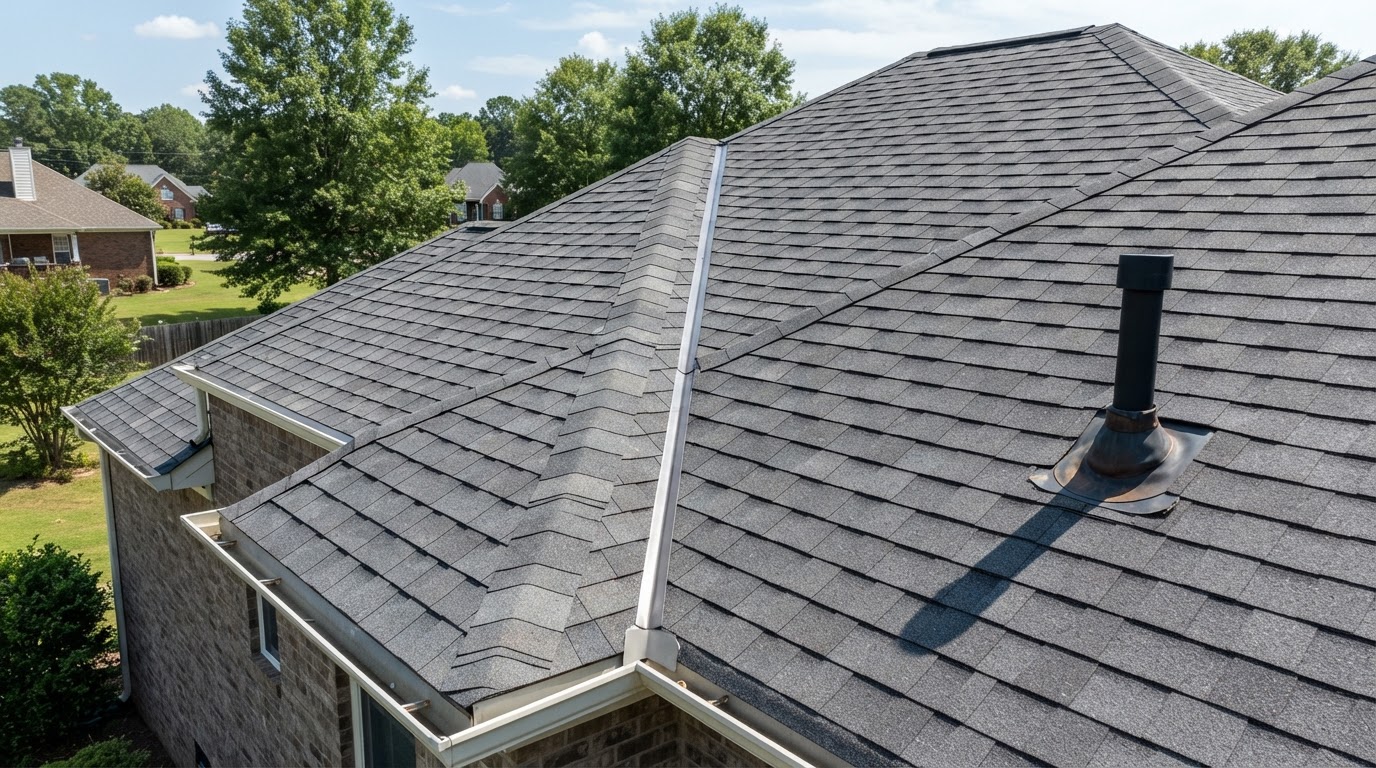
Signs an Attic Ventilation Assessment May Be Useful Near Montgomery
Excessive Attic Heat
An attic that reaches extreme temperatures in summer can stress roofing materials, affect HVAC performance, and signal that airflow is not balanced or sufficient for the assembly.
Visible Condensation
Moisture on rafters, roof sheathing, or fasteners can indicate that warm moist air is reaching a cold surface — a sign that ventilation, air sealing, or insulation may need attention.
Moisture-Related Symptoms
Damp insulation, staining, or wood discoloration in the attic can have multiple causes, including roof leaks, air leakage from below, or inadequate ventilation.
Blocked Soffit Vents
Insulation, storage, or debris blocking intake vents disrupts the airflow path. Without intake, exhaust vents alone cannot move air effectively.
Insulation Obstructing Airflow
Baffles are required at the eaves to keep insulation from blocking the ventilation pathway. Without them, the intake air never reaches the exhaust.
Inadequate or Unbalanced Airflow
Ventilation works as a system — intake and exhaust must be balanced. Too much exhaust without intake, or the wrong vent combination, can short-circuit the airflow.
Roof Replacement Planning
A roof replacement is the natural time to evaluate whether the attic ventilation design still matches the assembly, the insulation, and the building's current use.
These symptoms can have causes beyond ventilation. Roof leaks, plumbing moisture, duct leakage, and insulation gaps can produce similar signs, so an assessment considers the whole attic assembly rather than ventilation alone.
Evaluating Attic Ventilation in Montgomery Homes
An attic ventilation assessment reviews the assembly type, the components present, and how air is intended to move through the space. The goal is to understand the design, not to impose a one-size-fits-all solution.
Roof configuration
Pitch, hips, valleys, and dormers that shape how air naturally moves through the attic.
Attic assembly type
Vented, unvented, or conditioned — each has different ventilation requirements.
Soffit intake
Continuous or individual vents at the eaves that supply intake air.
Ridge or other exhaust
Ridge vents, box vents, or powered exhaust that let warm air exit.
Gable vents
Wall vents that can provide intake, exhaust, or both depending on placement.
Airflow pathways
Whether air can travel uninterrupted from intake to exhaust through the attic.
Insulation placement
Whether insulation is at the ceiling plane, the roof plane, or both.
Attic air sealing
How well the attic is sealed from the conditioned space below, which affects moisture movement.
Exhaust termination
Bath and kitchen exhaust ducts that should terminate outside, not in the attic.
Existing moisture concerns
Any signs of condensation, leaks, or biological growth that ventilation alone may not solve.
Conditioned or unvented attic assemblies follow different rules than conventional vented attics. Adding a ridge vent to an unvented or conditioned attic is not automatically appropriate and can create unintended airflow problems.
Attic Ventilation Options for Montgomery Roofing Systems
Soffit Vents
Provide intake air at the eaves in suitable vented attic assemblies. They are the supply side of the airflow path and must remain unobstructed by insulation or storage.
Ridge Vents
Provide exhaust at the roof's highest point in suitable vented attic assemblies. They work with soffit intake to create a continuous airflow path, but only when the assembly is designed for it.
Roof Vents
Box, turtle, or powered exhaust vents through the roof plane. These are alternatives to ridge exhaust when a ridge vent is not present or not appropriate.
Gable Ventilation
Wall-mounted vents at the gable ends. Their role depends on the overall ventilation design — they can provide intake, exhaust, or both, and may conflict with ridge vent airflow if mixed improperly.
Ventilation Baffles
Installed at the eaves to maintain a clear air channel between the soffit and the attic space above the insulation. Without baffles, insulation blocks the intake.
Air Sealing and Insulation
Ventilation alone does not solve moisture or energy problems if air leaks from the conditioned space below carry moisture into the attic. Air sealing and insulation work with ventilation, not instead of it.
Can Attic Ventilation Help With Moisture Concerns?
Ventilation can help manage moisture in a properly designed vented attic, but moisture control may also require evaluation of air leakage from the living space, ductwork, insulation, roof leaks, and other building conditions. Ventilation alone does not fix every moisture problem, and adding ventilation to the wrong assembly can make moisture issues worse.
Attic Ventilation Questions for Montgomery Homes
What is the purpose of attic ventilation?
In a vented attic, ventilation helps manage temperature and moisture by moving air through the space. Intake at the eaves and exhaust at the ridge create a continuous path that carries warm, moist air out and replaces it with drier outside air.
How do soffit and ridge vents work together?
Soffit vents supply intake air at the eaves; ridge vents exhaust warm air at the peak. Together they create a continuous airflow path through the attic, but only when the assembly is designed for that flow and the path is not blocked.
Does every attic need a ridge vent?
No. A ridge vent is one exhaust option. Whether it is appropriate depends on the attic assembly type, the roof design, the existing intake, and the overall ventilation plan. Some roofs use gable, box, or powered exhaust instead.
Can blocked soffits affect ventilation?
Yes. If intake vents are blocked by insulation, storage, or debris, exhaust vents alone cannot move air effectively. The system depends on balanced intake and exhaust.
Is ventilation different in a conditioned attic?
Yes. A conditioned or unvented attic is designed as part of the conditioned building envelope, not as a vented space. Adding vented attic components to a conditioned assembly can create unintended moisture and airflow problems.
Can attic ventilation fix moisture problems?
It can help in a properly designed vented attic, but moisture may also come from air leakage, ductwork, plumbing, or roof leaks. Ventilation alone does not address every moisture source, and in some assemblies it can make moisture worse.
Should ventilation be reviewed during roof replacement?
Yes. A roof replacement is the natural time to evaluate whether the existing ventilation design still matches the attic assembly, insulation, and building use, and to correct any imbalances or blocked pathways.
Questions About Attic Ventilation Near Montgomery?
Describe the attic assembly — vented or conditioned, the insulation placement, the vents present, and any symptoms you have noticed. The right ventilation plan follows the assembly type and the building, not a single rule applied to every roof.