
Roof Cleaning and Algae Removal Montgomery
Dark streaks and other roof discoloration can change the appearance of a home, but the right cleaning method depends on the roofing material, the type of growth, and the overall condition of the roof. Central Alabama's humidity and tree cover make algae and moss common, yet not every stain is algae, and not every roof should be cleaned the same way. This page covers what causes roof discoloration, when cleaning may be appropriate, and where a roofing assessment should come first.
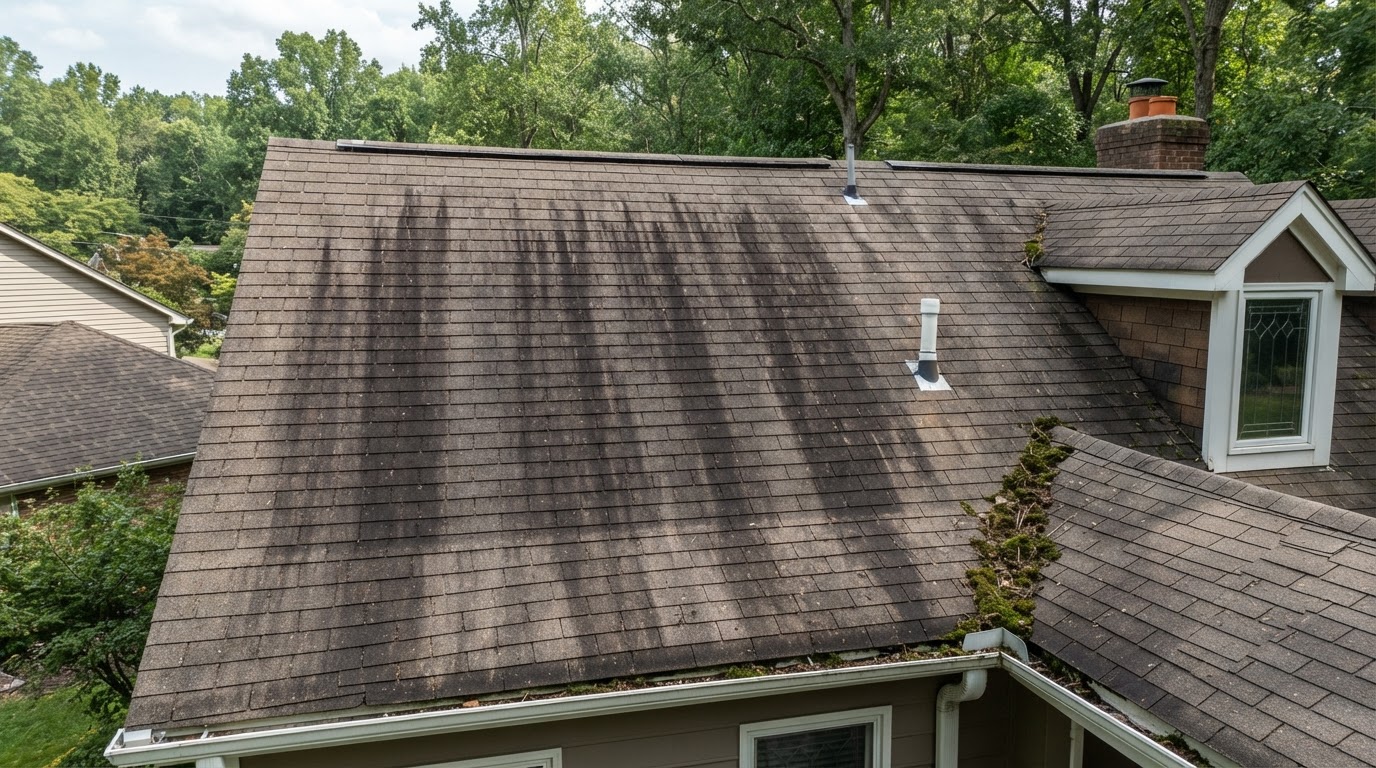
Roof Algae, Moss, and Discoloration in Montgomery
Algae-Associated Dark Streaking
The dark streaks that run down roof slopes are often associated with a type of algae that feeds on the limestone filler in asphalt shingles. The staining is primarily a cosmetic concern, though it can shorten shingle surface life over time.
Moss Growth
Moss holds moisture against the shingle surface and can lift edges as it grows. Unlike algae, moss can physically damage shingles by keeping them wet and lifting the leading edge.
Lichen
Lichen forms crusty or leaf-like patches anchored into the shingle surface. Aggressive physical removal can pull granules and damage the shingle, which is why lichen requires a different approach than simple staining.
Leaf and Organic Debris
Accumulated leaves, needles, and twigs decompose on the roof and in the valleys. Debris holds moisture and can foster the growth underneath, but the fix is removal, not a cleaning chemical.
Dirt or Environmental Staining
Wind-blown dust, pollen, and runoff patterns can leave streaks that look like algae but are not biological. Environmental staining may fade with weather or require a different approach.
Material Aging and Granule Loss
As shingles age, granule loss exposes the underlying asphalt and changes the color. What looks like a stain may actually be surface wear, which is a roofing condition rather than a cleaning problem.
These conditions do not all require the same treatment. Humidity and tree cover in Central Alabama contribute to organic growth, but the cause of any discoloration should be identified before a cleaning method is selected. Not every dark stain is algae, and not every stain is a health hazard.
Planning Roof Cleaning Near Montgomery
Roof cleaning is not a universal service. Whether it is appropriate depends on the roof material, the roof's condition, the type of discoloration, and safe access. The evaluation determines whether cleaning is the right step or whether a roofing assessment should come first.
1. Identify the Roof Material
Asphalt shingles, coated metal, membrane, or another system — each has different cleaning limits.
2. Review Manufacturer Maintenance Guidance
Available product instructions that govern what cleaning methods are compatible.
3. Observe Discoloration and Possible Damage
Whether the appearance change is staining, growth, granule loss, or a roofing defect.
4. Consider Roof Age and Condition
An older or fragile roof may not tolerate cleaning and may need replacement instead.
5. Evaluate Access, Slope, and Safety
Roof pitch, height, landscaping, and slope affect whether the roof can be accessed safely.
6. Determine Whether Cleaning Is Appropriate
Whether cleaning is the right step or whether a roofing assessment should come first.
7. Select a Manufacturer-Compatible Procedure
If the service is available, use a method compatible with the product and current instructions.
8. Protect Surrounding Materials
Landscaping, runoff, and environmental controls per the product and site requirements.
9. Review Results and Maintenance
Expected outcomes, ongoing maintenance, and when a future evaluation may be useful.
A particular chemical process, equipment type, or cleaning service should not be assumed until the roof material is identified, the roof condition is confirmed, and the available method is verified as suitable and offered.
Roof Cleaning Methods and Material Considerations in Montgomery
Asphalt Shingles
Industry guidance and shingle manufacturers warn against high-pressure washing and abrasive scrubbing. Aggressive pressure can dislodge protective granules and shorten shingle life. Pressure washing is not promoted here as a universal shingle-cleaning solution.
Chemical Cleaning Considerations
Manufacturer-approved cleaning products are applied in general terms. Suitability, dilution, application, landscaping protection, runoff handling, and worker safety all depend on the product, the roofing material, and current instructions. No one-size-fits-all chemical recipe is provided.
Metal Roofing
Coated metal systems may require different cleaning products and techniques than shingles. Finish requirements, corrosion, and the manufacturer's instructions govern the method. A treatment suitable for shingles is not automatically suitable for metal.
Moss and Lichen
Moss and lichen differ from algae staining. Aggressive physical removal can damage the shingle surface, lift granules, or scratch coated metal. The method must account for how firmly the growth is anchored.
When Cleaning Is Not the Right Solution
Missing shingles, loose or damaged metal panels, significant granule loss, unstable or sagging areas, suspected structural concerns, or active leaks all point to a roofing assessment rather than cleaning. Cleaning does not correct defective flashing, water intrusion, or material failure.
Appearance Expectations
Not every stain will disappear completely, and no roof remains stain-free for a fixed period. Algae and organic growth return over time, particularly under tree cover. Expectations should account for the property's exposure.
Algae-Resistant Roofing Products
Some roofing products are manufactured with algae-resistant features. These products are not algae-proof, and the protection offered varies by manufacturer and product. This is not a universal claim across all products.
Safety and Access
Homeowners should not be instructed to climb onto a roof to apply chemicals or clean. Roof slope, height, and the slip hazard of wet, treated surfaces make roof access a task for qualified help, not a do-it-yourself cleaning project.
Cleaning Does Not Replace a Roofing Assessment
Discoloration can coexist with real roof problems. Before a roof is cleaned, the condition of the shingles, metal, flashing, and drainage should be considered. If the roof is failing, cleaning the surface does not restore it — and an assessment should identify whether replacement or repair is the more appropriate path.
Roof Cleaning and Algae Removal Questions in Montgomery
What causes dark streaks on asphalt shingles?
The streaking is most often associated with a type of algae that grows on the shingle surface, particularly where humidity and shade are present. The streaks are primarily cosmetic, though over time the growth can affect the shingle surface. Not all discoloration is algae — dirt, granule loss, and environmental staining can look similar.
Does roof algae mean I need a new roof?
No. Algae staining alone does not mean the roof has failed. The decision to replace depends on the shingle condition, granule loss, flashing, leaks, and age — not on staining by itself. A roof with sound shingles and cosmetic algae may need cleaning, not replacement.
Can asphalt shingles be pressure-washed?
High-pressure washing is not recommended for asphalt shingles. The pressure can dislodge protective granules and shorten shingle life. Manufacturer and industry guidance favors lower-pressure, product-compatible cleaning methods that avoid damaging the surface.
Is moss removal the same as algae cleaning?
No. Moss holds moisture and can lift shingle edges; lichen anchors into the surface. Both can be more damaging to remove than algae and may require a different, more careful approach. Aggressive physical removal can pull granules and damage the roof.
Can metal roofs be cleaned using the same method as shingles?
Not always. Coated metal may require different products and techniques, and the finish and any corrosion must be considered. A method that works on asphalt shingles is not automatically safe for a coated metal roof.
Will roof cleaning remove every stain?
Not necessarily. Most algae and organic staining can be reduced, but some discoloration may persist, and staining returns over time, especially under tree cover. No roof remains permanently stain-free after a single cleaning.
Should my roof be inspected before cleaning?
Generally yes. An inspection confirms the roof is sound enough to clean and helps distinguish cosmetic staining from actual damage. Cleaning a failing roof does not restore it, and in some cases cleaning is not the appropriate first step.
Request a Roof Cleaning Suitability Assessment in Montgomery
Share your roof material, the type of staining, the approximate roof age if known, and any other observed concerns. The assessment determines whether cleaning is appropriate for the roof or whether a roofing evaluation should come first. Cleaning availability and method are confirmed before any work is scheduled.