
Roof Repair Montgomery
A roof leak or a few missing shingles rarely means the whole roof needs replacing — but it does mean something needs attention. Roof repair in Montgomery starts with understanding where water is actually entering, what surrounding material is involved, and whether a localized fix can hold up over time. This page focuses on diagnosing and repairing specific problems rather than replacing the roof.
Roofing Problems That May Require Repairs Near Montgomery
Missing or Damaged Shingles
Wind can lift and crease shingles, and physical impact or aging can crack or shed them. A few displaced shingles on an otherwise sound roof are often a localized repair — the question is whether surrounding material is also fatigued.
Roof Leaks and Interior Water Stains
A stain on a ceiling rarely marks the exact entry point. Water travels along roof planes, sheathing, and framing before it appears inside. Repairing the visible drip without locating the exterior entry usually means the leak returns.
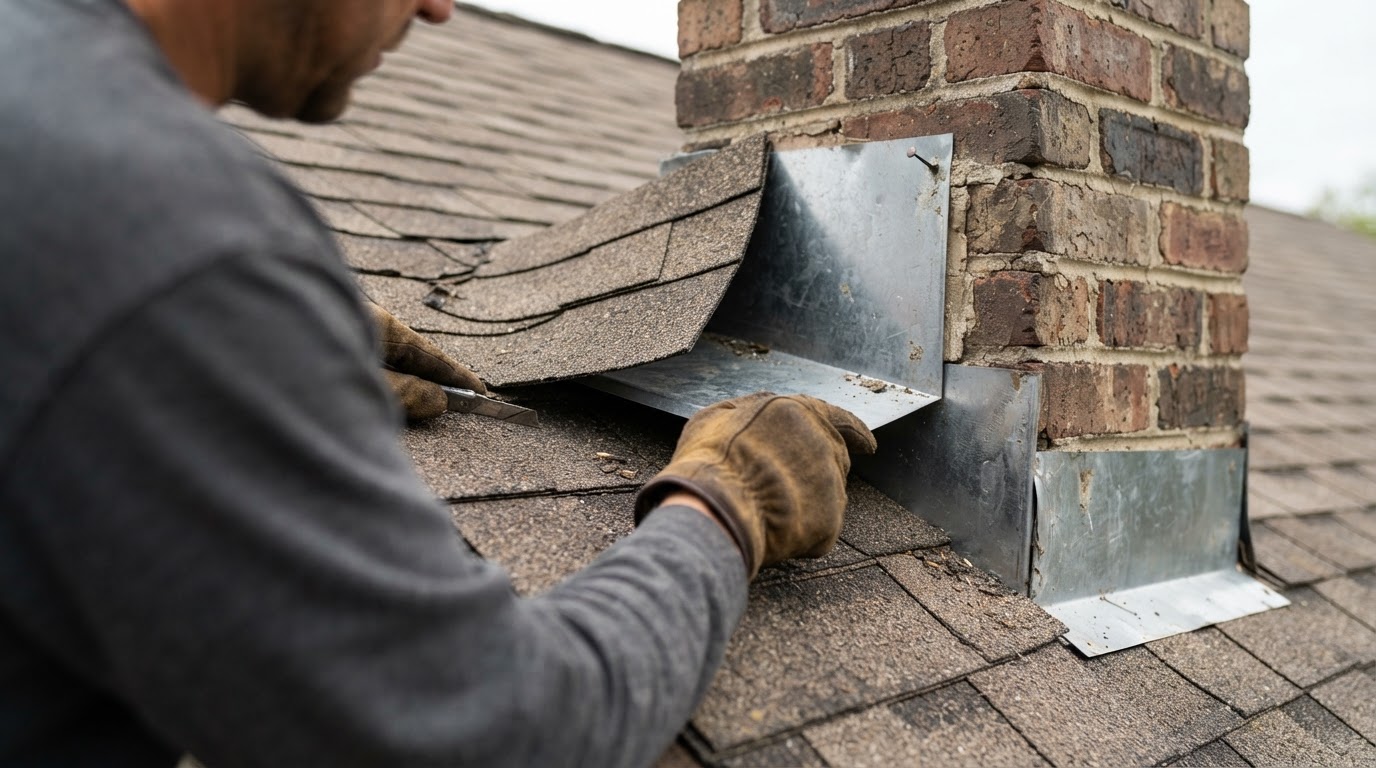
Flashing Problems
Step flashing at roof-to-wall transitions, apron flashing, valley flashing, and cricket flashing around chimneys are common leak sources. Deteriorated, lifted, or improperly layered flashing lets water behind the covering rather than over it.
Pipe Boots and Roof Vents
Plumbing vent penetrations use rubber boots that can crack and shrink with age and sun exposure. A failed boot can leak steadily even when the surrounding shingles are in good condition.
Ridge Caps and Roof Edges
Ridge cap shingles and drip edge at the roof perimeter take the brunt of wind and weather. Loosened or deteriorated edge components create openings for wind-driven rain and insects as much as water.
Storm-Related Roof Damage
Wind-displaced shingles, debris impacts, and damaged flashing after a storm can be repairable when localized. Widespread damage is a different question — this page does not describe any specific Montgomery storm event.
How Roof Repair Needs Are Evaluated in Montgomery
A useful repair starts with locating the actual entry point rather than the visible symptom. Evaluation typically considers where water appears, what surrounding materials are involved, and whether the problem is isolated or part of broader deterioration. Some leaks have more than one contributing cause.
- Locating the possible water entry point on the roof, not just the interior stain
- Reviewing surrounding shingles, panels, and components for related damage
- Checking flashing, valleys, and penetrations near the suspected area
- Evaluating shingle condition — age, granule loss, creasing, and adhesion
- Identifying potential underlying deterioration that a surface repair alone won't resolve
- Considering roof age and the remaining condition of the rest of the assembly
- Determining whether a localized repair is reasonable or whether the problem signals broader issues
Not every leak can be isolated immediately, and not every repair can be confirmed from the ground. If conditions are unsafe, do not climb onto a roof to inspect damage — describe what is visible from a safe location instead.
Roof Repair Options for Montgomery Homes
Shingle replacement
Replacing individual or small groups of damaged shingles when surrounding material is sound and compatible.
Flashing repairs
Re-securing, sealing, or replacing step, apron, valley, or penetration flashing.
Penetration repairs
Replacing cracked pipe boots or resealing vent and skylight transitions.
Ridge cap repairs
Re-securing or replacing loosened ridge cap shingles and edge components.
Localized underlayment work
Addressing a small area of compromised underlayment beneath an otherwise sound roof section.
Component replacement
Repairing specific roof components — boots, vents, edge metal — without replacing the field.
Storm-related repairs
Fixing localized wind or debris damage when the surrounding assembly remains serviceable.
Temporary weather protection
Short-term tarping or sealing where appropriate while a durable repair is planned.
When Roof Repair May Not Be Enough
Repairs reach a point of diminishing return. When the same area leaks repeatedly, when multiple sections of one roof begin failing, or when the covering material itself is nearing the end of serviceable life, a broader replacement evaluation can make more sense than another round of localized fixes. That direction is worth weighing — it is not the answer to every roof problem, and a sound roof with one isolated issue does not need replacement.
Roof Repair Questions for Montgomery Homes
Can a roof leak be repaired without replacing the whole roof?
Often, yes. When the entry point is localized and the surrounding material is sound, a targeted repair addresses the cause. The key is locating the actual entry point rather than the visible interior stain. When the leak reflects widespread or age-related deterioration, replacement may become the more reasonable direction.
What causes leaks around chimneys or roof vents?
Chimney and vent leaks commonly involve flashing — step, apron, or cricket flashing that has lifted, corroded, or been installed without proper layering. Penetration boots can also crack and shrink with age. The surrounding shingles matter too, since flashing only works when the covering directs water over it correctly.
Can missing shingles be replaced individually?
Yes, when the surrounding shingles are in good condition and a compatible replacement is available. A small number of wind-displaced shingles on an otherwise sound roof is typically a localized repair. The question is whether the loss points to broader fastener or material fatigue across the roof.
How do I know whether flashing needs repair?
Flashing problems show up as leaks at transitions — roof-to-wall joints, valleys, chimneys, and penetrations. Visible lifting, corrosion, separation from the surface, or sealant breakdown are signs. Because flashing sits beneath or alongside the covering, some conditions are confirmed only with direct access.
Can storm-related roof damage be repaired?
Localized storm damage — a few displaced shingles, a damaged section of flashing, debris impact — is often repairable. Widespread damage across multiple planes may point toward replacement. This page does not reference any specific Montgomery storm event.
What if a roof has multiple leaks?
Multiple leaks can mean several independent issues, or a single underlying condition showing up in several places. Evaluation helps tell the difference. When leaks cluster with broad material deterioration, the question shifts from which leak to fix to whether the assembly still responds to repairs.
When should I consider replacement instead of repair?
When repairs recur and no longer hold, when the covering is broadly deteriorated, or when damage is extensive enough that a series of localized fixes would cost more than a sound replacement. A sound roof with one isolated problem does not need replacement — the decision follows the roof's overall condition.
Need Help Evaluating Roof Damage Near Montgomery?
Describe the symptom, where it appears, the roofing material if known, and whether there is an active leak. That context helps determine whether a localized repair is reasonable or whether the problem points toward a broader evaluation. No emergency response time is promised — the next step is confirmed through the inquiry process.