
Impact-Resistant Class 4 Shingles Montgomery
Impact-resistant shingles are a product category some Montgomery homeowners consider when comparing roofing materials in hail-prone parts of Central Alabama. But "impact-resistant" describes a tested classification earned by specific products under defined conditions — not a guarantee against storm damage, and not a feature of every architectural shingle. This page explains what a Class 4 rating actually means, how it differs from other shingle characteristics, and what to weigh before choosing an impact-rated product for a roof replacement.
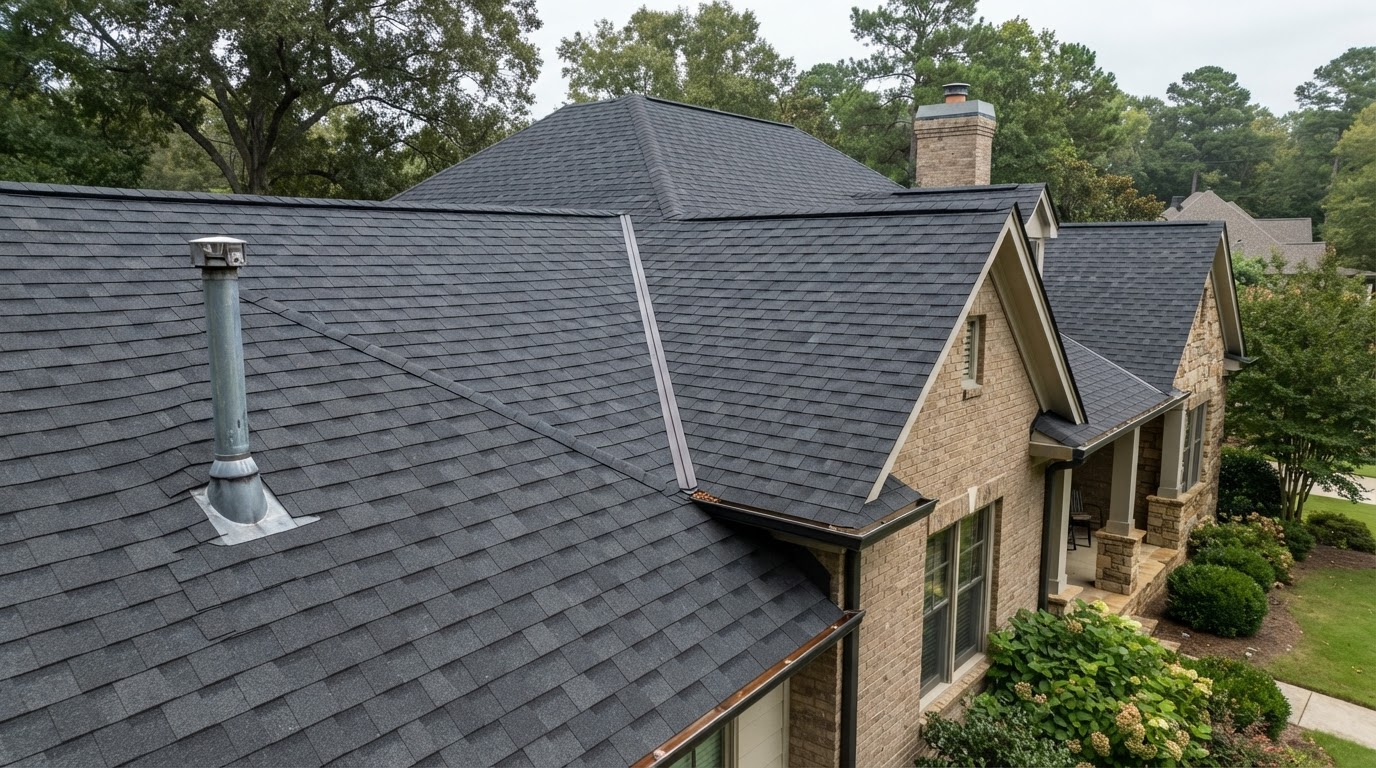
What Does Class 4 Impact Resistance Mean for Roofing Near Montgomery?
Impact-resistance classifications come from a defined laboratory test, not from a roof's performance in a real storm. Understanding where the rating comes from — and where it stops — is what makes the comparison useful.
UL 2218 testing
The widely referenced steel-ball impact test classifies shingles into Classes 1 through 4 based on resistance to repeated strikes under controlled conditions.
Class 4 is the highest
Within that UL 2218 framework, Class 4 is the top classification — meaning the product performed best in that specific test, not that it is impact-proof.
Lab versus real storms
Hail size, angle, velocity, roof slope, and substrate all differ from the test setup. A passing lab result does not guarantee no damage in an actual storm.
Product documentation matters
The rating belongs to a specific tested product. Not every architectural shingle carries it, and the only way to confirm a rating is the manufacturer's product documentation.
Impact-resistant does not mean impact-proof.
A Class 4 rating is not a promise that a roof will not be damaged by hail or falling debris. It is also not a statement about wind classification, fire rating, or warranty coverage — those are separate product characteristics that still have to be confirmed for the exact product.
Planning an Impact-Resistant Shingle Roof in Montgomery
A shingle's tested impact classification is one input into a roof system, not a substitute for one. The covering, deck, underlayment, flashing, and ventilation still have to work together for the roof to perform.
Existing roof condition
What is currently installed, how many layers, and whether a tear-off is required.
Roof pitch
Slope affects which products are appropriate and how underlayment and fastening are specified.
Decking
The substrate the shingles fasten to must be sound, dry, and properly spaced for the assembly.
Underlayment
The water-shedding barrier selected for slope, code, and the shingle product.
Flashing
Step, valley, apron, and penetration flashing that direct water away from the joints most likely to leak.
Ventilation
Balanced intake and exhaust ventilation that affects long-term shingle and attic performance.
Roof geometry
Hips, valleys, and penetrations that shape installation sequencing and flashing detail.
Product availability
Impact-rated products vary by line, and the exact product's documentation is what confirms the rating.
Manufacturer documentation
The tested rating, wind classification, and warranty terms for the specific product being considered.
Installation requirements
Starter strips, fastening, ridge, and accessory compatibility that follow the product instructions.
Replacement scope
Whether the project is a full replacement or a repair, and how each is planned.
Code and product instructions
Local code and the manufacturer's installation instructions govern the actual assembly.
A product's tested impact classification does not eliminate the need for a properly designed and installed roof system. The rating is one factor; the assembly around it is what determines whether the roof performs.
Comparing Impact-Resistant Shingles for Montgomery Homes
Comparing impact-rated shingles is really comparing several separate product characteristics at once: the impact rating itself, the material construction, the architectural appearance, the wind classification, the compatible roof-system accessories, and the installation requirements. A product can carry a Class 4 rating and still differ from another Class 4 product in weight, profile, wind rating, and warranty terms.
Upfront project cost reflects roof area, complexity, material selection, the existing assembly, tear-off and disposal, decking and underlayment, flashing and penetrations, and access. This page does not publish prices — actual scope and cost are established through an inquiry and assessment.
Class 4 Shingles and Homeowners Insurance
Any potential premium benefit depends on the insurer, the policy, the product documentation, the property, and any applicable program requirements. This page does not promise a discount or fixed savings — eligibility is confirmed through the insurer, not assumed from a product rating.
Class 4 Shingles vs. Standard Architectural Shingles
Architectural appearance and impact classification are different product characteristics. An architectural shingle describes laminated, dimensional construction; a Class 4 rating describes tested impact performance. Not every architectural shingle is Class 4, and not every Class 4 shingle is architectural. Some products carry both; many carry only one.
Impact-Resistant Shingle Questions for Montgomery Homes
What does Class 4 mean for roofing shingles?
Within the UL 2218 steel-ball impact test, shingles are classified into Classes 1 through 4. Class 4 is the highest classification in that test, meaning the product resisted impact best under the test's controlled conditions. It is a product-specific rating confirmed by manufacturer documentation, not a guarantee against real-world storm damage.
Are Class 4 shingles hail-proof?
No. No asphalt shingle is hail-proof or tornado-proof. A Class 4 rating reflects performance in a defined laboratory test; actual hail size, angle, and velocity differ from the test. An impact-rated shingle may resist damage better than a non-rated product in some storms, but it is not guaranteed to come through every event undamaged.
Are all architectural shingles impact-resistant?
No. Architectural describes laminated, dimensional construction; impact resistance is a separate tested classification. Many architectural shingles do not carry a Class 4 rating, and some impact-rated products are not architectural. The only way to confirm a rating is the specific product's documentation.
Can Class 4 shingles reduce insurance premiums?
A potential premium benefit depends on the insurer, the policy, the product documentation, the property, and any applicable program requirements. This page does not promise a discount or fixed savings. Eligibility is confirmed through the insurer rather than assumed from a product rating.
Can impact-resistant shingles still be damaged by storms?
Yes. Impact resistance is tested under controlled conditions; real storms involve variables the test does not fully replicate. Sufficiently large hail, debris impacts, or wind-driven conditions can still damage an impact-rated roof. The rating describes relative resistance, not immunity.
What affects the cost of impact-resistant shingles?
Cost reflects roof area and complexity, the specific product and its rating, compatible accessories, the existing assembly and tear-off, decking and underlayment, flashing and penetrations, and access. This page does not publish prices — scope and cost are established through an inquiry and assessment.
How do I verify a specific product's classification?
The rating belongs to a specific tested product and is confirmed through the manufacturer's product documentation, not a product name or appearance. When an impact-rated shingle is being considered, the documentation for the exact product is what establishes the classification, wind rating, and warranty terms.
Considering Impact-Resistant Shingles Near Montgomery?
Share the roof material, the property type, the roof's condition, and what prompted the question — a planned replacement, hail concerns, or material research. An inquiry that includes the product documentation question helps confirm the exact rating, wind classification, and compatible system rather than a product name alone.