
Fascia and Soffit Repair Montgomery
Fascia and soffit components finish and protect important areas along a home's roof edge. When those components deteriorate, the right repair may involve more than replacing visible trim. Deteriorated fascia can weaken gutter attachment, and damaged soffit panels can alter the ventilation path the roof relies on. This page covers the conditions that bring roof-edge trim into a roofing conversation and how fascia and soffit repair is evaluated for Montgomery properties.
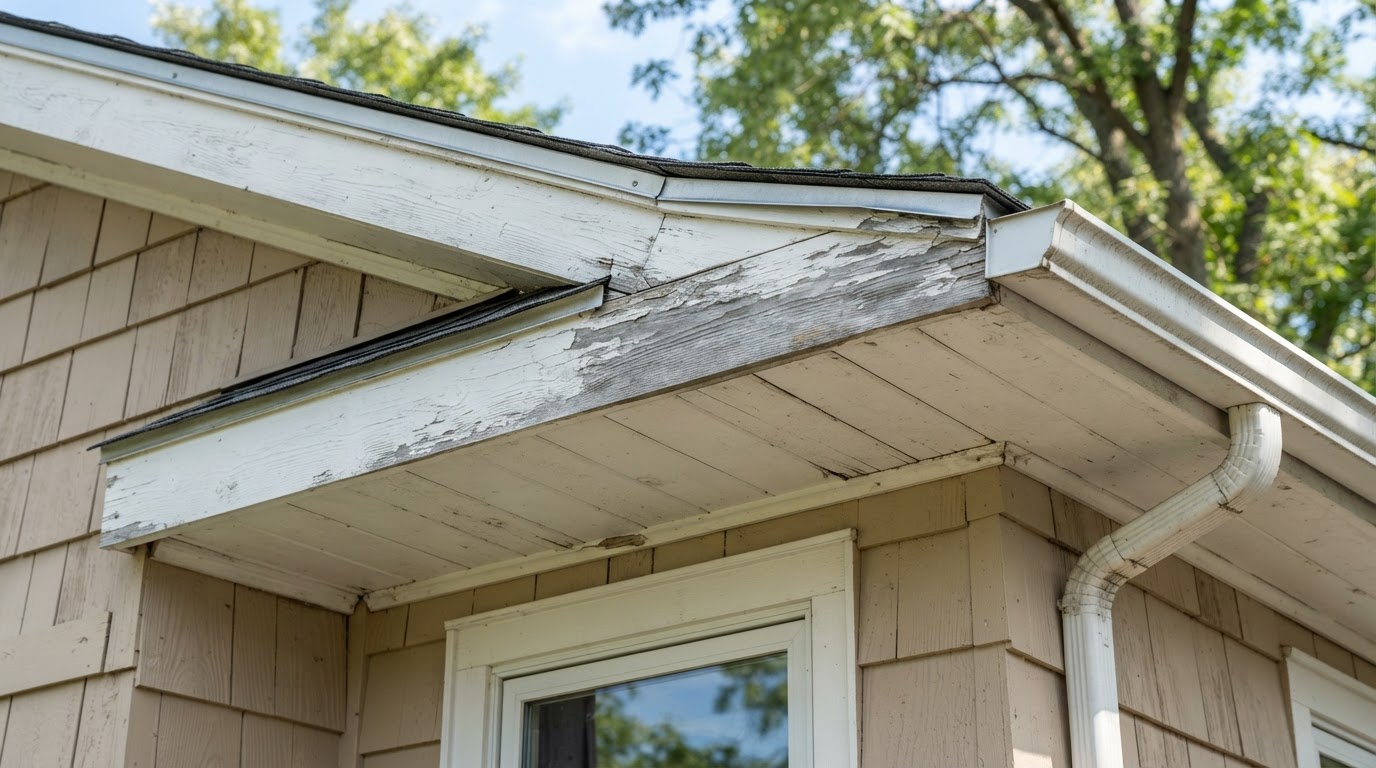
Signs Your Montgomery Home May Need Fascia or Soffit Repair
Peeling Paint or Deteriorated Finishes
Paint that peels, cracks, or lifts away from the fascia often points to moisture behind the finish. The coating fails because the wood beneath it is staying wet.
Cracked, Warped, or Missing Panels
Fascia boards and soffit panels that split, cup, or fall away leave the roof edge exposed. Warping usually indicates the material has absorbed and released moisture repeatedly.
Soft or Visibly Deteriorated Fascia
Fascia that feels spongy or shows dark staining has likely absorbed water. Deteriorated fascia cannot reliably support gutters or hold fasteners.
Water Staining Beneath Roof Overhangs
Discoloration on the underside of an overhang or on the siding below the eaves may indicate water is running behind the fascia rather than into the gutters.
Loose or Separated Trim
Trim pulling away from the rafter tails or wall creates a gap that admits wind-driven rain and insects. Separation often means the fasteners have lost grip in deteriorated wood.
Gutter Attachment Problems
Gutters that sag, pull away, or drop typically signal that the fascia behind them has weakened. Replacing gutters over rotten fascia transfers the same problem to the new system.
Damaged Soffit Ventilation Openings
Crushed, clogged, or corroded vent openings reduce the intake airflow the attic depends on. Blocked vents can shift the balance of a ventilation system.
Visible Gaps Allowing Pest Access
Openings at the roof edge can let birds, squirrels, or insects enter the attic. Pest entry is often a symptom of deteriorated trim rather than a standalone problem.
Visible deterioration does not by itself prove the exact source of moisture. Runoff, damaged gutters, roofing details, condensation, or other exterior conditions can all contribute, and a repair plan should address the underlying cause, not only the visible symptom.
How Fascia and Soffit Repair Near Montgomery Is Evaluated
Fascia and soffit repair is evaluated as part of the roof edge, not in isolation. Because these components sit at the intersection of the roof covering, gutters, ventilation, and the building exterior, the assessment considers how each system interacts.
1. Review Visible Symptoms
Peeling paint, staining, warping, or separation, along with the homeowner's reported concerns.
2. Examine Roof-Edge Conditions
Accessible overhang, eave, rake, and fascia conditions, and how the roof covering terminates at the edge.
3. Consider Gutter and Drip-Edge Relationships
How gutters attach, where the drip edge lands, and whether runoff is shedding correctly.
4. Review Existing Fascia and Soffit Condition
Material type, extent of deterioration, and whether localized or broader replacement is appropriate.
5. Identify Concealed Deterioration
Water damage behind the fascia or in the rafter tails that is not visible without opening the assembly.
6. Discuss Repair Versus Replacement
Whether the damage is isolated or whether the roof edge needs a coordinated scope.
7. Confirm Compatibility and Finish
Matching products, ventilation requirements, finish expectations, and gutter coordination.
8. Perform and Review
Complete the agreed work and review the finished area with the homeowner.
Concealed framing damage cannot be confirmed without opening the assembly. A fascia and soffit quote does not automatically include gutter replacement, framing repair, or pest remediation unless those scopes are specifically identified and agreed.
Fascia and Soffit Repair Options in Montgomery
Wood Fascia and Soffit Materials
Wood is common and paintable, but it is moisture-sensitive. Repairs involve replacing deteriorated sections, priming cut ends, and finishing to match. Ongoing finish maintenance helps protect the material.
Vinyl, Aluminum, and Other Exterior Systems
Alternative materials differ in appearance, durability, installation method, and compatibility with the existing roof edge. Available products should be confirmed against actual supplier and fulfillment capabilities.
Vented Versus Solid Soffits
Some roof assemblies use soffit intake ventilation; others use a different ventilation approach or an unvented assembly. Ventilation openings must be compatible with the actual attic or roof design. Not every soffit replacement should add vents.
Gutter Attachment and Fascia Condition
Gutters fasten to the fascia. Deteriorated fascia undermines every fastener. When fascia is being repaired, the gutter attachment and roof-edge drainage should be reviewed at the same time.
Drip Edges and Roof-Edge Transitions
Roof-covering details and water-shedding components at the eave affect how water reaches the gutter. Repair planning may need to coordinate the drip edge, underlayment, and fascia.
Local Repair Versus Broader Replacement
Whether a single damaged section or a longer roof-edge run is involved depends on the extent of deterioration, access, matching products, and surrounding construction. Not every trim problem requires a full roof-edge rebuild.
Coordinating Fascia, Soffit, and Roofing Work
Fascia and soffit work often overlaps with roof replacement, ventilation improvements, or gutter installation. Those projects are not always needed, but when the roof edge is being opened the relationship between each component should be reviewed.
Fascia and Soffit Repair Questions in Montgomery
What is the difference between fascia and soffit?
The fascia is the vertical board that caps the rafter tails along the roof edge and is where the gutters attach. The soffit is the horizontal underside of the overhang between the exterior wall and the fascia. Both sit at the roof edge, but they perform different roles and fail differently.
How can I tell if my fascia is deteriorating?
Peeling paint, soft spots, dark staining, warped boards, and gutters that pull away or sag are common signs. The most reliable indicator is fascia that feels spongy when gently pressed, which suggests the wood has absorbed moisture and lost strength.
Can damaged soffit panels be replaced individually?
Yes, when the deterioration is localized and the surrounding panels and framing are sound. If the damage is widespread or the framing behind the soffit is also affected, a broader section may need replacement.
Does fascia damage mean my roof is leaking?
Not necessarily. Fascia and soffit deterioration can come from gutter overflow, runoff behind the fascia, condensation, or exterior exposure rather than a roof leak. The source should be investigated before assuming the roof covering is the cause.
Should fascia be replaced before installing new gutters?
Usually yes. Gutters depend on the fascia for support. Installing gutters over deteriorated fascia transfers the same weak attachment to the new system and can cause premature sagging or failure. Fascia condition should be confirmed before a gutter project.
Can soffit repairs affect attic ventilation?
Yes. If the soffit contains intake vents, replacing panels or altering vent openings changes the intake airflow. Any soffit work on a vented assembly should account for the existing ventilation design so the balance is preserved.
What influences the cost of fascia and soffit repair?
The extent of deterioration, the material, the length of roof edge involved, whether gutters or roof work are coordinated, access height, and the finish required. Costs are property-specific and should be quoted after the area is evaluated.
Request a Fascia and Soffit Repair Quote in Montgomery
Describe the visible damage, any gutter problems, peeling paint, warped trim, or concerns around the roof overhang. The assessment considers the fascia, soffit, gutter attachment, and ventilation interface before any scope is proposed.