
Stone-Coated Steel Roofing Montgomery
Stone-coated steel roofing pairs formed metal panel construction with a stone-granule surface, producing a roof that can resemble dimensional shingles, wood shakes, or tile while remaining a steel panel system. The visual range is the point — a stone-coated roof can look traditional from the curb while behaving as a metal assembly underneath. This page covers stone-coated steel specifically, separately from painted standing seam and the broader metal roofing overview.
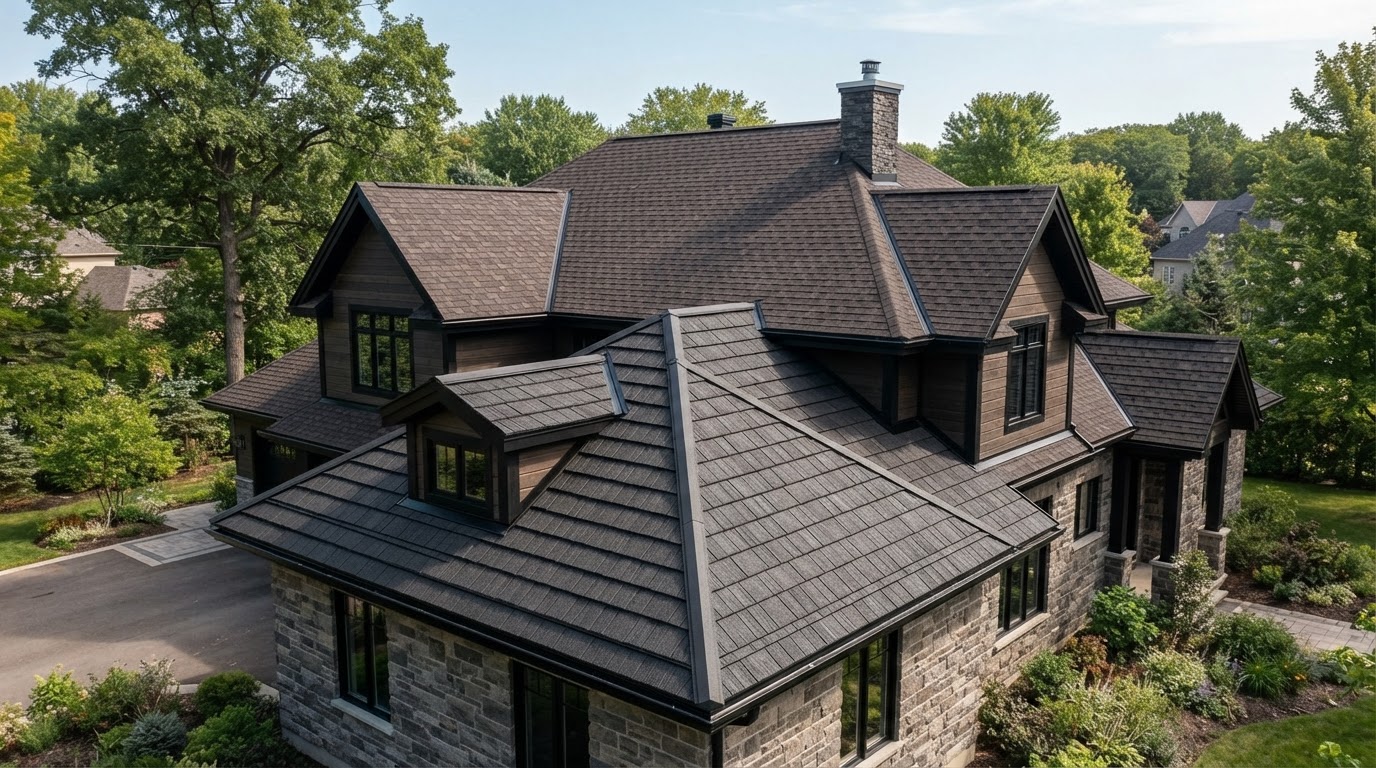
Stone-Coated Steel Roof Styles for Montgomery Homes
Stone-Coated Steel Shingle Profiles
Panels formed to resemble dimensional shingles, with a granule surface that reads like asphalt from a distance but carries the construction of a formed steel panel.
Stone-Coated Steel Shake Profiles
Textured profiles inspired by traditional wood shake, offering the shadow line and irregularity of split shake in a formed steel panel.
Stone-Coated Steel Tile Profiles
Profiles designed to resemble selected tile roofing styles, with the weight and installation differences of a steel system rather than a clay or concrete tile.
Available shapes, panel sizes, finishes, and attachment systems depend on the selected product. Within stone-coated steel, profiles differ by manufacturer and product line — this page does not claim identical color retention, impact resistance, wind performance, or warranty coverage across them.
Stone-Coated Steel Roof Installation Considerations in Montgomery
Existing roof condition
What is installed, how many layers, and whether tear-off or overlay is appropriate for the assembly.
Roof slope
Panel systems carry minimum-slope requirements; suitability follows the product and the geometry.
Structural capacity
The framing and deck must support the system; some assemblies require specific sheathing or battens.
Decking or support systems
Solid deck, skip-sheathing, or a batten system depending on the product's installation method.
Underlayment
The separation layer selected for the system, slope, and code.
Product-specific fastening
Fasteners and clips specified by the manufacturer for the profile and exposure.
Flashing
Valley, wall, eave, and penetration flashing coordinated with the panel system.
Valleys
Open or closed valley details that manage drainage across the roof.
Ridge details
Ridge caps and vented ridge components that close the peak.
Ventilation
Intake and exhaust ventilation that affects condensation and long-term performance.
Trim
Eave, rake, and transition trim that finish the panel system at the edges.
Drainage and access
How water leaves the roof and how the property is accessed for installation.
Not all stone-coated products install the same way. Some use a batten system; others attach direct to deck. This page does not universally recommend installation over an existing roof — overlay feasibility follows local code, the existing layers, the structure, and the manufacturer's requirements, evaluated against the actual assembly.
Stone-Coated Steel Roofing Compared With Other Systems
Stone-Coated Steel vs. Asphalt Shingles
Asphalt shingles are a fiberglass-and-asphalt composite; stone-coated steel is a formed metal panel with a granule surface. The two share a granule appearance but differ in product construction, weight, installation method, and maintenance. This page does not assign identical lifespan or cost to both.
Stone-Coated Steel vs. Standing Seam
Standing seam is a painted, linear raised-seam panel; stone-coated steel carries a granule surface and is formed into shingle, shake, or tile profiles. The visual difference is traditional profile versus linear seam — different appearances and installation approaches, not interchangeable.
Stone-Coated Steel vs. Traditional Tile
Clay or concrete tile carries real weight and its own installation system; stone-coated steel tile profiles are lighter formed panels. The materials, weight, structural requirements, and attachment differ even when the appearance is similar.
Granule coatings and product-specific care matter. Color retention, impact resistance, wind performance, and warranty coverage vary by manufacturer and product line — this page does not guarantee identical performance across them. The product documentation is what confirms the characteristics of the exact panel being considered.
Stone-Coated Steel Roofing Questions for Montgomery Homes
What is stone-coated steel roofing?
A formed steel roofing panel with a stone-granule surface bonded to the metal. The panel construction is steel; the granule finish can resemble dimensional shingles, wood shakes, or tile. It is a metal roof system, not an asphalt shingle, even when the appearance is similar.
Is stone-coated steel the same as asphalt shingles?
No. The two share a granule surface but differ in product construction. Asphalt shingles are a composite; stone-coated steel is a formed metal panel. They differ in weight, installation method, maintenance, and how they attach to the roof.
Can stone-coated steel resemble tile or wood shake roofing?
Yes — profiles are formed to resemble dimensional shingles, wood shakes, or selected tile styles. The resemblance is visual; the underlying construction remains a formed steel panel with its own attachment system and weight characteristics.
What affects the cost of stone-coated steel roofing?
Roof area and complexity, the selected profile and product, flashings and penetration details, removal requirements, substrate or batten preparation, and access. This page does not publish prices; scope and cost are established through an inquiry and assessment.
Can it be installed over an existing roof?
Overlay can be possible, but it depends on local code, the number of existing layers, the condition of the assembly, the structure, and the manufacturer's requirements. This page does not universally recommend installation over an existing roof — it is evaluated against the actual assembly, not assumed.
Does stone-coated steel require maintenance?
Yes. No metal roof is maintenance-free. Attention to the granule surface, flashing transitions, penetrations, drainage, and product-specific fastening is appropriate over time. The specific care follows the manufacturer's product documentation.
How does stone-coated steel compare with standing seam roofing?
Standing seam is a painted, linear raised-seam panel; stone-coated steel carries a granule surface and is formed into shingle, shake, or tile profiles. The two differ in appearance, finish, and installation approach — traditional profile versus linear seam — and are not interchangeable looks.
Considering Stone-Coated Steel Roofing Near Montgomery?
Share the roof's slope, the existing material, the profile being considered, and the property type. The right stone-coated steel system follows the roof geometry, the substrate or batten system it requires, and the flashing details at every edge — not a profile name alone.