Metal Roofing Montgomery
Metal roofing is a group of systems, not a single product. Standing seam, exposed-fastener, and stone-coated steel panels differ in attachment, appearance, slope requirements, maintenance, and architectural effect — and the differences matter when one is being considered for a Montgomery home. This page is the residential metal roofing overview; the standing seam, stone-coated steel, and exposed-fastener pages go deeper on each system.
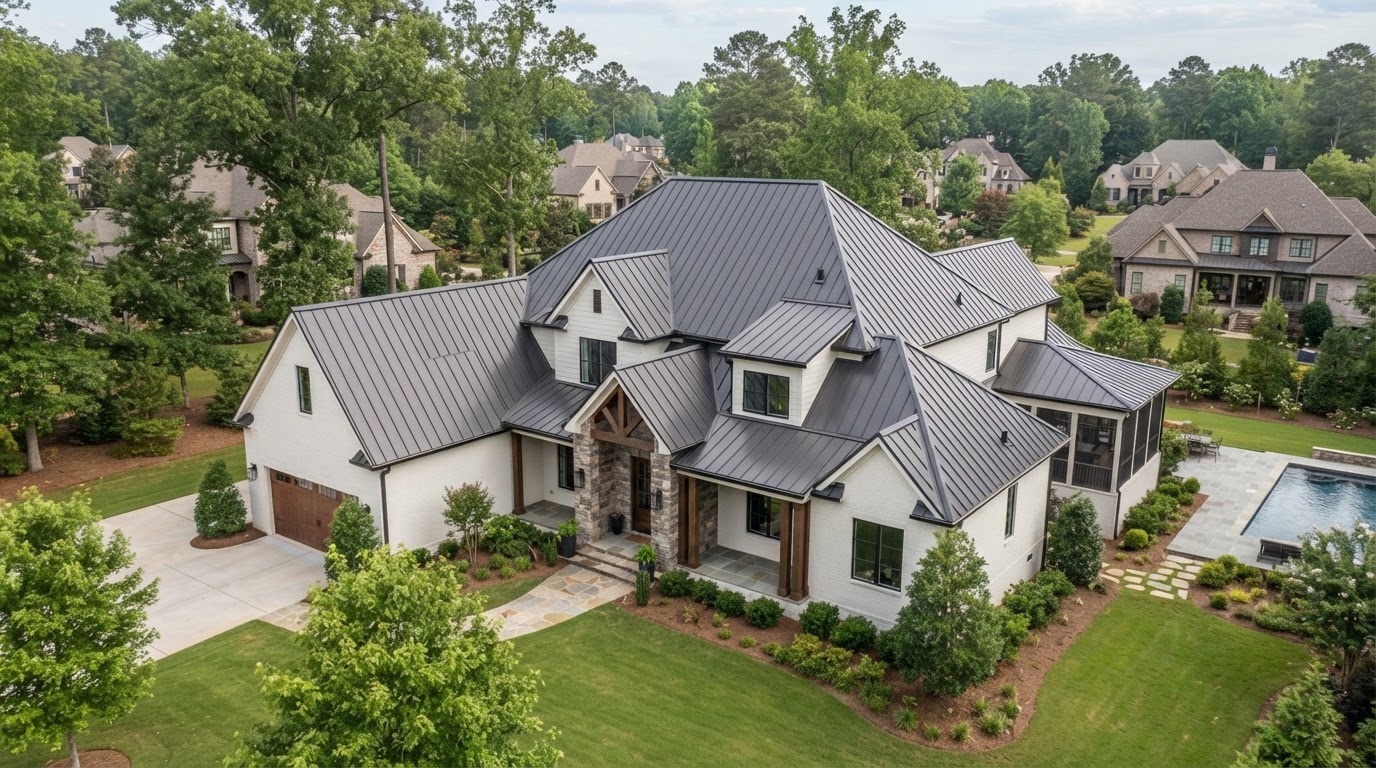
Types of Metal Roofing for Homes Near Montgomery
Standing Seam Metal Roofing
Concealed-fastener panels with raised seams that hide the attachment from view. A distinct vertical-seam appearance and a category that includes different proprietary clip and seam systems. See the standing seam page for installation-specific planning.
Standing Seam Metal RoofingExposed-Fastener Metal Roofing
Through-fastened panels where screws pass through the face of the panel into the substrate or framing. Common in 5V-crimp and R-Panel profiles with visible fastener patterns. See the exposed-fastener page for fastener and maintenance considerations.
Exposed-Fastener Metal RoofingStone-Coated Steel Roofing
Formed steel panels with a stone-granule surface that can resemble shingles, shakes, or tile. A different appearance and installation approach from painted standing seam. See the stone-coated steel page for profiles and installation considerations.
Stone-Coated Steel RoofingOther Metal Roofing Materials and Profiles
Steel, aluminum, and other substrates behave differently in corrosion, weight, and thermal movement. Panel widths, seam heights, and finishes vary by product. This page does not assert that any one material suits every property — suitability follows the roof and the product specifications.
What to Consider Before Installing a Metal Roof in Montgomery
A metal roof is an assembly attached to a structure. The roof's slope, the existing covering, the substrate, the panel profile, the fastening system, and the flashing at every transition all interact — and no single metal roof installs the same way as every other.
Roof structure
The framing and deck the panels attach to and whether they can support the system.
Existing covering
What is installed now, how many layers, and whether tear-off or overlay is appropriate.
Roof slope
Panel systems carry minimum-slope requirements that differ by profile and seam type.
Decking and substrate
Solid deck or skip-sheathing depending on the system, with structural condition verified.
Panel profiles
Width, seam height, and profile selected for the roof geometry and architectural intent.
Fastening systems
Concealed clips versus through-fasteners, each with different movement and maintenance behavior.
Underlayment
The separation layer between metal and substrate, selected for the system and slope.
Flashing
Valley, wall, eave, rake, and penetration flashing coordinated with the panel system.
Thermal movement
Metal expands and contracts; the system must accommodate movement without fastener or seam stress.
Ventilation
Attic ventilation that affects condensation and long-term performance.
Drainage and penetrations
How water leaves the roof and how vents, skylights, and chimneys are flashed.
Code and manufacturer instructions
Local code and the product's installation instructions govern the actual assembly.
This page describes planning considerations, not a universal installation specification. Actual slope, fastening, and flashing follow the selected system, the roof assembly, applicable code, and the manufacturer's instructions.
Comparing Metal Roofing Systems Near Montgomery
Standing Seam vs. Exposed-Fastener
Concealed clips hide the fasteners on standing seam; through-fasteners are visible on exposed-fastener panels. The difference affects appearance, how the panel accommodates thermal movement, and where maintenance attention is needed over time.
Steel vs. Aluminum
Steel is common and economical; aluminum resists corrosion differently and carries a different weight. Each has product-specific applications. This page does not prescribe one material for every property.
Metal Roofing vs. Asphalt Shingles
The two differ in appearance, maintenance, installation complexity, and project scope. Neither is universally better; the comparison depends on roof geometry, maintenance preference, and the existing assembly.
Painted Panels vs. Stone-Coated Steel
Painted standing seam has a smooth, linear finish; stone-coated steel carries a granule surface that can resemble shingles, shakes, or tile. Different finishes, textures, and roof appearances — not interchangeable looks.
What Affects Metal Roof Installation Cost in Montgomery?
Cost reflects roof geometry and area, the panel and material selected, flashings and penetration details, removal requirements, and access. This page does not publish a company price list — scope and cost are established through an inquiry and assessment. No metal roof is promised to be maintenance-free or to last a fixed number of years.
Metal Roofing Questions for Montgomery Homes
What types of metal roofing are available?
Common residential options include standing seam (concealed-fastener), exposed-fastener panels such as 5V-crimp and R-Panel, and stone-coated steel. Within each, panel widths, seam heights, substrates, and finishes vary by product.
How is standing seam different from exposed-fastener metal?
Standing seam attaches with concealed clips so fasteners are not visible; exposed-fastener panels are through-fastened with visible screws and sealing washers. The difference affects appearance, how the panel handles thermal movement, and where maintenance is needed over time.
Is metal roofing suitable for every home?
No. Suitability depends on roof slope, structure, the existing assembly, geometry, and the specific system. Some roofs are not candidates for a particular metal system; an evaluation against the actual roof is what confirms suitability.
Can metal roofing be installed over shingles?
An overlay can be possible, but it depends on local code, the number of existing layers, the condition of the assembly, the structure, and the manufacturer's requirements. This page does not promise universal eligibility — overlay is evaluated, not assumed.
What maintenance considerations apply to metal roofs?
Maintenance differs by system. Exposed-fastener roofs need fastener and washer review; standing seam attention centers on seams, clips, and flashing. Finish condition, drainage, and penetration flashing also matter. No metal roof is maintenance-free.
What affects metal roofing cost?
Roof area and complexity, the selected panel and substrate, flashings and penetration details, removal requirements, and access. This page does not publish prices; scope and cost are established through an inquiry and assessment.
How do steel and aluminum roofing materials differ?
Steel is common and economical; aluminum resists corrosion differently and carries a different weight and cost profile. Each suits certain applications. This page does not prescribe one material for every property — the right choice follows the roof and the product specifications.
Exploring Metal Roofing for Your Montgomery Home?
Share the roof's slope, the existing material, the property type, and what prompted the question. The right metal system follows the roof geometry, the substrate, and the compatible details — not a panel name alone. The standing seam, stone-coated steel, and exposed-fastener pages go deeper on each system.