Historic Home Roofing Montgomery
Roofing work on an older or historically significant home requires attention to the roof's condition, its architectural details, compatible materials, and any applicable preservation requirements. A thoughtful plan can address roofing performance while respecting the property's character. This page covers the roofing concerns common to older and historic Montgomery-area homes and how those projects are evaluated.
Historic Home Roofing Concerns in Montgomery
Older homes carry a roofing history. Materials may have been patched, replaced, or altered over decades, and the roof often includes details that newer construction does not — complex geometry, prominent chimneys, dormers, and traditional flashing. Understanding what is present is the first step in any repair or replacement plan.
Aging Roof Materials
Original or older coverings may be near or past their serviceable life. Aging shows up as brittle, cracked, or worn materials and as repeated small repairs that no longer hold.
Prior Repairs with Incompatible Products
Earlier fixes may have used roofing cement, mismatched shingles, or sealants that aged differently from the surrounding material. Those repairs can both cause and conceal problems.
Complex Roof Shapes
Hips, valleys, dormers, and multiple roof planes create more intersections and more places where flashing and transitions matter. Complexity also changes how a replacement is planned and priced.
Chimneys and Traditional Flashing
Older chimneys often have step flashing, counterflashing, and masonry conditions that need attention together. A chimney that has been repointed or relined affects how the roof flashing should be detailed.
Dormers and Valleys
Dormers introduce sidewall and roof-to-wall transitions; valleys concentrate water flow. Both are common leak paths on older homes and common places for prior patching to fail.
Built-In or Concealed Gutters
Some older homes use built-in or boxed gutters integrated into the roof edge. These systems can leak into the structure rather than overflowing visibly, and they require specific evaluation.
Historic Roof Ornaments and Edge Details
Decorative ridges, cresting, finials, or distinctive eave detailing contribute to the home's character. Any roofing scope should account for how those details are handled or matched.
Deteriorated Roof Decking
Decades of minor leaks can leave the decking or sheathing compromised. Decking problems are often concealed until the roof covering is removed and the substrate is exposed.
Not every older Montgomery home has slate, copper, clay tile, or standing seam metal. Material references here are examples of what may be present, and any specific product discussion has to stay tied to the actual property.
Planning Historic Roof Repairs Near Montgomery
A roofing project on an older or potentially historic property is evaluated carefully. The goal is to understand the existing roof, identify what is driving the concern, and determine whether repair, partial replacement, or full replacement fits the property and any review requirements that may apply.
1. Review Owner Concerns
The reported leaks, visible damage, and the owner's repair or replacement goals.
2. Identify Existing Materials and Details
Visible roof materials, profiles, flashing, chimneys, dormers, and edge details that define the roof's character.
3. Review Condition and Prior Alterations
Accessible roof condition and evidence of earlier repairs or material changes.
4. Assess Localized Repair Feasibility
Whether the problem can be addressed with a targeted repair or whether broader work is warranted.
5. Identify Character-Defining Elements
Roof features whose appearance, profile, or material contribute to the property's character.
6. Confirm Designation and Review Needs
Whether the property is in a historic district, individually designated, register-listed, or under a preservation easement, and what review that may require.
7. Evaluate Compatibility and Availability
Whether the existing or desired materials are available and compatible with the roof assembly.
8. Coordinate Scope and Specialists
The roofing scope and any specialist trades — masonry, metal, slate, or preservation — that the project may require.
9. Plan Around Architectural Details
Authorized work planned to respect existing architectural features and transitions.
10. Review and Document
Completed roofing work and relevant documentation the owner may want to retain.
Architectural conservation assessments and historic-preservation certification are specialized services. If a project calls for those, a provider with the appropriate qualifications should handle that scope. Specialized historical material work — particular slate, tile, or ornamental metal — may also require providers with specific expertise.
Historic Roofing Materials and Repair Options in Montgomery
Traditional Standing Seam Metal Roofing
Standing seam has a long history on residential roofs and may suit an older home. Profile, seam geometry, panel width, and finish all affect how closely a modern system mirrors a historic installation. Modern standing seam products do not automatically replicate historic detailing.
Slate Roofing
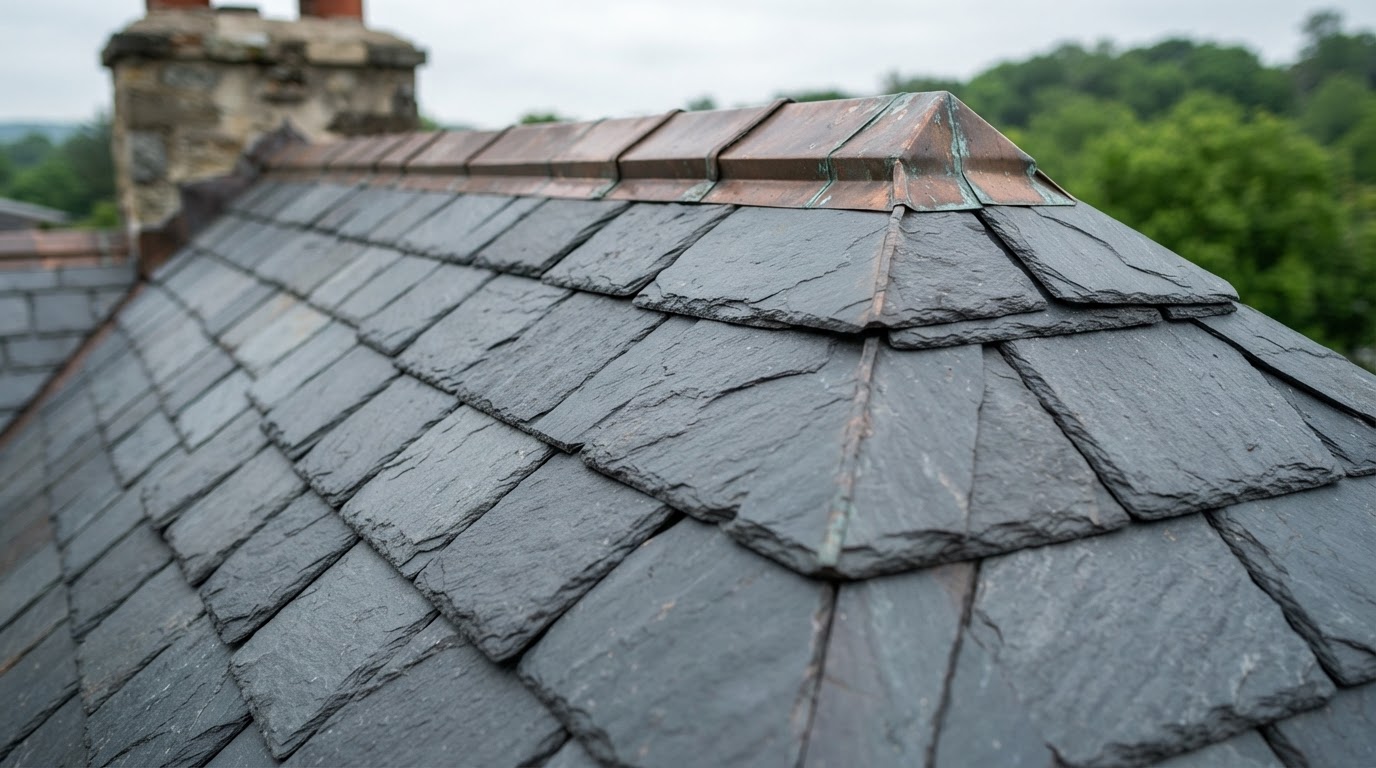
Natural slate may be present on some older homes. Evaluating slate means reviewing the condition of the slate units, fasteners, flashing, and substrate. Targeted slate repair can extend a serviceable roof. The Slate Roof Repair page covers that material in more detail, and broad slate-restoration capability should not be assumed without confirming expertise.
Asphalt Shingles on Older Homes
Many older houses have been reroofed with asphalt shingles over the years. Material selection and visual compatibility with the home's style remain considerations, and the underlying deck and flashing should be reviewed before any replacement.
Traditional Flashing Details
Chimneys, valleys, dormers, roof-to-wall intersections, and complex geometry all depend on flashing. On an older home, flashing may be metal, may have been patched repeatedly, and may need to be recreated to match the existing roof system.
Roof Decking and Concealed Conditions
Opening an older roof can reveal substrate or framing conditions — rot, modified framing, or earlier leak damage — that were not visible from outside. Those conditions can change the project scope and should not be assumed to be included in an initial quote.
Repair Versus Replacement
Where existing materials are serviceable and the failure is localized, retaining sound materials may better serve a preservation goal. Where materials are deteriorated or unsuitable, replacement is appropriate. The recommendation follows the actual condition, not a default preference.
Matching Historic Appearance
Roof shape, texture, color, visible profiles, and architectural detailing all contribute to how a roof reads on an older home. Matching them depends on product availability; an exact reproduction of an unavailable historical material cannot be guaranteed.
Modern Materials as Possible Alternatives
Modern roofing products may be compatible with an older home's appearance and performance. Whether a modern substitute is permitted on a protected property, however, depends on the applicable review process and should not be assumed.
Ventilation, Moisture, and Older Assemblies
Older building assemblies may not match modern ventilation or insulation assumptions. Changing ventilation, insulation, or moisture-management details on an older home can affect how the roof and the building behave, so those changes should be considered carefully rather than applied as a universal retrofit. There is no single ventilation or insulation prescription that fits every historic roof.
Checking Preservation Requirements for a Montgomery Property
Not every older Montgomery home is subject to historic-district review. These categories are not automatically equivalent, and the actual property has to be checked before stating that special approval applies:
- An older home that is simply aging — no special review by default.
- A property located within a designated local historic district.
- An individually designated historic property.
- A property listed on a state or national historic register.
- A property subject to a preservation easement or other specific restriction.
Where a property is regulated, the current City of Montgomery historic preservation and architectural review procedures should be confirmed, and local review distinguished from state or federal preservation programs. National Park Service preservation guidance may be relevant where applicable. This page does not promise approval of any proposed material or design, does not advertise historic-preservation tax incentives as automatically available, and does not claim completed historic-property projects without evidence. Definitive legal or permitting conclusions for a specific property require review against that property's actual status and current rules.
Historic Home Roofing Questions in Montgomery
Can a historic home receive a modern roofing material?
It depends on the property. On a non-regulated older home, a compatible modern material may be fine. On a designated or regulated property, the material may need to meet local or program review. Whether a modern substitute is permitted is a property-specific question that should be confirmed against the actual property's status and current rules.
Does every older Montgomery home need historic-district approval for roof work?
No. Age alone does not trigger review. Approval requirements apply to properties that are in a designated historic district, individually designated, register-listed, or under a preservation easement. A homeowner who is unsure of their property's status should confirm it before assuming review is or is not required.
Can a historic roof be repaired instead of completely replaced?
When the failure is localized and the surrounding materials are sound, a targeted repair can extend a serviceable roof and may better serve preservation. When materials are broadly deteriorated or unsuitable, replacement is appropriate. The recommendation follows the actual condition.
Is standing seam metal roofing appropriate for an older home?
Standing seam has a long residential history and may suit an older home's profile. The right panel profile, seam geometry, and finish depend on the roof and the property. Modern standing seam does not automatically replicate a historic installation.
What if the existing slate or traditional roofing material is difficult to match?
Matching depends on product availability, color, and profile. Targeted slate repair may be possible where the slate is sound. When a material is unavailable, a compatible alternative may be considered, subject to any applicable review. An exact reproduction of an unavailable material cannot be guaranteed.
Can roofing changes affect the appearance of a designated historic property?
Yes. Roof shape, material, color, and profile can all be character-defining. On a regulated property, changes that affect those features may require review before work begins. The property's actual designation and the applicable review process should be confirmed first.
What determines the cost of historic home roof repairs?
Roof size and complexity, the existing material, the condition of the decking and flashing, access, any specialist trades needed, and whether the property is subject to review. Concealed conditions found during the project can also affect scope. Costs are quoted after the roof is evaluated.
Discuss Historic Home Roofing in Montgomery
Share the property location, existing roof material, roof age if known, repair or replacement goals, historic designation status if known, and any architectural details of concern. Owners are not required to know their designation status before submitting an inquiry — that can be confirmed as part of the project.