
Roof Leak Repair Montgomery
A roof leak is a symptom, not a diagnosis. Water that appears on a ceiling or wall can travel along rafters, underlayment, or through flashing before it shows up inside — so the visible stain is rarely the actual entry point. This page covers how residential roof leaks are investigated, what components are usually involved, and what repair scope may follow once the source is understood.
What Can Cause a Roof Leak Near Montgomery?
Damaged or Missing Shingles
Wind-lifted, cracked, or deteriorated shingles expose the underlayment and deck to water. A single missing shingle does not always mean the roof leaks, but displaced materials in valleys, along ridges, or at roof edges often do.
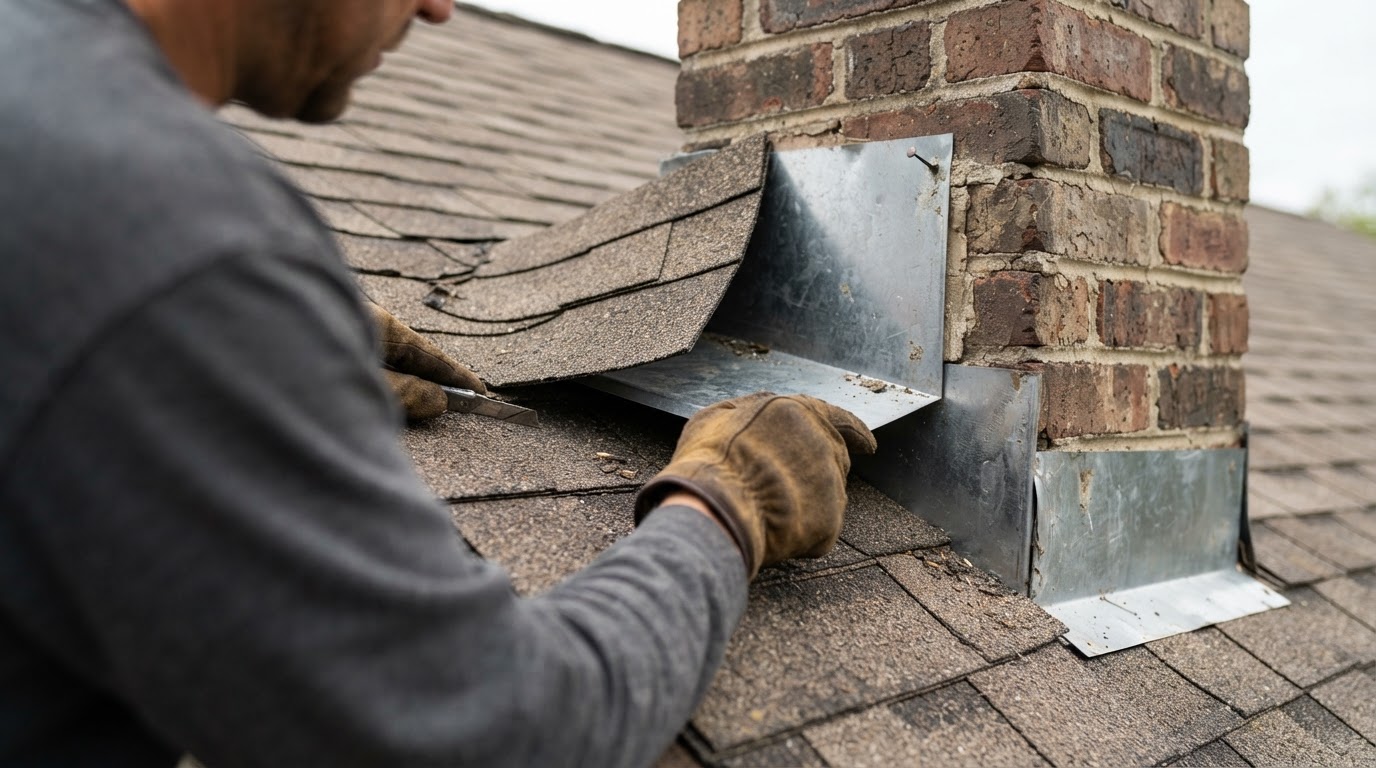
Flashing Problems
Transitions at chimneys, walls, valleys, skylights, and dormers rely on flashing to direct water away from joints. Loose, corroded, or improperly installed flashing is one of the most common leak sources on residential roofs.
Roof Penetrations
Plumbing vents, exhaust pipes, satellite mounts, and other penetrations create holes through the roof covering. The boots, collars, and flashing around those penetrations age and fail over time.
Skylight-Related Leaks
Leakage near a skylight may involve the glazing, the curb flashing, the surrounding shingles, or the skylight frame itself — not always the skylight unit. Assuming the skylight is defective can miss the real entry point.
Low-Slope Roof Problems
On low-slope or flat residential sections, seams, drains, and membrane edges are common leak sources. Ponding water and clogged drains accelerate membrane deterioration and can push water under flashing.
Storm-Related Roofing Damage
Wind-driven rain, debris impacts, and hail can damage roofing materials and create entry points that only leak during certain conditions. Storm-related leaks may appear long after the weather event that caused them.
How Roof Leak Sources Are Evaluated in Montgomery
Finding the source of a roof leak is a process of elimination that combines interior observations with exterior review. The goal is to trace water back to its entry point, not just to the stain it left behind.
Review when leaks occur
Whether water appears only during rain, only during wind-driven rain, or continuously — timing narrows the source.
Examine interior symptoms
Ceiling stains, damp insulation, and water trails that may indicate the path water took through the assembly.
Consider weather conditions
Wind direction, rain intensity, and temperature swings that may correlate with when the leak appears.
Review accessible roof components
Shingles, flashing, penetrations, valleys, and edges visible from the ground or a safe vantage point.
Evaluate flashing
Step, counter, valley, and penetration flashing for gaps, corrosion, or displacement.
Check roof penetrations
Pipe boots, vent collars, and skylight curbs for seal failure or movement.
Consider roof slope and drainage
Low-slope sections, valleys, and areas where water can collect or slow down.
Identify concealed deterioration
Decking, underlayment, or framing damage that may not be visible without targeted inspection.
Leak investigation can require more than visual inspection. Some sources only become apparent after targeted review of specific components, and concealed damage may need invasive investigation to confirm. The source is not always identifiable on the first visit.
Roof Leak Repair Options for Montgomery Homes
Localized shingle repairs
Replacing damaged or displaced shingles in the affected area when the surrounding roof is sound.
Flashing repairs
Reworking or replacing flashing at the transition or penetration identified as the leak source.
Roof penetration repairs
Restoring seals around vents, pipes, and skylights where the boot or collar has failed.
Ridge or valley component work
Repairing ridge caps, valley flashing, or edge details that direct water off the roof.
Appropriate membrane repairs
On low-slope sections, addressing seams, patches, or drainage issues in the membrane.
Temporary protection when warranted
Short-term measures to reduce water entry while a permanent repair is planned.
Roof replacement evaluation
When deterioration is extensive, leaks recur, or the assembly has reached the end of its service life.
Temporary Leak Protection vs. Permanent Roof Repair
Stopping visible water with a bucket, towel, or temporary patch is not the same as repairing the roofing component that failed. Temporary measures reduce damage while the source is investigated and a durable repair is planned — they do not replace it.
When Repeated Roof Leaks May Require a Broader Assessment
A roof that leaks in multiple locations, leaks after every storm, or leaks despite repeated repairs may have widespread deterioration that a localized repair will not solve. In those cases, a full roof condition assessment helps determine whether replacement is more appropriate than continued spot repairs.
Roof Leak Repair Questions for Montgomery Homes
What are common causes of roof leaks?
Damaged or missing shingles, failed flashing at transitions and penetrations, worn pipe boots, skylight flashing problems, low-slope membrane seams, and storm-related damage. The cause depends on where the water enters and the roof's construction.
Can a roof leak be repaired without replacing the entire roof?
Yes, when the damage is localized and the surrounding roof is sound, a targeted repair of the failed component — a flashing detail, a few shingles, or a penetration seal — can resolve the leak without full replacement.
Why does water appear far from the damaged area?
Water can travel along rafters, underlayment, or through flashing before it appears inside. The visible stain is often downstream of the actual entry point, which is why tracing the source matters more than treating the stain.
Can flashing cause ceiling leaks?
Yes. Flashing at chimneys, walls, valleys, and penetrations is one of the most common leak sources. When flashing loosens, corrodes, or was installed incorrectly, water enters at the joint and can travel into the ceiling below.
What should I do if water is entering during a storm?
Contain the water with buckets or towels, move belongings away from the area, and document what you observe safely from inside. Avoid climbing onto the roof during a storm. Once conditions are safe, a professional assessment can identify the source and appropriate repair.
Can an old roof develop multiple leaks?
Yes. As roofing materials age, multiple components can fail independently — flashing, shingles, penetrations, and underlayment can each deteriorate over time, producing leaks in different areas that may not share a single cause.
When should I consider roof replacement?
When leaks recur across multiple areas, repairs no longer hold, the roof covering is at or past its expected service life, or an inspection reveals widespread deterioration, replacement may be more cost-effective than continued repairs.
Dealing With a Roof Leak Near Montgomery?
Describe when the leak appears, where the water shows up inside, and what you can see from the ground. The more specific the timing and location, the more useful the inquiry is for tracing the source and planning the right repair.