
Shingle, Metal & Commercial Roofing Montgomery County
This page covers roofing across the broader Montgomery County area — not a second Montgomery city page. The homepage already serves the city; here the focus is the county's varied property types and jurisdictions: residential shingle roof replacement, metal roofing, roof leak repairs, storm-related roof assessments, commercial TPO and low-slope systems, agricultural and detached-building roofing where appropriate, roof flashing and drainage, and roofing project planning across different local authorities. Property types vary between urban, suburban, and less densely developed parts of the county, and no single permit rule applies to every property — the City of Montgomery, the Town of Pike Road, and unincorporated county areas each carry their own considerations. The applicable authority is confirmed per parcel through current official sources before any permit rule is stated as definite. No branch office, map pin, or completed project history is implied.
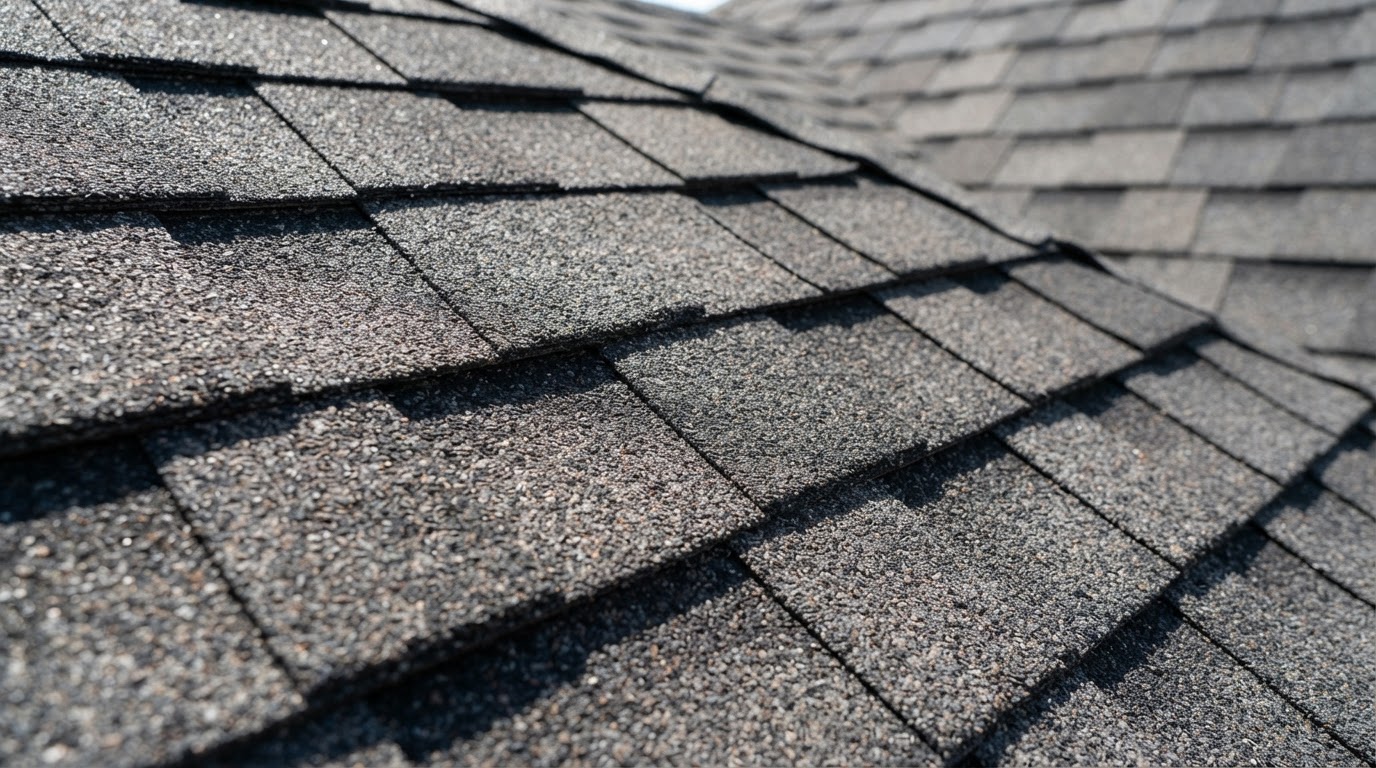
Residential Roof Repair and Replacement in Montgomery County
Shingle repair and replacement, standing-seam and exposed-fastener metal, commercial TPO and low-slope systems, drainage and penetrations, storm assessment, and detached-building roofing.
Residential Roof Replacement
A full re-roof evaluates existing layers, decking, underlayment, flashing, valleys, and ventilation before a new shingle system is installed.
Learn moreRoof Leak Repair
Water entry is traced to the likely source — flashing, penetration, valley, or drainage — rather than assumed from an interior stain.
Learn moreStanding-Seam Metal Roofing
Concealed-fastener standing seam selected against roof slope, style, and compatibility with the existing assembly.
Learn moreExposed-Fastener Metal Systems
Through-fastened panels need washer, fastener, and seal inspection as they age — evaluated separately from standing seam.
Learn moreCommercial TPO Roofing
Low-slope commercial buildings may call for TPO or other membrane systems, evaluated against the building and confirmed scope.
Learn moreCommercial Roof Repair
Commercial repairs address membrane seams, drainage, penetrations, and rooftop equipment specific to the building.
Learn moreStorm Damage Assessment
Post-storm documentation supports the owner's insurance process without promising claim approval or deductible reimbursement.
Learn moreBarn & Agricultural Roofing
Roofing, reroofing, drainage, and maintenance for qualifying detached and agricultural-type structures — not new building construction.
Learn moreCommercial TPO Roofing Throughout Montgomery County
Property types vary across the county — urban, suburban, and less densely developed — and roofing needs follow what the specific building shows, not a uniform assumption.
Montgomery County spans a range of property types. Inside the City of Montgomery the building stock is denser and more commercial; in suburban areas and the Town of Pike Road, residential neighborhoods and newer construction predominate; and in unincorporated communities like Hope Hull, Pintlala, and Mathews, rural residential properties and detached structures are more common. Roofing needs follow what the specific building shows — its slope, existing materials, flashing, penetrations, ventilation, drainage, and exposure — not a uniform assumption that every property shares the same age, condition, or design.
Commercial roofing and residential roofing are not the same work. A low-slope commercial roof is evaluated for the membrane, seams, penetrations, rooftop equipment curbs, drains or scuppers, flashing, insulation, and substrate — not with the steep-slope shingle methods used on a residence. How membrane seams and transitions affect water resistance, why localized commercial repairs need system compatibility, and why existing insulation and substrate conditions matter are part of the evaluation. On the residential side, architectural shingles and metal are compared on their merits — appearance, budget, slope suitability, and maintenance — and the two metal systems (standing-seam and exposed-fastener) are treated as distinct, with different installation methods and upkeep.
For qualifying detached and agricultural-type structures, the discussion stays on roofing, reroofing, drainage, and maintenance — not new building construction. The roof system for a primary residence, a workshop, and a barn may differ, and material selection depends on the structure's slope, framing, substrate, and use. No property is assigned a storm-damage history without a verified event, and no community is described as uniformly old, newly built, or storm-affected.
County-wide, not one-size-fits-all
Roofing Assessments for Residential and Commercial Properties in Montgomery County
From the initial inquiry through scope review, material selection, scheduling, and documentation — with response times and completion kept conditional.
1. Describe the Property and Concern
The roofing problem, the property location within the county, whether the property is residential or commercial, the roof material if known, and any occupancy or access notes.
2. Arrange an Assessment
An appropriate roof assessment is arranged, subject to availability — not promised as same-day or free.
3. Evaluate the Roof System
On a low-slope commercial roof: the membrane, seams, penetrations, drains, flashing, insulation, and substrate. On a residence: the covering, flashing, valleys, drainage, and decking.
4. Identify the Actual Source
The visible evidence is traced to the likely entry point rather than assumed from an interior stain — a chimney, valley, pipe-boot, or roof-to-wall transition.
5. Weigh Repair and Replacement
A localized defect may be repairable; widespread deterioration, repeated leaks, or soft decking may favor replacement. Coatings, recover, and replacement are kept distinct.
6. Review Materials and Compatibility
Architectural shingles, standing-seam metal, and exposed-fastener metal are compared on the roof's actual slope, style, and substrate — and commercial repairs match the surrounding system.
7. Prepare a Written Scope
A written scope reflects the actual findings — including any commercial membrane, drainage, or penetration work — rather than a generic package.
8. Approvals, Work, Closeout
Permit and jurisdiction are verified for the parcel; work is performed in keeping with the agreed scope, followed by cleanup and maintenance guidance.
No free-inspection or fixed-response promise
Understanding County and Municipal Roofing Requirements
Exact parcel location matters — the City of Montgomery, the Town of Pike Road, and unincorporated county areas each carry their own considerations, confirmed per parcel through current official sources.
Montgomery County contains more than one permitting authority. A property inside the City of Montgomery, a property inside the Town of Pike Road, and a property in an unincorporated part of the county may each fall under a different set of requirements. Whether a given roofing project requires a permit, inspection, or other approval depends on the work's scope and the specific property's jurisdiction — and the applicable authority is confirmed per parcel through current official sources before any permit rule is stated as definite. A county-level statement does not override a municipality's requirements or another applicable authority.
For commercial projects, coordination goes with that: occupied buildings, customer and employee access, rooftop equipment, material staging, parking, and scheduling that limits disruption without promising zero business interruption. For residential properties, repair-versus-replacement follows what the specific roof shows — a localized defect with sound neighbors may be repairable; widespread deterioration, repeated leaks, or soft decking may favor replacement. Property owners are not directed onto damaged or unsafe roofs; safe observation from the ground and documentation of visible conditions are appropriate, and an assessment is arranged subject to availability rather than promised as same-day or free.
Roofing Considerations Across Montgomery County, Alabama
Residential and commercial roofing across the county, municipal and outlying jurisdictions, and choosing roofing services based on the specific property's needs.
Residential and Commercial Roofing Across the County
Montgomery County spans a range of building types and densities, and roofing across the county follows the building rather than the address. Inside the City of Montgomery, commercial stock and established neighborhoods carry one set of roof configurations; in suburban areas and the Town of Pike Road, newer residential construction predominates; and in unincorporated communities such as Hope Hull, Pintlala, Mathews, Ramer, and Mount Meigs, residential properties and qualifying detached structures are more common. Architectural shingles suit steep-slope residential roofs where the slope and style fit, while standing-seam or exposed-fastener metal is considered where the geometry and the owner's preference suit it — each a distinct system with its own fastening and upkeep, never treated as interchangeable. For qualifying low-slope commercial buildings, the evaluation turns to the appropriate membrane, its seams, drainage, and rooftop equipment rather than shingle standards. No material is described as universally superior, and the recommendation weighs roof slope, the existing assembly, appearance, and budget. The roof replacement and commercial roofing pages describe how each system is compared.
Roofing in Municipal and Outlying Areas
A roofing project's requirements can differ depending on whether a parcel sits inside an incorporated municipality or in an unincorporated part of the county. A property inside the City of Montgomery, a property inside the Town of Pike Road, and a property in an unincorporated community may each fall under a different set of rules, and the applicable authority is confirmed per parcel through current official sources before any permit rule is stated as definite. For unincorporated properties, longer access routes, larger lots, or detached workshops and qualifying agricultural-type structures can influence how a project is planned — but only when those conditions actually apply to the parcel, not as a uniform assumption that every outlying property is rural, agricultural, or difficult to reach. No branch office, map pin, or completed project history is implied for any community.
Choosing Roofing Services Based on Property Needs
The right roofing service follows what the specific roof shows rather than a blanket recommendation. A localized defect — a few damaged shingles or one flashing leak — may be repairable when the surrounding material is sound and compatible, while widespread deterioration, repeated leaks across separate areas, or soft decking favor replacement. Roof drainage, gutter performance, and flashing at vents, chimneys, and roof-to-wall transitions are evaluated together because water entry often originates at transitions rather than in the field of the roof. Material selection weighs the roof's actual slope, the existing substrate, appearance, and the maintenance an owner is prepared to keep up — and for a Pike Road or Hope Hull property alike, the scope is built from the roof and the jurisdiction it actually falls under, not from a borrowed rule or a county-wide assumption.
Roofing Questions About Montgomery County
County-wide questions on coverage, shingle replacement, standing-seam metal, repair decisions, commercial TPO, storm documentation, unincorporated-area roofing, and the correct permit authority.
Does this page cover Montgomery city, or only the county outside the city?
This page covers the broader Montgomery County area, including the City of Montgomery, the Town of Pike Road, and unincorporated communities such as Hope Hull, Pintlala, and Mathews. The homepage already serves the city-focused target, so this page adds county-wide coverage and jurisdiction guidance rather than duplicating the city page. For a specific property, the applicable authority is confirmed per parcel.
When does a Montgomery County roof need replacement rather than repair?
A localized defect — a few damaged shingles or one flashing leak — may be repairable when the surrounding material is sound and compatible. Widespread shingle deterioration, repeated leaks across several areas, soft decking, or multiple existing layers often favor replacement. The decision follows what an on-site assessment of the specific roof actually shows, not a fixed rule or an assumption that damage always means full replacement.
Is standing-seam metal roofing a good option for Montgomery County homes?
Standing-seam panels use concealed clips and a folded seam that hides the fasteners and allows thermal movement. They are one option among several, selected against the roof's slope, the existing substrate, appearance preferences, and maintenance expectations — and compared with architectural shingles and exposed-fastener metal on those merits, not as a universal default. Metal is not noise-free or maintenance-free.
How are roof repair decisions made for unincorporated county properties?
Repair-versus-replacement follows what the specific roof shows — a localized defect with sound neighbors may be repairable; widespread deterioration, repeated leaks, or soft decking may favor replacement. Unincorporated county properties are evaluated the same way any roof is: by the covering, flashing, valleys, drainage, and decking the building actually has. The jurisdiction question is separate and confirmed per parcel.
What does a commercial TPO roof repair involve in Montgomery County?
A low-slope commercial inspection looks at the TPO membrane, seams, penetrations, rooftop equipment curbs, drains or scuppers, flashing, insulation, and any ponding or previous repairs. The goal is to identify the actual source of a concern — a leak at a rooftop unit is not the same as a seam defect — so the scope reflects the building rather than a generic repair. A localized repair that does not match the surrounding membrane or assembly is not a durable fix.
Can storm damage documentation help with an insurance claim?
Post-storm documentation records the visible conditions the roof actually shows and can support the owner's insurance process. It does not promise claim approval, deductible reimbursement, or a specific settlement. No property is assigned a storm-damage history without a verified event, and the insurer's decision is the insurer's to make.
How is roofing handled for detached or agricultural-type structures in the county?
For qualifying detached and agricultural-type structures, the discussion stays on roofing, reroofing, drainage, and maintenance — not new building construction. The roof system for a primary residence, a workshop, and a barn may differ, and material selection depends on the structure's slope, framing, substrate, and use. Not every detached structure qualifies for the same roofing system.
How do I confirm the correct permit authority for a Montgomery County property?
Montgomery County contains more than one permitting authority. A property inside the City of Montgomery, inside the Town of Pike Road, or in an unincorporated area may each fall under different requirements. The applicable authority is confirmed per parcel through current official sources before any permit rule is stated as definite — a county-level statement does not override a municipality's requirements or another applicable authority.
Montgomery County Coverage and Related Communities
An accurate county orientation and links to completed community and service pages.
Montgomery County covers the City of Montgomery, the Town of Pike Road, and unincorporated communities such as Hope Hull, Pintlala, and Mathews. This page describes county-wide roofing considerations — it does not represent a branch office, and no map pin, fabricated boundary, or completed project history is implied. For Montgomery city coverage, the homepage serves that target; this page covers the broader county. Nearby completed service areas are linked only where the geographic relationship is genuine.
Regional coverage context only · Montgomery County · not a contractor office or fabricated boundary
Request a Roofing Quote Throughout Montgomery County
Share the property location within the county, the roofing concern, whether the property is residential or commercial, and any occupancy or access notes. An assessment documents the visible conditions, weighs repair against replacement, separates a low-slope commercial evaluation from a residential shingle scope, and confirms the applicable authority for the specific parcel — City of Montgomery, Town of Pike Road, or unincorporated county — without inventing a project the company has not verified or a permit rule the property does not have.