
Emergency Roof Tarping Montgomery
When a roof covering is suddenly damaged — by wind, a fallen limb, or debris — temporary tarping may be considered to reduce further water entry while the full scope is assessed and permanent repairs are planned. This page explains when temporary protection may be appropriate, what it can and cannot do, and the safety considerations that come with storm-damaged roofs. It is an informational resource, not a promise of immediate dispatch.
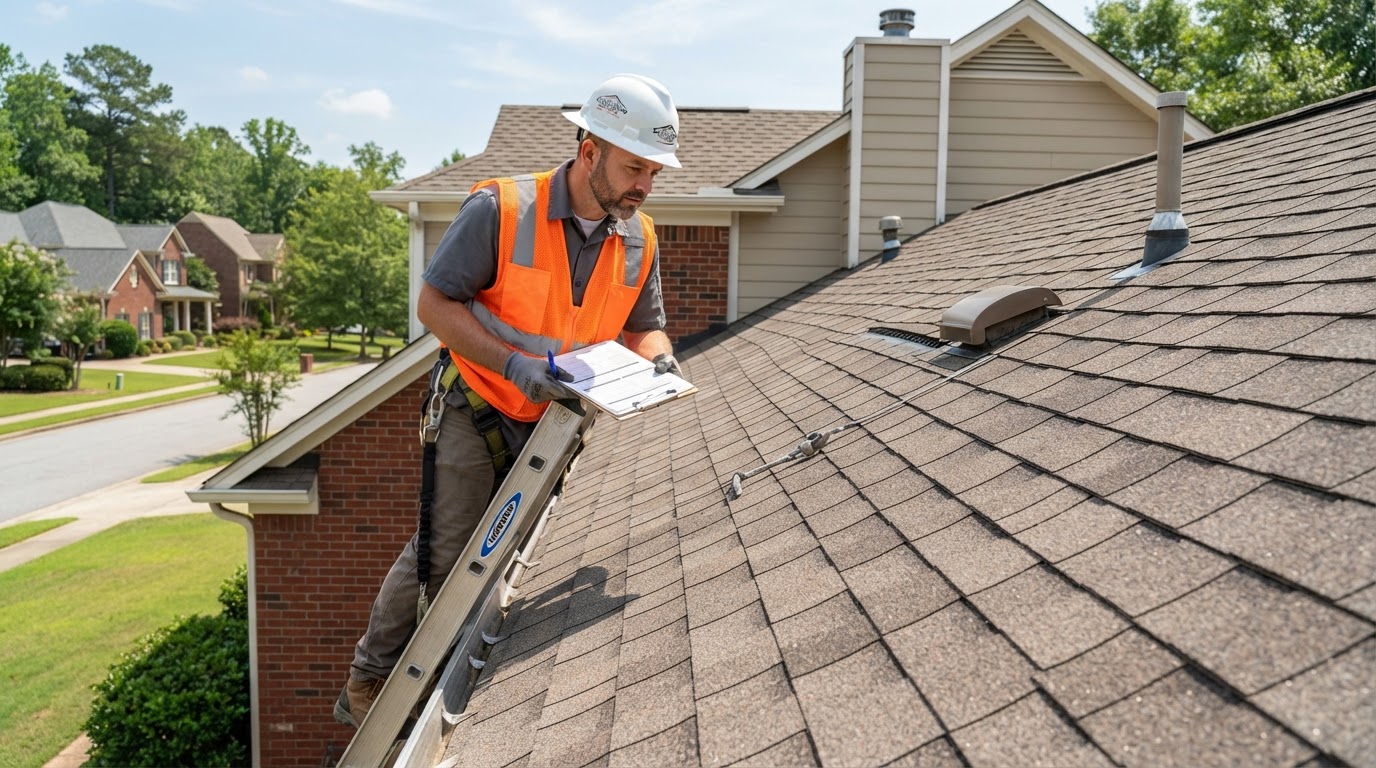
Roof Damage That May Require Temporary Protection Near Montgomery
Missing or Displaced Roofing Materials
Wind can lift shingles or panels off the roof, exposing the underlayment and deck to rainfall. The larger the exposed area, the more urgent the need for temporary cover.
Fallen Trees and Debris
A tree or large limb on the roof may have damaged the covering and the structure beneath it. Debris removal and structural evaluation usually come before tarping.
Storm-Related Openings
Hail, wind, or flying debris can puncture roofing materials or break flashings, creating entry points that only leak during the next rain.
Active Water Entry
When water is already entering the building, temporary protection can reduce additional damage to insulation, drywall, and interior finishes while repairs are organized.
Roof Damage Before Permanent Repairs
When a full assessment or permanent repair cannot happen immediately, temporary cover can buy time — but only if the roof is safe to access and the structure is stable.
Tarping is not appropriate in every situation. It depends on safe access, remaining structural stability, and whether the damage can reasonably be covered while a permanent repair is planned.
What to Consider After Sudden Roof Damage in Montgomery
Safety comes first. A damaged roof can hide structural problems that are not visible from the ground, and storm conditions can make access hazardous.
Stay away from sagging or unstable sections
A sagging roof may indicate structural or decking damage that could collapse under weight. Do not walk on it.
Avoid damaged electrical equipment
Storm damage can involve downed power lines or compromised service entry. Treat any contact with metal near electrical service as a hazard.
Do not climb onto storm-damaged roofs
Wet surfaces, wind, and hidden damage make storm-damaged roofs dangerous to walk on, even for inspection.
Avoid unstable trees and structures
Standing beneath damaged trees, overhanging limbs, or compromised structures risks secondary injury.
Contact emergency authorities when there is immediate danger
Downed power lines, gas odors, structural collapse, or injuries require emergency services, not a roofing assessment.
Document visible conditions from a safe location
Photos from the ground or a safe vantage point help with insurance and repair planning without risking personal access.
Seek appropriate professional assessment
A qualified roofing professional can determine whether tarping is safe, what the damage involves, and what permanent repair will require.
What Temporary Roof Tarping Can and Cannot Do
Short-term weather protection
A properly secured tarp can shed rain away from the damaged area for a limited period.
Limitations during severe weather
High wind, heavy debris, or continued storms can dislodge or tear a tarp, especially on a compromised roof.
Dependence on existing roof condition
Tarping requires a surface and anchor points that can hold the cover without causing additional damage.
Attachment and access considerations
Securing a tarp safely requires access that does not endanger the person installing it or the structure below.
Remaining leak risks
A tarp reduces but does not eliminate water entry — wind-driven rain, seams, and edges can still allow some water through.
Need for follow-up evaluation
Temporary protection is a bridge to a permanent repair, not a replacement for assessing the full scope of damage.
Why Roof Tarping Is Not a Permanent Roofing Solution
A tarp is a temporary cover, not a roof. It does not restore the damaged shingles, flashing, decking, or structural components that failed. It buys time — it does not resolve the underlying damage or stop deterioration that may already be underway beneath it.
Planning Repairs After Temporary Roof Protection
Once the roof is temporarily protected, the damaged shingles, decking, flashing, penetrations, and surrounding materials need a full assessment. The repair or replacement plan follows the actual condition found, not just the visible opening. Insurance coverage for tarping and repairs depends on the policy and the claim determination.
Emergency Roof Tarping Questions for Montgomery Homes
When might emergency roof tarping be appropriate?
When a roof covering has been suddenly damaged by wind, debris, or a fallen limb and the property is exposed to additional rainfall, and the roof is safe to access, temporary tarping may be considered while permanent repairs are planned.
Is roof tarping a permanent repair?
No. Tarping is a temporary measure to reduce further water entry. It does not restore the damaged roofing materials, flashing, decking, or structure. A permanent repair or replacement is still required.
Can a tarp prevent all water intrusion?
No. A tarp reduces water entry but does not eliminate it. Wind-driven rain, seams, edges, and the condition of the roof beneath the tarp can still allow some water through, especially in severe weather.
Is it safe to tarp a storm-damaged roof myself?
Climbing onto a storm-damaged roof is hazardous. Wet surfaces, hidden structural damage, wind, and electrical hazards make DIY tarping dangerous. Temporary protection is best handled by someone qualified to assess whether the roof is safe to access.
What if a fallen tree damaged the roof?
A fallen tree may involve both the roof covering and the structural framing beneath it. Debris removal and a structural evaluation usually come before any tarping or repair planning, and the situation may require emergency services if there is immediate danger.
What happens after temporary roof protection?
The damaged area needs a full assessment — shingles, decking, flashing, penetrations, and surrounding materials — to determine the permanent repair or replacement scope. Temporary protection is a bridge, not an endpoint.
Does insurance cover emergency roof tarping?
Coverage depends on the policy and the claim determination. Some policies include temporary mitigation as part of a covered loss; others do not. The insurer, not the roofing contractor, determines what is reimbursable under the policy.
Concerned About Sudden Roof Damage Near Montgomery?
Describe what happened, what you can see from a safe location, and whether water is entering the building. An inquiry that includes the event, the visible damage, and the timing helps determine whether temporary protection is appropriate and what the next step should be.