
Chimney Flashing and Chimney Caps Montgomery
Water appearing near a chimney does not always originate from the chimney itself. Roof flashing, adjoining shingles, the chimney exterior, and related drainage details may all need attention. This page covers chimney-specific flashing repair, cap selection, and how chimney-area roof work is evaluated — without claiming this business performs chimney sweeping, masonry rebuilding, or flue certification.
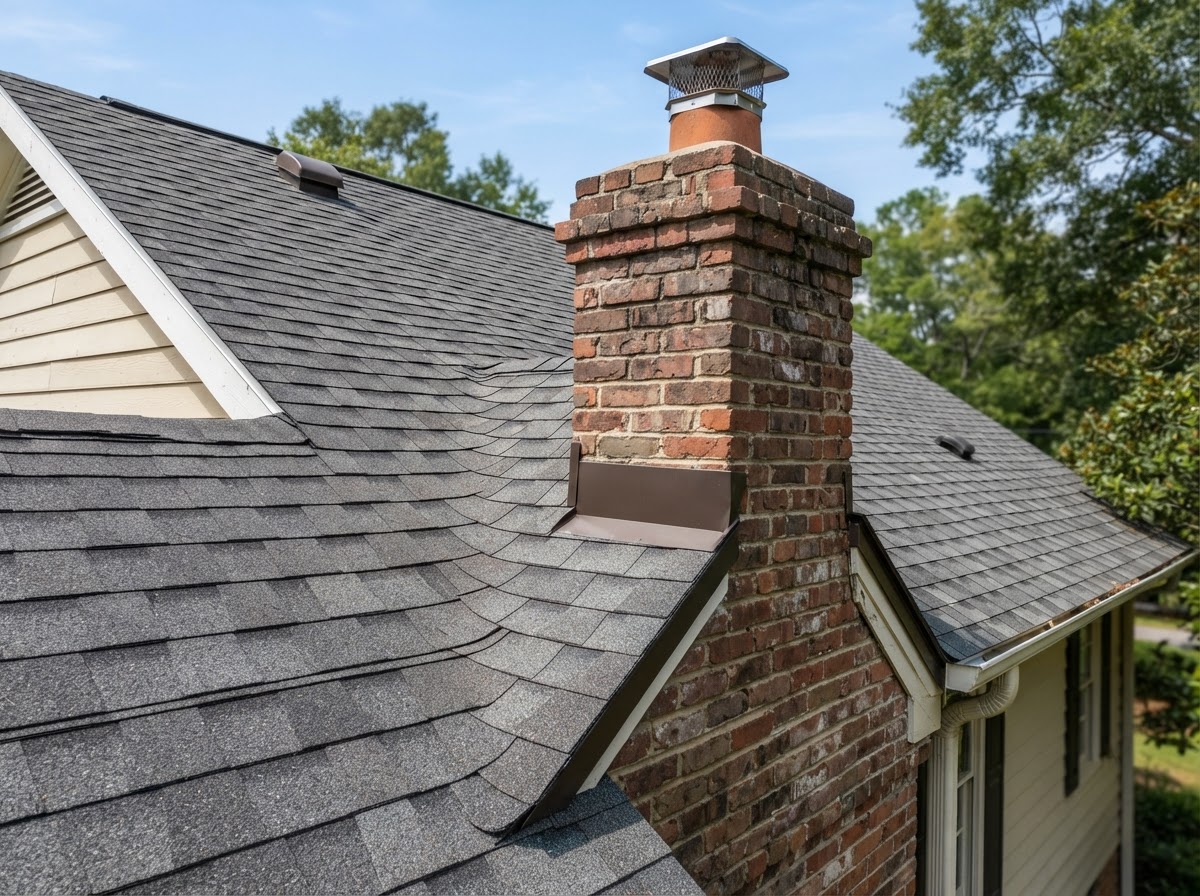
Chimney Flashing Problems in Montgomery Homes
Separation at the Roof-to-Chimney Transition
Step flashing and counterflashing can pull away from the chimney or roof deck as materials expand and contract with temperature changes, creating an open path for water at the joint.
Aging or Displaced Step Flashing
Step flashing installed in courses up the chimney can corrode, lift, or slip out of position over time. When a step loses its overlap with the course below, water gets behind the flashing.
Counterflashing Failures
Counterflashing covers the top edge of the step flashing from the masonry side. If it loosens or corrodes, water runs down behind the step flashing and into the building.
Roof Covering Changes That Disturb Flashing
A roof replacement or repair that does not re-integrate the existing chimney flashing can leave the transition unsealed. New shingles or panels must tie back into the chimney detail correctly.
Deteriorated Sealant or Prior Patching
Roof cement, mastic, or caulk applied at the chimney in past repairs can dry, crack, or fall out. These materials are secondary seals — when they fail, the primary flashing is exposed.
Water Collection Behind Wide Chimneys
A chimney wider than about 30 inches on the upslope side can collect runoff that the flashing alone may not redirect. A cricket or saddle may be needed to divert water around the chimney.
Wind-Driven Rain at the Intersection
Even sound flashing can be overwhelmed by wind-driven rain that pushes water up under the counterflashing or behind the step flashing at the chimney wall.
Masonry, Crown, or Cap Concerns
Cracked chimney masonry, a deteriorated crown, or a failed chase cover can allow water into the chimney structure itself — a different problem from roof flashing that may require a chimney professional.
A ceiling stain near a fireplace is not definitive proof of failed flashing. Roof leaks, masonry cracks, condensation, and plumbing leaks can all produce similar symptoms. The source is identified through investigation, not appearance alone.
How Chimney Flashing Repair Near Montgomery Is Evaluated
Chimney-area roof work follows a conditional sequence. Not every step is needed on every project, and some conditions only become apparent after the flashing or surrounding roofing is exposed.
1. Collect leak history
When the water appears, how often it recurs, and whether it correlates with wind direction or rain intensity.
2. Review roof and chimney interface
The roof covering, step flashing, counterflashing, and chimney exterior visible from a safe vantage point or accessible roof area.
3. Distinguish roofing from masonry
Whether the water is entering through the roof flashing or through the chimney masonry, crown, or cap — different trades and scopes.
4. Examine flashing details
Step flashing courses, counterflashing, apron, back pan, and any cricket where the chimney width and roof geometry warrant one.
5. Evaluate adjoining roofing
Whether the shingles, metal panels, or membrane around the chimney must be disturbed or replaced to do the flashing repair correctly.
6. Discuss the repair plan
Materials, metal compatibility, scope, whether a chimney professional is needed for masonry or cap work, and project timing.
7. Complete authorized work
Execute the agreed scope, integrate the flashing with the surrounding roofing, and review accessible finished details.
Water testing may be used as a diagnostic technique when safe, appropriate, and within the verified provider scope — it is not a universal requirement for every chimney-area inquiry.
Chimney Flashing and Cap Options in Montgomery
Step Flashing and Counterflashing
L-shaped step flashing is installed in courses up the chimney where the roof slope meets the masonry. Counterflashing covers the top edge of the step flashing from the wall side. Both must be compatible with the roof covering and the chimney material.
Front Aprons, Back Pans, and Crickets
Aprons and back pans carry water down the upslope side of the chimney. A cricket or saddle diverts water around a wide chimney when roof geometry, code, or manufacturer requirements make one appropriate — not every chimney needs one.
Corrosion and Metal Compatibility
Flashing metal must be compatible with the roof covering, fasteners, and the chimney. Dissimilar metals in contact can cause galvanic corrosion. Localized repair is reasonable when the surrounding metal is sound.
Chimney Caps vs. Chimney Flashing
A chimney cap covers the flue opening to keep rain, debris, and animals out. It is not the same as roof-to-chimney flashing, which seals the joint between the roof and the chimney exterior.
Flue Caps, Chase Covers, and Crowns
Flue caps cover individual flue openings. Chase covers seal prefabricated chimney chases. Masonry crowns cap the top of a brick chimney. These are distinct products with distinct requirements.
Roof Replacement Coordination
When the roof around a chimney is replaced, the existing flashing must be assessed — not automatically reused or discarded. New flashing must integrate with both the new roof covering and the existing chimney.
Cap Selection Requires a Qualified Professional
Chimney cap draft, venting, spark-arresting, and appliance compatibility requirements must be handled by appropriately qualified professionals. This page does not confirm that this business performs chimney sweeping, masonry rebuilding, gas-appliance servicing, or flue certification. Any chimney-cap installation or specialized chimney work must be confirmed as an available and appropriately qualified service before being advertised.
Chimney Flashing Questions From Montgomery Homeowners
Why does my roof leak near the chimney only during heavy rain?
Wind-driven rain can push water behind counterflashing or up under step flashing at the chimney wall. Heavy rain also exposes gaps that lighter rain does not reach. The leak near the chimney usually points to the flashing detail, not the chimney itself.
Can chimney flashing be repaired without replacing the entire roof?
Yes. When the flashing detail has failed but the surrounding roof covering, underlayment, and decking are sound, the step flashing and counterflashing can be repaired or replaced without a full roof replacement.
Is a chimney cap the same thing as chimney flashing?
No. A chimney cap covers the flue opening at the top of the chimney to keep rain, debris, and animals out. Chimney flashing seals the joint between the roof covering and the chimney exterior. They are different products with different functions.
Does a chimney need a cricket behind it?
Not always. A cricket or saddle is considered when the chimney is wide on the upslope side and roof geometry, drainage behavior, code, or manufacturer requirements call for water diversion. Narrower chimneys may not need one. The decision follows the specific roof and chimney.
Can old chimney flashing be reused during roof replacement?
Sometimes. Existing flashing is assessed during roof replacement — it is not automatically reused or discarded. If the metal is sound, compatible with the new roof covering, and properly sized, it may be re-integrated. If it is corroded, damaged, or incompatible, it is replaced.
What if the water is coming through the chimney masonry instead of the roof?
Cracked masonry, a failed crown, or a deteriorated chase cover can allow water into the chimney structure itself. That is a masonry or chimney problem, not a roof-flashing problem, and may require a qualified chimney professional rather than a roofing contractor.
How do I request an estimate for chimney-area roof work?
Describe the location of the leak, the roof material, the chimney type if known, and any visible concerns. The estimate follows the actual scope, which depends on access, the flashing type, the extent of damage, and whether adjoining roofing must be disturbed.
Request a Chimney-Area Roofing Assessment in Montgomery
Describe the location of the leak, the roof material, the chimney type if known, and any visible concerns. The right repair follows the type of flashing, the failure, and the surrounding roofing system.