
Rental Property Roofing Montgomery
Rental properties carry roofing concerns that differ from owner-occupied homes. A landlord balances tenant communication, lease schedules, repair-versus-replacement decisions, and the cost of recurring leak calls against the cost of a full re-roof. This page covers the roofing considerations most relevant to Montgomery rental property owners — including how an inspection documents condition, how maintenance is planned between tenants, and how storm damage is recorded for the property's records.
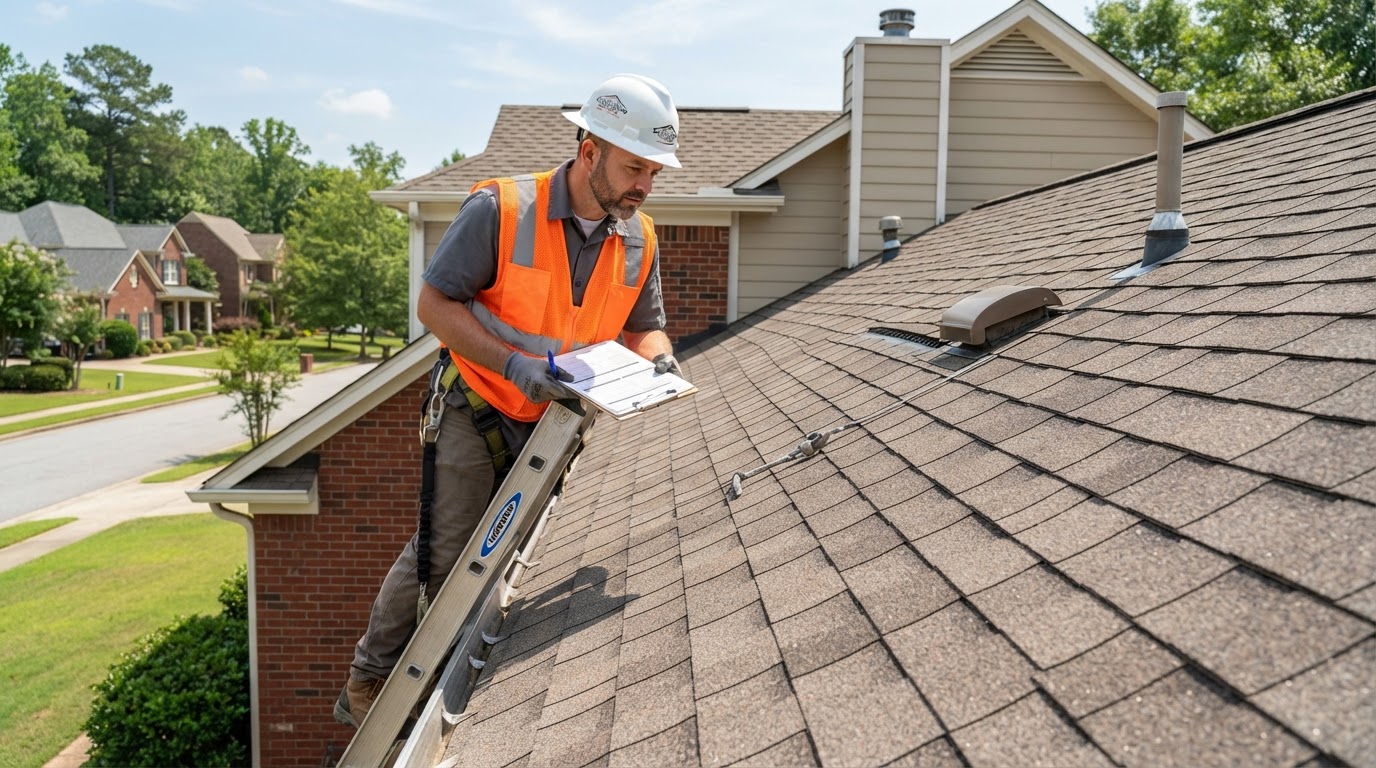
Inspecting and Maintaining a Rental Roof
A documented roof inspection is the starting point for most rental-property roofing decisions. Between tenants is a practical window to assess the covering, flashing, penetrations, gutters, and roof edge without coordinating around an occupant's schedule. The inspection records the roof's material, approximate age where known, and the condition of the details where most leaks actually begin — chimney and vent flashing, valleys, and roof-to-wall transitions.
Tenant Turnover Checks
A between-tenant inspection catches lifted or missing shingles, clogged valleys, and flashing deterioration before they become an active leak reported by the next occupant.
Recurring Leak Patterns
When the same unit or area reports leaks repeatedly, the underlying cause — a flashing detail, a penetration, or drainage — is evaluated rather than only repairing the visible stain.
Gutter and Drainage Attention
Overflowing gutters push water behind fascia and at roof edges. On a rental, drainage problems often show up first as exterior damage the tenant mentions.
Maintenance Between Re-Roofs
Preventive attention to flashing, debris, and fasteners can extend the serviceable life of an existing roof, but it does not prevent storm damage or guarantee a fixed lifespan.
A maintenance arrangement describes what is included and what is not. No fixed response time, price, or guaranteed service interval is promised here — those terms follow the specific agreement and the responding provider's confirmed scope.
Repair Versus Replacement and Occupied-Property Coordination
Whether a localized repair, a partial replacement, or a full re-roof fits the property depends on the extent and pattern of the conditions found — not on the property's classification alone. A single failed flashing detail may warrant a targeted repair, while widespread shingle deterioration or multiple failed valleys may point toward replacement. The recommendation follows the actual roof.
Coordinating Around Tenants
Roofing work on an occupied rental requires notice, access scheduling, and protection of the occupant's belongings and landscaping. The responding provider's coordination capability is confirmed before any turnaround is promised.
Storm Damage Documentation
After a storm, visible conditions are documented from a safe location. Damage is not attributed to a specific event without verified evidence, and the property's records support later insurance or maintenance decisions.
Multifamily Considerations
For qualifying duplex or small multifamily buildings, shared rooflines, drainage, and tenant access add planning complexity. Low-slope or membrane portions are evaluated as a distinct system from steep-slope sections.
Material and Budget Planning
Architectural shingles and suitable metal systems are weighed against the roof's slope, the investment horizon, and the owner's maintenance expectations — not a one-size recommendation.
Rental Property Roofing Questions From Montgomery Landlords
Should I repair or replace the roof on my rental property?
That depends on the extent and pattern of the conditions found. A localized flashing defect or a few damaged shingles may warrant a targeted repair, while widespread deterioration or multiple failed valleys may point toward replacement. The recommendation follows the actual roof, documented during an inspection — not the property's classification.
Can roofing work be scheduled between tenants?
Between-tenant turnover is often a practical window for inspections and repairs because access is unrestricted. When the unit is occupied, work requires notice, scheduling, and protection of the occupant's belongings. The responding provider's coordination capability is confirmed before any turnaround time is promised.
How is storm damage documented for a rental roof?
Visible conditions are observed and recorded from a safe location after a storm. Damage is not attributed to a specific event without verified evidence, and no one should climb onto a storm-damaged roof. The documented conditions support the property's records and any later insurance or maintenance decision.
Do you offer maintenance for rental roofs?
A maintenance arrangement may include periodic condition checks and attention to flashing, drainage, and debris. What is included is defined by the specific agreement — no fixed schedule, price, or guaranteed service interval is promised here. If a formal recurring arrangement is not yet available, the inquiry still helps identify what attention the roof deserves.
Are multifamily or duplex roofs handled differently?
Qualifying duplex and small multifamily buildings often share rooflines, drainage, and tenant access, which adds planning complexity. Any low-slope or membrane portion is evaluated as a distinct system from steep-slope sections. The approach follows the actual building and the responding provider's confirmed scope.
How do I request a roofing quote for a rental property?
Use the quote form on this page or the Contact page. Include the property location, the roofing concern, the roof material if known, and any tenant-access or scheduling notes already confirmed. The inquiry starts the assessment process for the specific property.
Request a Roofing Quote for Your Montgomery Rental Property
Share the property location, the roofing concern, the roof material if known, and any tenant-access or scheduling notes. An assessment documents the visible conditions and helps determine the right scope — repair, partial replacement, or full re-roof — for the specific property.