Metal & TPO Roofing Contractors, Roof Replacement & Repair Montgomery
From aging asphalt shingles and roof leaks to standing seam metal systems and commercial TPO roofing, finding the right solution starts with understanding the roof, the building, and the work required. Explore residential and commercial roofing options throughout Montgomery and Central Alabama — including roof replacement, repairs, inspections, storm-related damage, and ongoing roof maintenance.
Shingle replacement, roof repairs, and property-specific roofing needs.
Metal Roofing
Standing seam systems, exposed-fastener applications, and metal roof repair.
Commercial Roofing
TPO and other low-slope roof systems, plus repair, replacement, and maintenance.
Top Rated Residential & Commercial Roofing Contractors Near Montgomery
Find Montgomery Shingle, Metal, & Commercial Roofing across the review platforms property owners use to research roofing contractors.
yYelp
Google
fFacebook
NNextdoor
PPorch
Houzz
Verified review counts and any “Top Rated” claim will be substantiated and added before publication.
Make a More Informed Roofing Decision in Montgomery
Roofing decisions are rarely small. Roof condition, the materials already in place, how the property is used, and long-term performance all shape whether a repair is enough or a replacement is the right call. Understanding these factors first helps you ask better questions and compare options with clearer expectations — whether the property is a Montgomery home, a retail building, or a low-slope commercial facility.
Roofing Options for Different Properties
Residential houses and commercial buildings may need different material systems, drainage strategies, installation methods, and maintenance plans.
Clearer Project Scope
Understanding repair versus replacement, roof components, materials, and project limitations helps property owners ask better questions before committing to work.
Residential & Commercial Inquiry Paths
Homeowners, commercial property managers, and facility representatives can describe their specific roofing needs through the appropriate inquiry fields on this page.
Residential & Commercial Roofing Services in Montgomery
Roofing needs vary by building type, roof slope, material, age, existing condition, and the property owner's objectives. These four categories cover the main paths an inquiry can take — each connects to a fuller range of related roofing topics as this project's pages come online.
Residential Roof Replacement & Repair in Montgomery
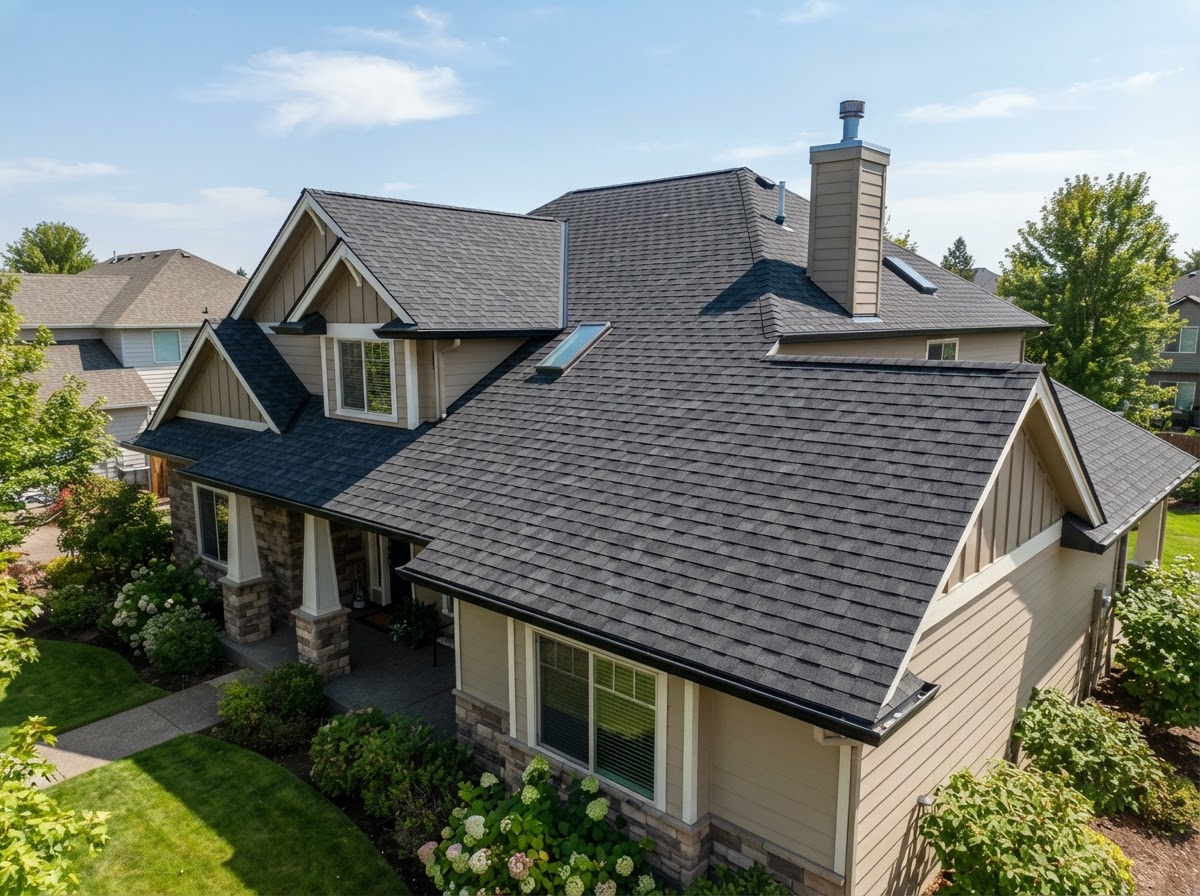
Asphalt shingle roofing, architectural shingles, roof replacement, localized roof repair, roof inspections, roof leak concerns, and flashing or roof component repairs. Repair suitability depends on roof condition and the extent of the problem.
Explore Residential Roofing
Metal Roofing Contractors Near Montgomery
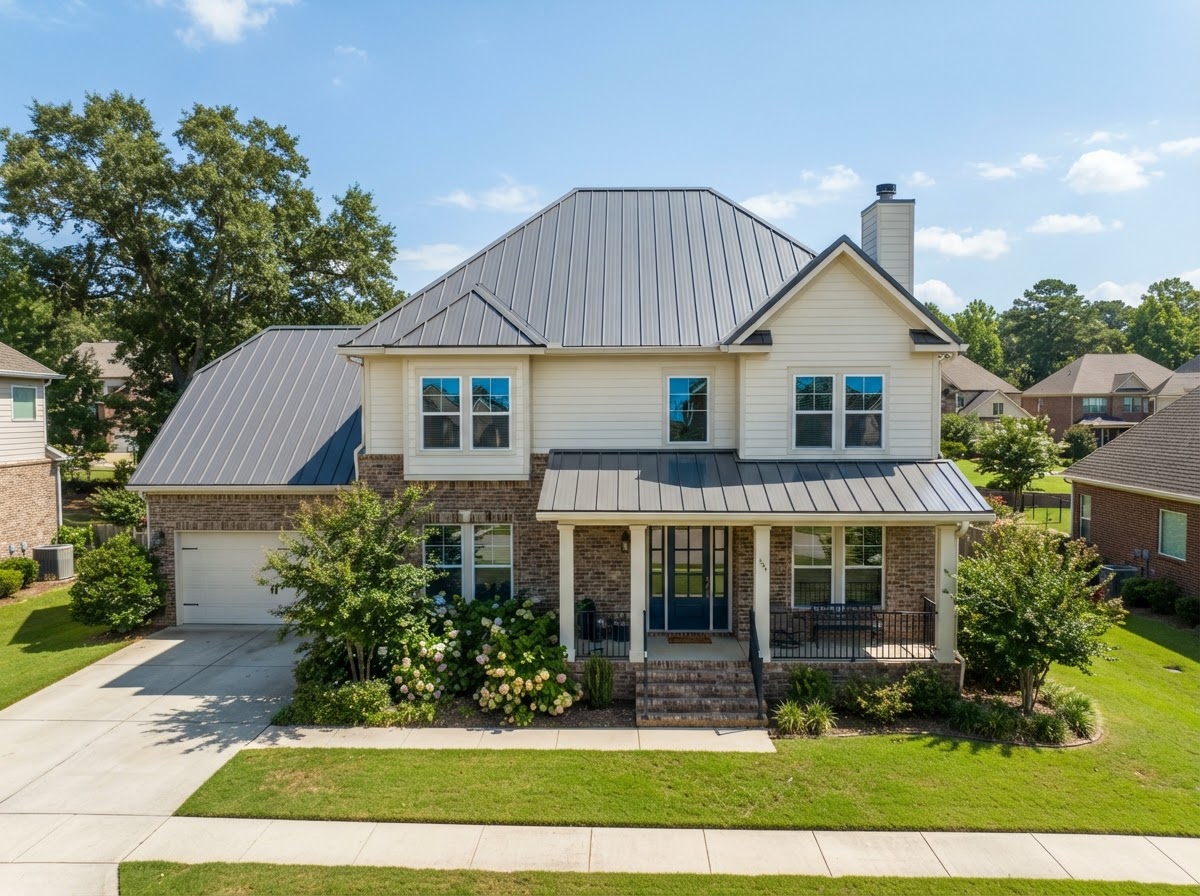
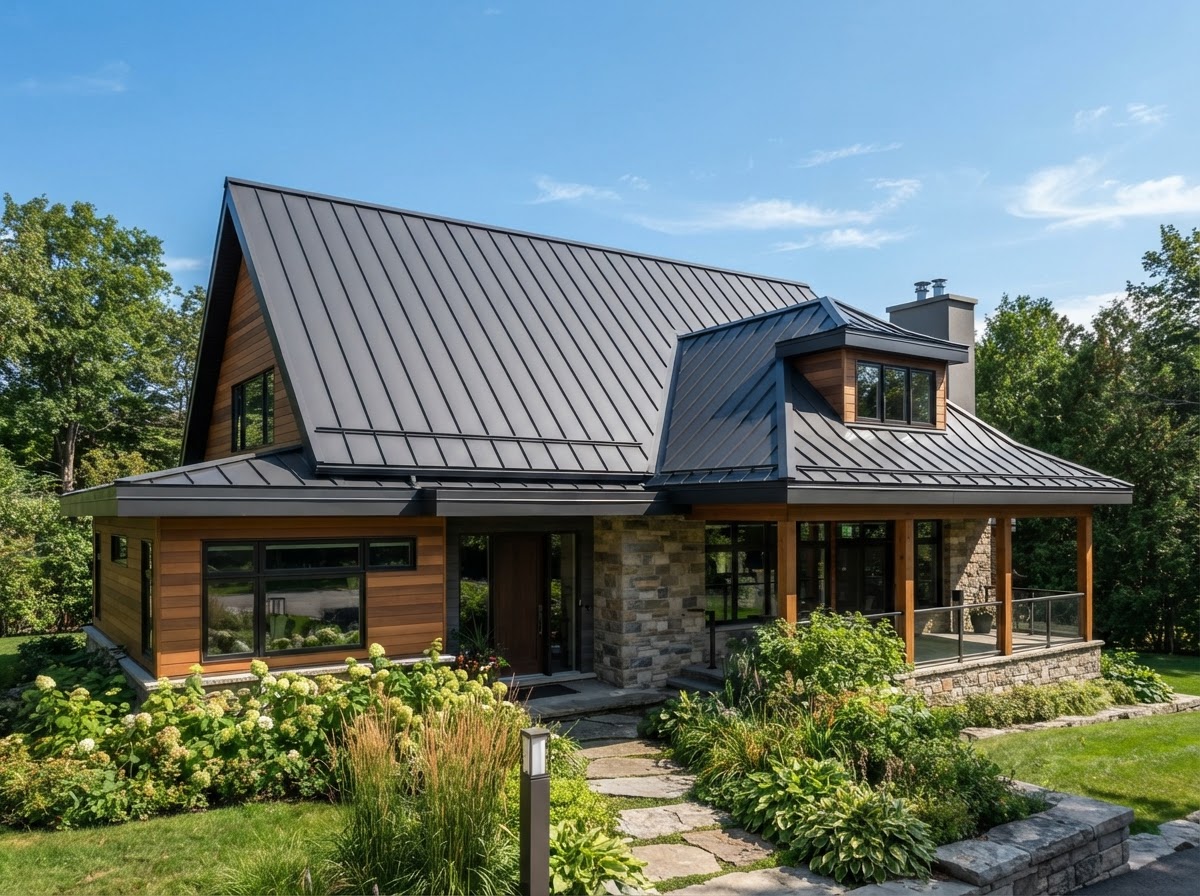
Standing seam metal, exposed-fastener metal roofing, metal roof repairs, and stone-coated steel where appropriate. Different metal systems have different attachment, maintenance, and longevity characteristics — not every existing roof qualifies for the same approach.
Explore Metal Roofing
Commercial TPO & Flat Roofing in Montgomery
TPO roofing and other applicable membrane systems, commercial roof repairs, commercial replacement, inspections and maintenance, drainage, and penetrations. TPO, EPDM, PVC, coatings, and modified bitumen are not interchangeable systems.
Explore Commercial Roofing
Storm Damage Roof Repair Near Montgomery
Wind-related roof damage, hail impacts, missing shingles, damaged flashing, storm-related roof leaks, fallen-tree impacts, and temporary protection considerations. No 24-hour dispatch or immediate-availability claim is made on this site.
Explore Storm Damage Roofing
Complete Residential, Commercial, Metal & Storm Roofing Services Near Montgomery
Montgomery Shingle, Metal, & Commercial Roofing connects property owners with roofing solutions for residential buildings, commercial properties, metal roof systems, and storm-related damage. The service descriptions below help visitors understand available roofing systems, repair versus replacement considerations, material and installation options, inspection and maintenance considerations, common roofing problems, storm damage restoration planning, commercial building requirements, and overall roofing project considerations.
Residential Roofing
Residential roofing work throughout Montgomery and Central Alabama — from full roof replacement and targeted repairs to inspections, leak diagnosis, and component-level fixes for homes of many ages and roof configurations.
Roof Replacement in Montgomery
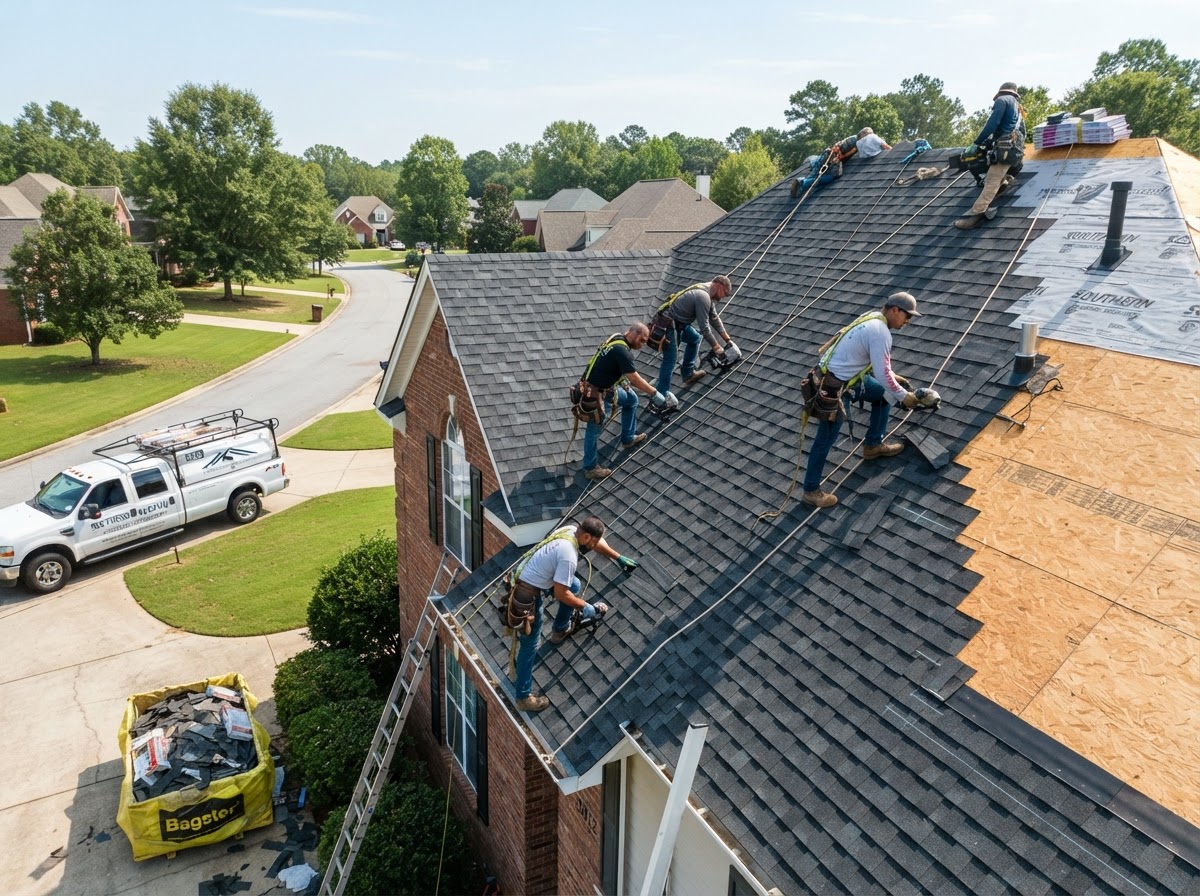
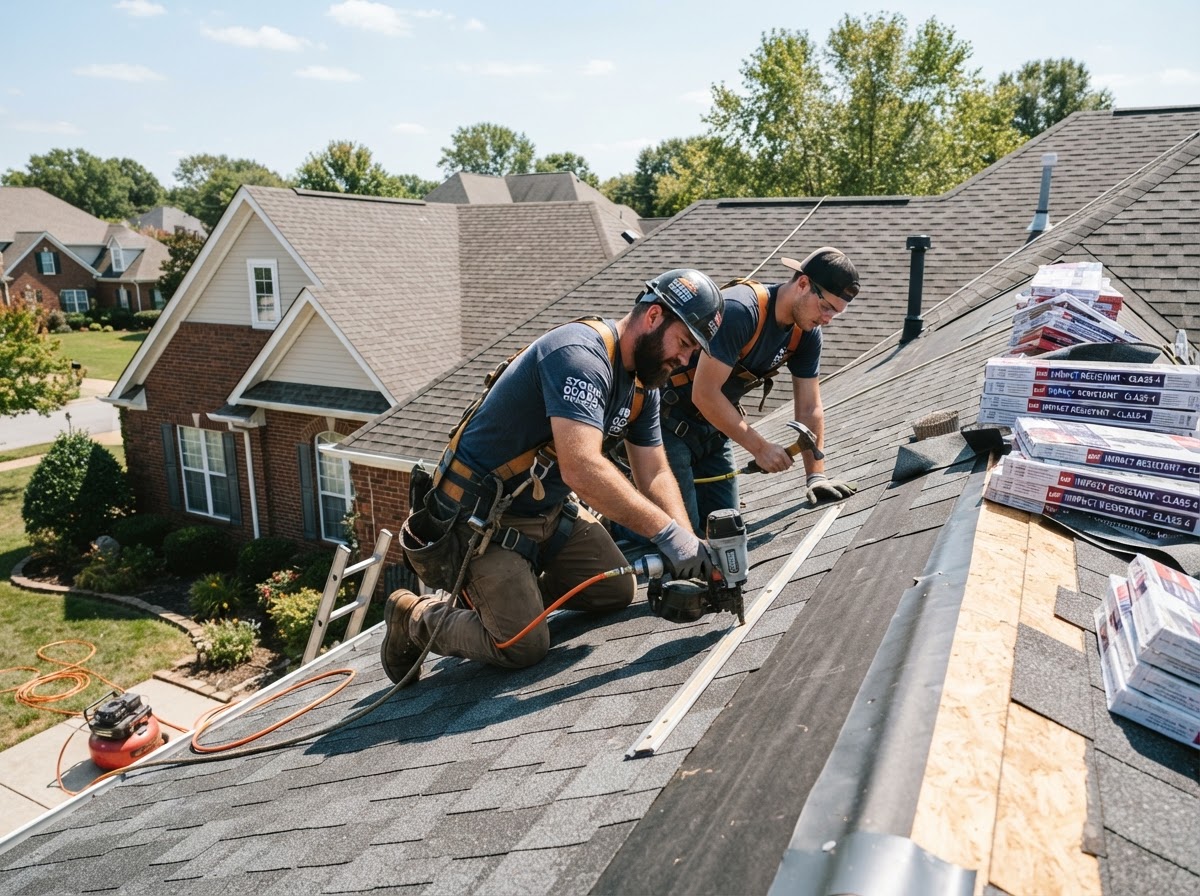
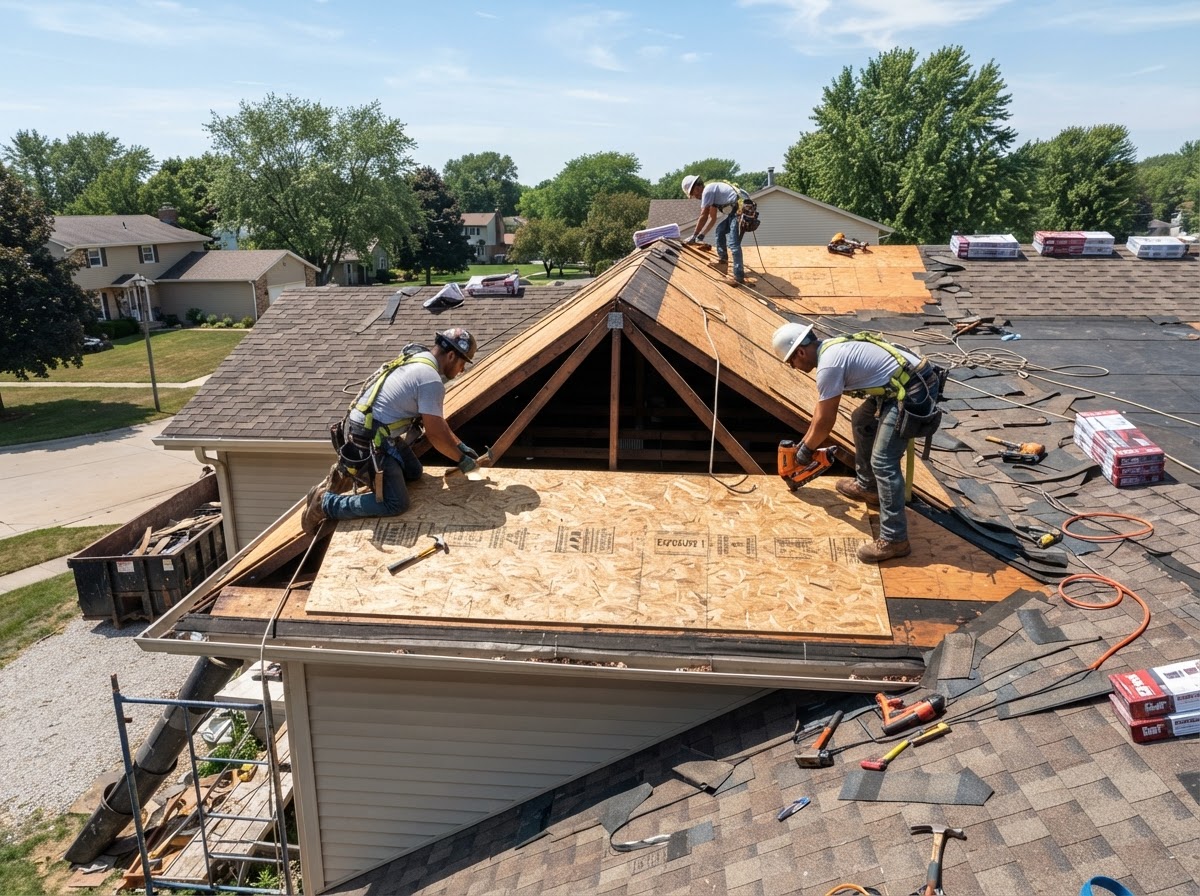
Roof replacement becomes worth considering when shingles are widespread and brittle, leaks keep returning, or the roof assembly is simply at the end of its useful life. A replacement decision usually starts with assessing the decking, ventilation, flashing, underlayment, and the material best suited to the building and its slope.
Replacement is not always the answer. Where damage is localized and the assembly is still sound, a repair may be the more appropriate path. The right call depends on the existing roof's condition, the building's use, applicable code, and the owner's objectives.
Benefits for Montgomery Property Owners
Updated weather protection for the home
Modern roofing materials and system components
Improved long-term roof-system reliability
A planned project rather than a recurring repair cycle
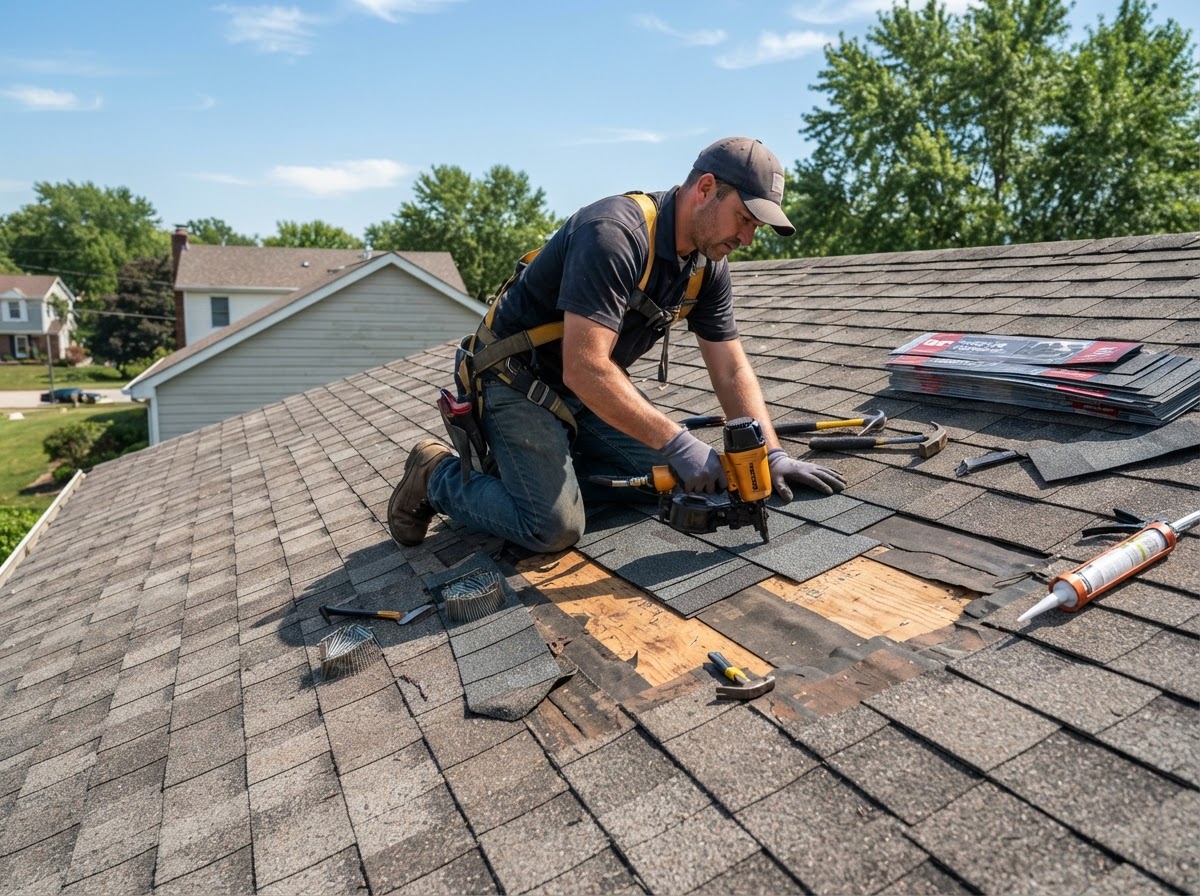
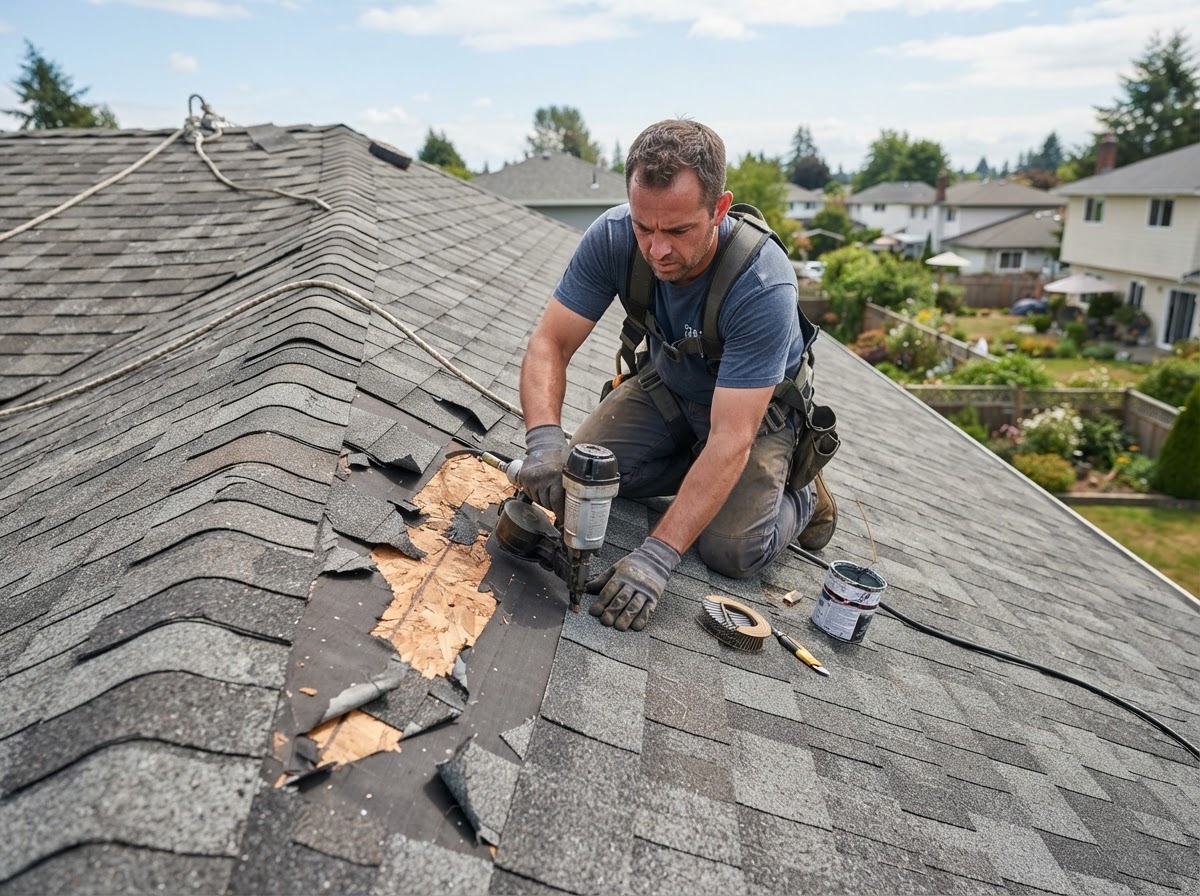
Roof repair addresses missing or damaged shingles, deteriorated components, roof penetrations, and minor storm-related issues. Because water can travel some distance from where it actually enters the assembly, the visible stain is not always the source of the leak.
Repair scope depends on the condition of the surrounding roofing and whether the damaged section can be reliably tied in. Matching existing materials and evaluating flashing and penetrations help determine whether a targeted repair will hold or whether a larger section needs attention.
Benefits for Montgomery Property Owners
Targeted resolution of the specific problem
Reduced risk of continuing moisture intrusion
Potentially extending usable roof life
A smaller-scope alternative when replacement isn't warranted
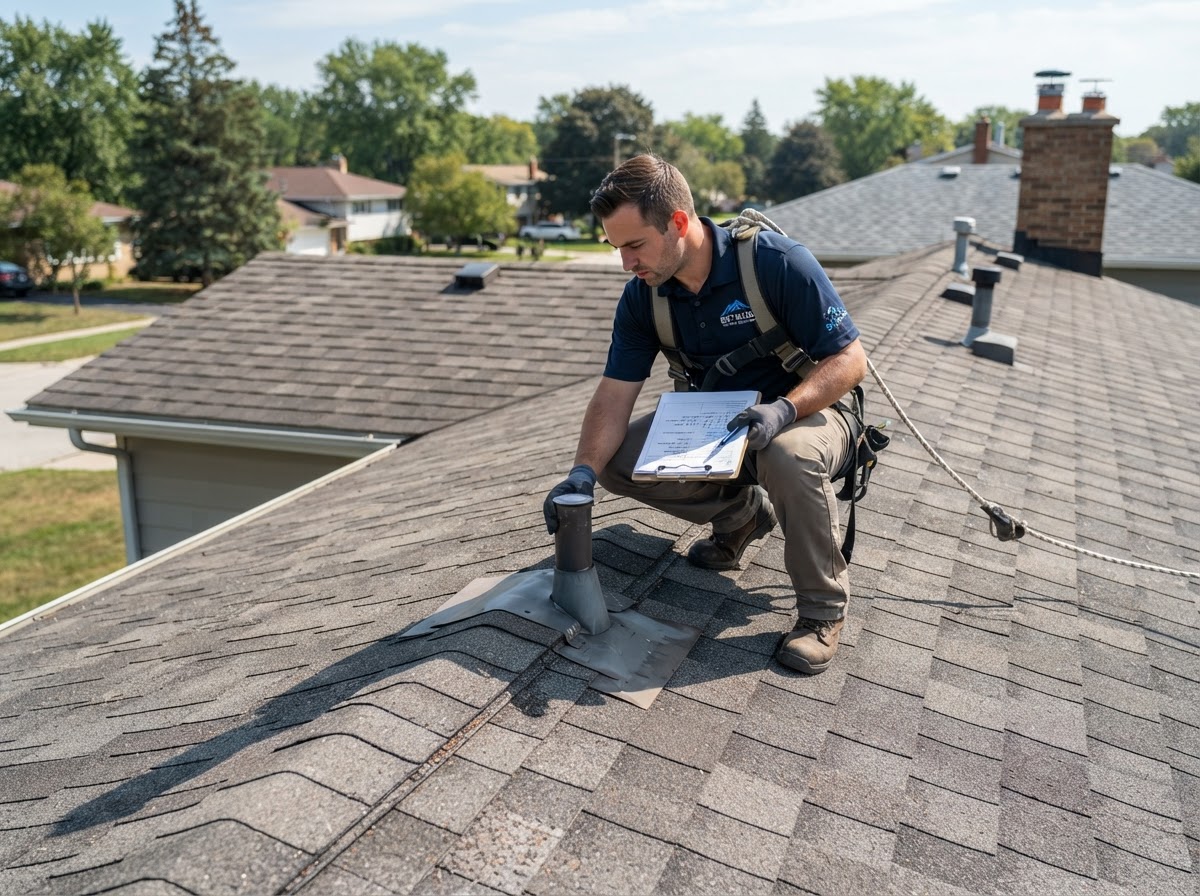
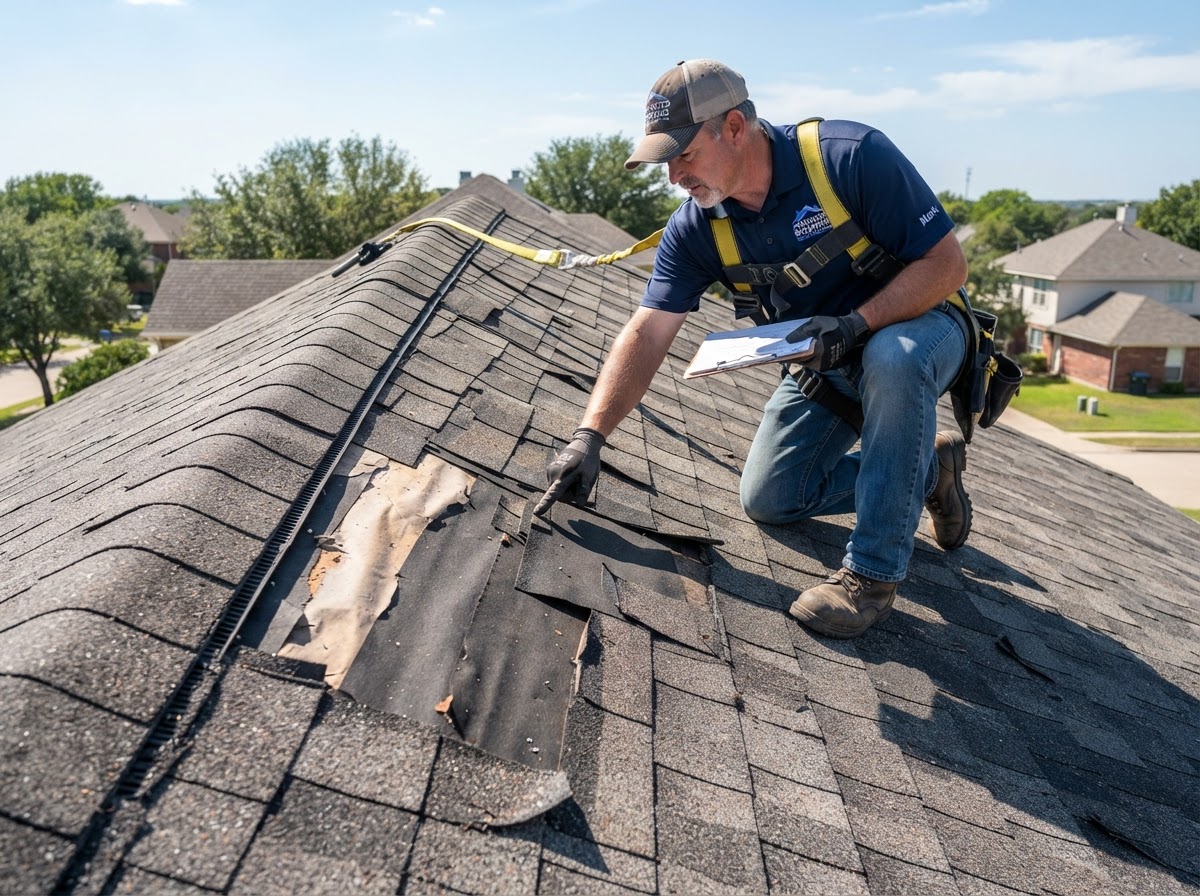
A roof inspection documents the visible condition of the roof surface, shingle wear, flashing, penetrations, ventilation, and drainage, along with any storm-related observations. The goal is a clearer picture of where the roof stands and what, if anything, warrants attention.
An inspection is distinct from an insurance adjustment — it informs the owner's maintenance and repair decisions rather than determining coverage. Documented observations help prioritize repairs or plan a replacement when the time comes.
Benefits for Montgomery Property Owners
A clearer understanding of current roof condition
Informed maintenance and repair decisions
Visible concerns identified before they become major projects
Asphalt shingles remain a common residential choice, available in standard three-tab and architectural (laminated) profiles. Selecting a shingle involves roof slope, underlayment and ventilation requirements, appearance, and product variations.
Installation details — starter strips, fastening patterns, ridge caps, and flashing — determine how the system performs. This site avoids assigning unsupported lifespans; material selection is best matched to the roof and the owner's priorities.
Architectural (dimensional) shingles use a laminated construction that produces a thicker, more textured profile than three-tab shingles. Product selection, roof layout, wind-resistance considerations, and underlayment all shape how the finished roof performs.
Not every architectural shingle meets the highest impact rating. Matching the product to the roof, the property, and the owner's priorities — rather than a one-size assumption — is the honest approach.
Class 4 impact-resistant shingles are tested for resistance to hail impact, though no shingle is hail-proof. Product construction, testing classification, underlayment, and wind rating all factor into whether an impact-resistant product suits a given roof.
This site does not guarantee hail immunity or insurance discounts. Impact resistance is one material characteristic among several to weigh during replacement planning.
Benefits for Montgomery Property Owners
Additional material option for weather-exposed homes
Potentially improved resistance to some impact damage
Low-slope residential roofs — over porches, additions, or certain home designs — face drainage, ponding, membrane, and seam concerns distinct from steep-slope shingle roofs. Diagnosis looks at membrane condition, seams, penetrations, and flashing.
Repair versus replacement depends on the extent of deterioration and whether the underlying assembly is sound. Compatible repair materials and proper drainage detailing matter as much as the patch itself.
Benefits for Montgomery Property Owners
Addressing low-slope roof vulnerabilities
Improved drainage performance
Targeted moisture protection
An alternative to full replacement where the assembly is sound
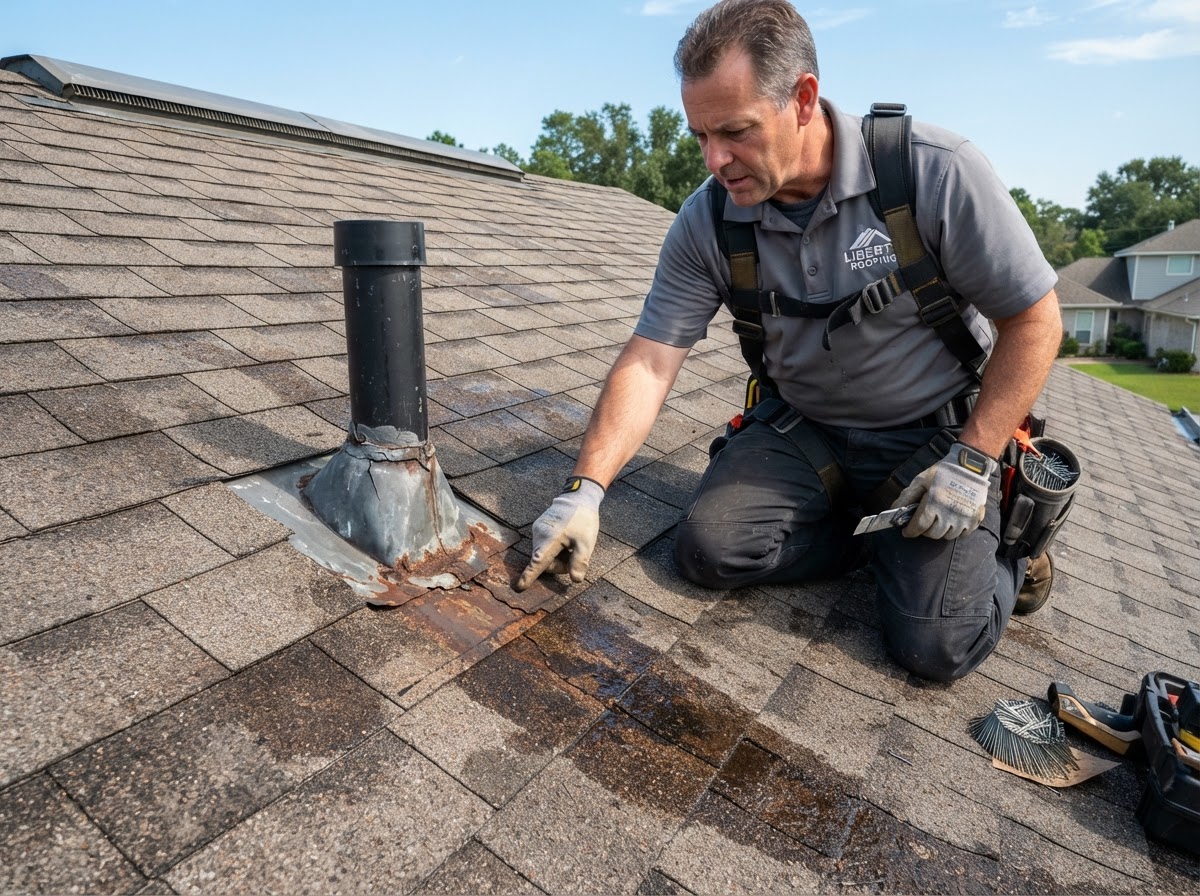
Roof leaks trace back to penetrations, pipe boots, flashing failures, missing shingles, and roof valleys. Attic moisture observations and the timing of when water appears help narrow the source — keeping in mind that water can travel from the actual entry point.
Leak-source identification is the first step; a durable repair addresses the underlying condition rather than only stopping active water temporarily. Describing symptoms and recent weather in an inquiry helps plan the right investigation.
Roof decking (sheathing) can rot or deteriorate from moisture, leaving a soft or unstable surface that won't hold fasteners reliably. Damaged sections are typically addressed during a replacement or when a repair exposes compromised substrate.
Decking condition, fastener-holding requirements, and material suitability all factor into scope. Structural concerns go beyond decking and require specialist review — a roofer can identify the issue but not every situation is a roofing-only fix.
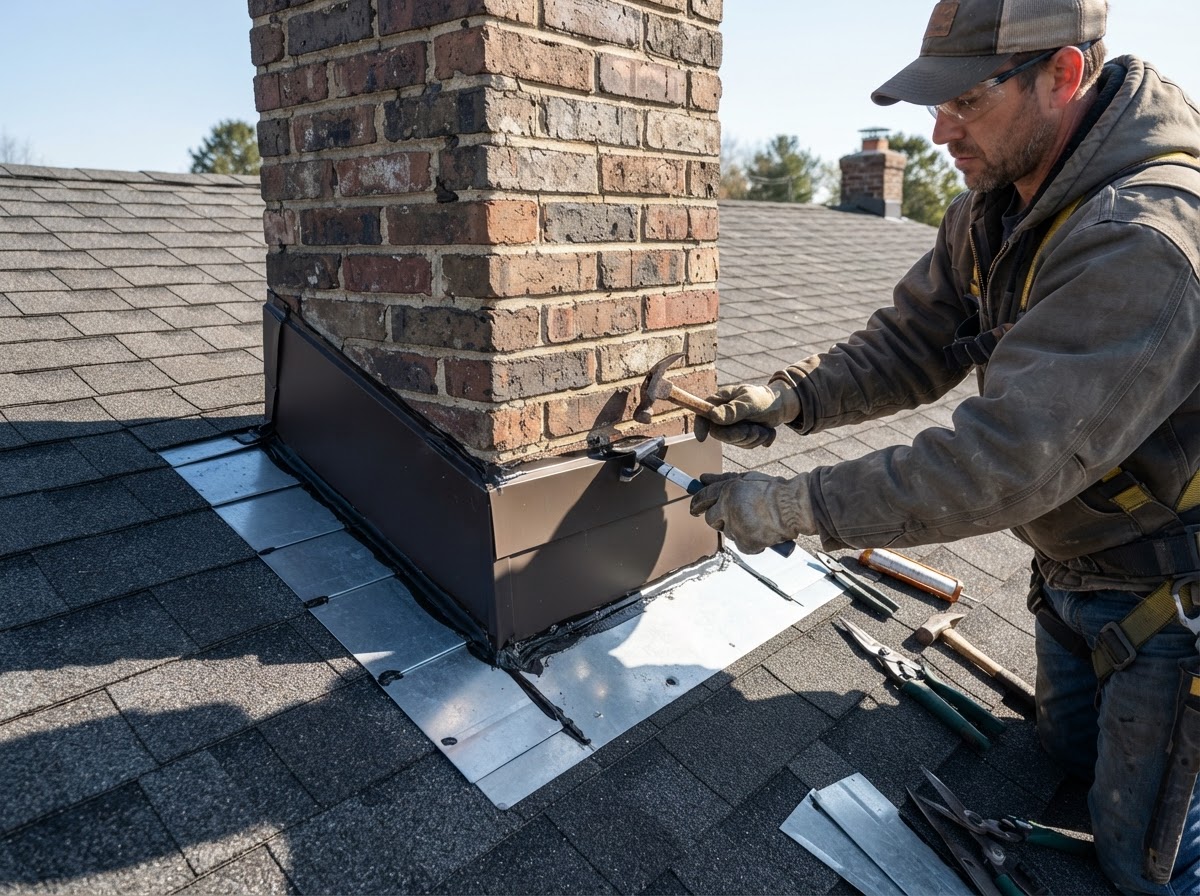
Flashing protects the roof's most vulnerable transitions: wall-to-roof intersections, chimneys, valleys, step flashing, counterflashing, and penetrations. Deteriorated sealants and corroded metal are common leak pathways.
Flashing repair involves inspecting the existing metal, checking material compatibility, and replacing or resealing details so water sheds away from — not into — the assembly. Proper water-shedding design is as important as the metal itself.
Benefits for Montgomery Property Owners
Improved protection at vulnerable roof transitions
Commercial roofing systems for Montgomery-area buildings — low-slope membranes, metal, coatings, repairs, replacement, and inspections — with attention to drainage, penetrations, occupancy coordination, and roof lifecycle planning.
Commercial Roofing Services in Montgomery
Commercial roof-system selection depends on building use, drainage, roof access, insulation, and lifecycle planning. Low-slope membranes, commercial metal, and coatings each suit different conditions and maintenance expectations.
Coordinating around an occupied building — scheduling, access, and protecting operations — is part of any commercial roofing project. The right system balances first cost, maintenance, and long-term performance.
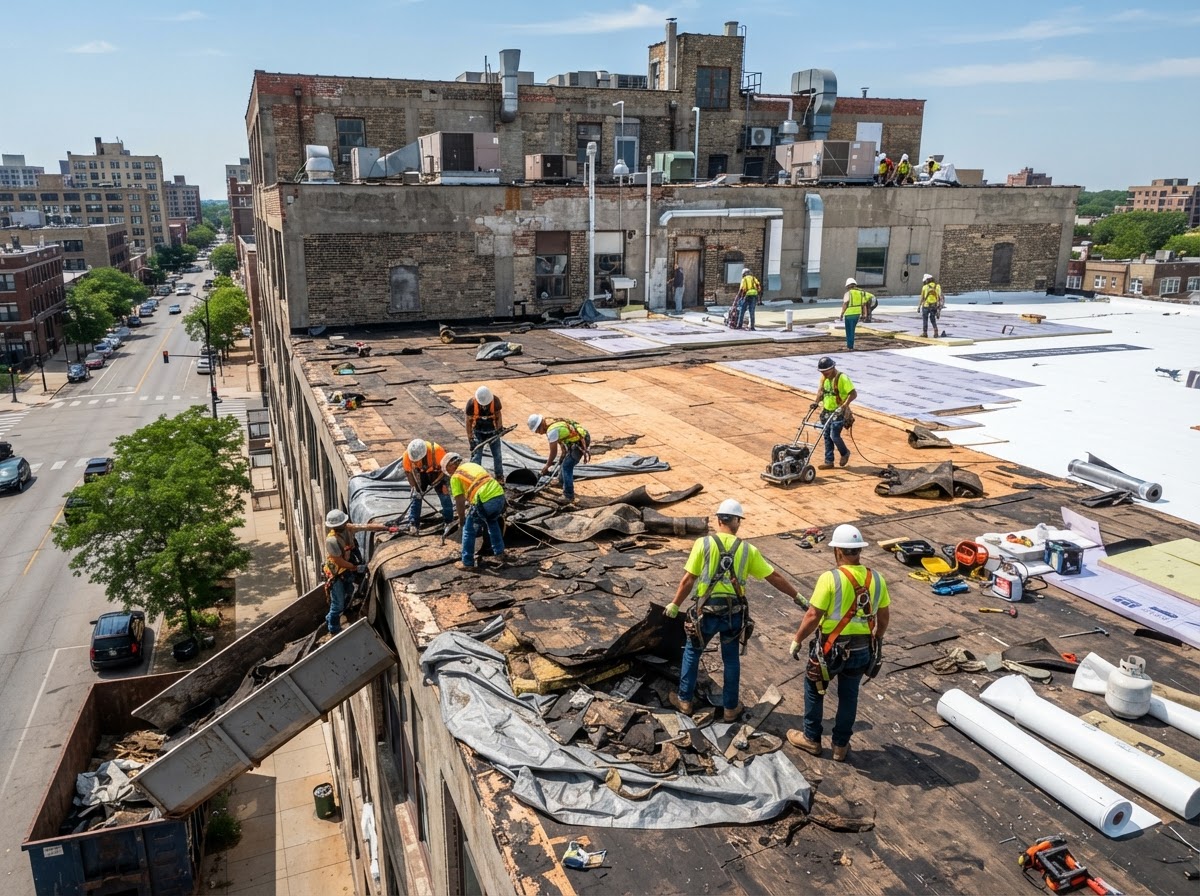
A deteriorated commercial roof may warrant replacement when repairs no longer hold or the assembly is at the end of its service life. Tear-off versus recover, insulation requirements, drainage, and decking condition all shape the scope.
Occupancy coordination matters: scheduling around business operations, protecting inventory and equipment, and managing access. Material selection follows the building's use and the owner's maintenance expectations.
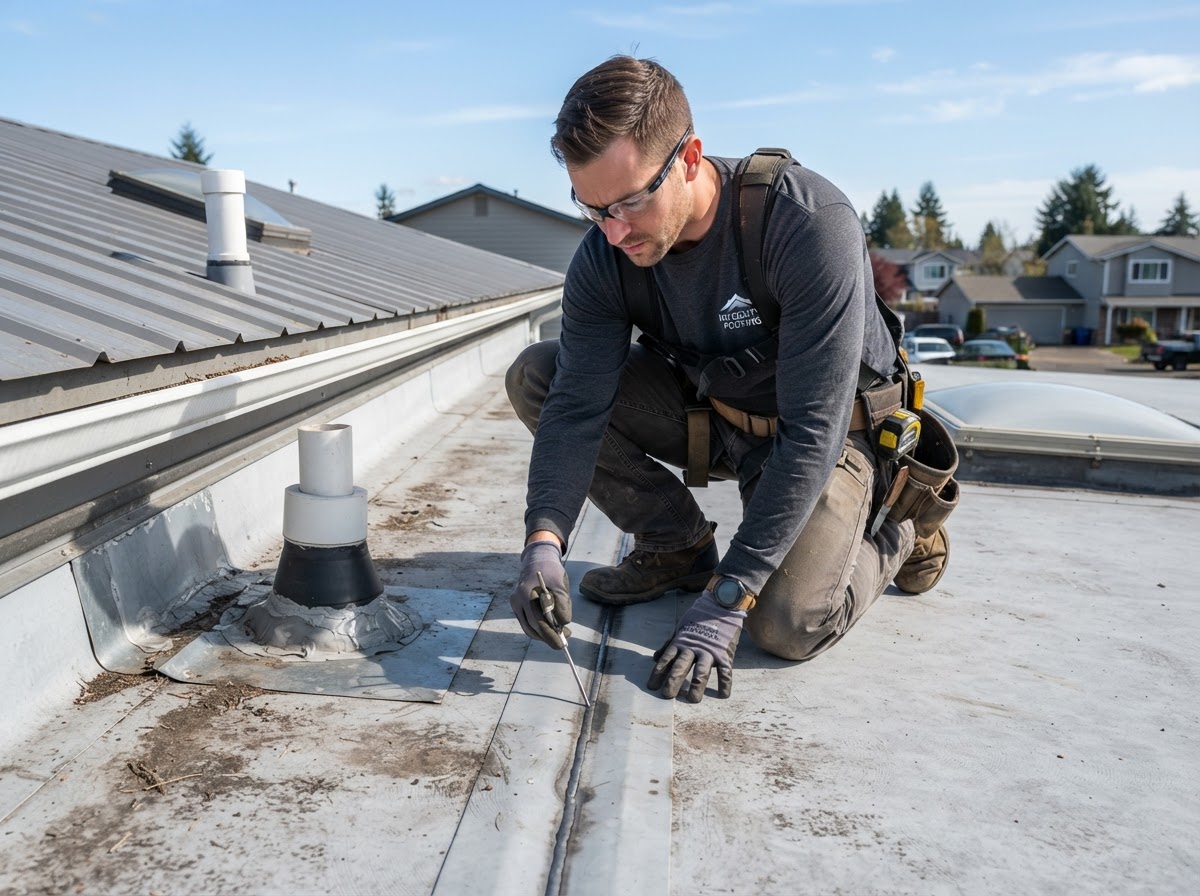
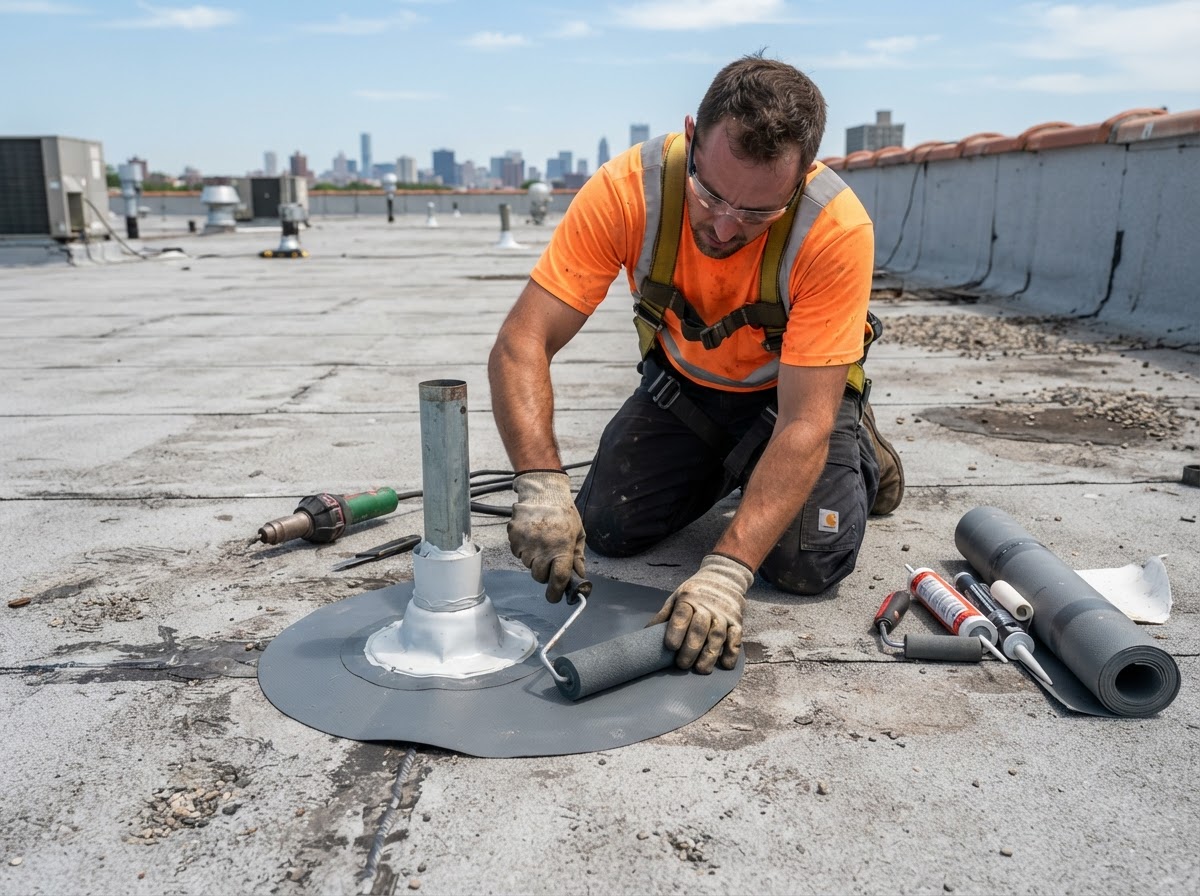
Commercial roof repair addresses membrane punctures, seam failures, flashing defects, rooftop-equipment penetrations, ponding water, and drainage problems. Targeted repair methods depend on the membrane type and the extent of the issue.
A repair is distinct from a coating, a recover, or a replacement. Where the core assembly is saturated or the substrate compromised, a surface repair alone can conceal rather than resolve the problem.
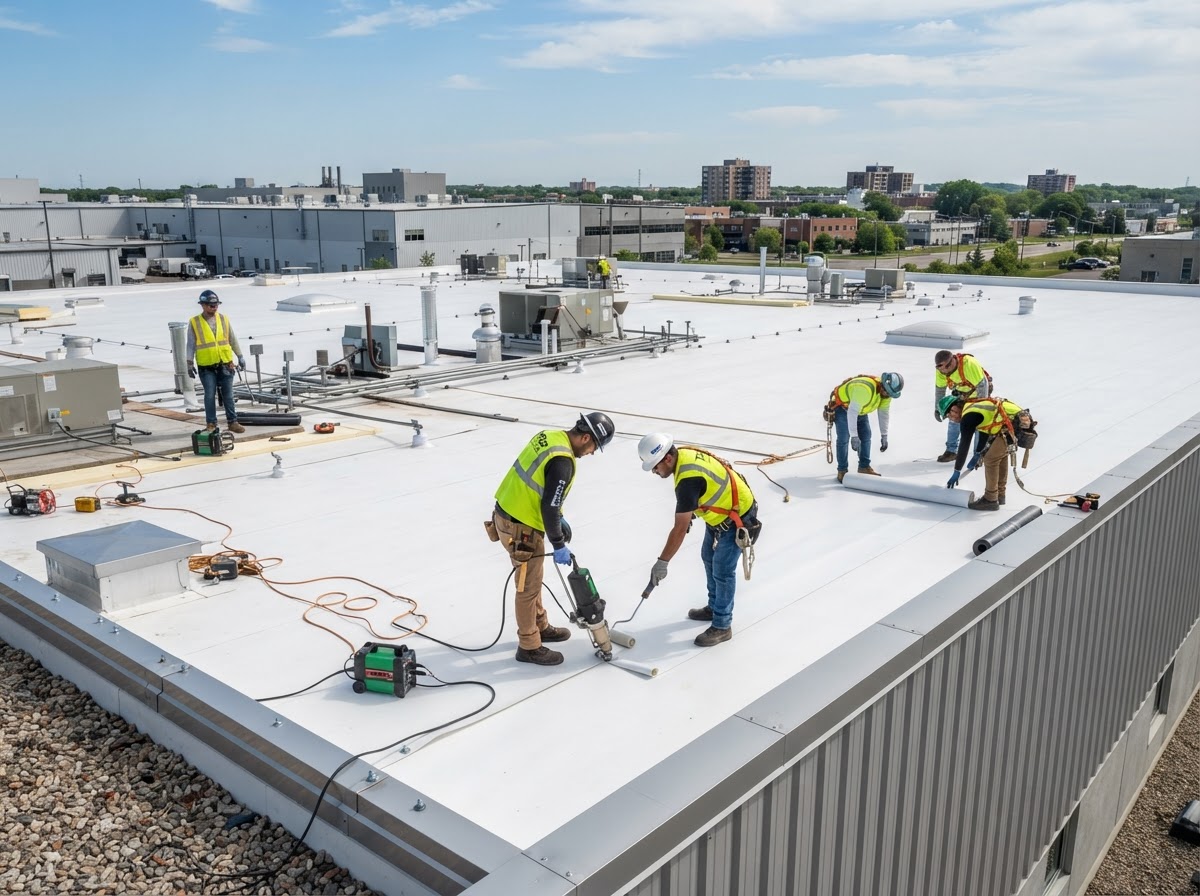
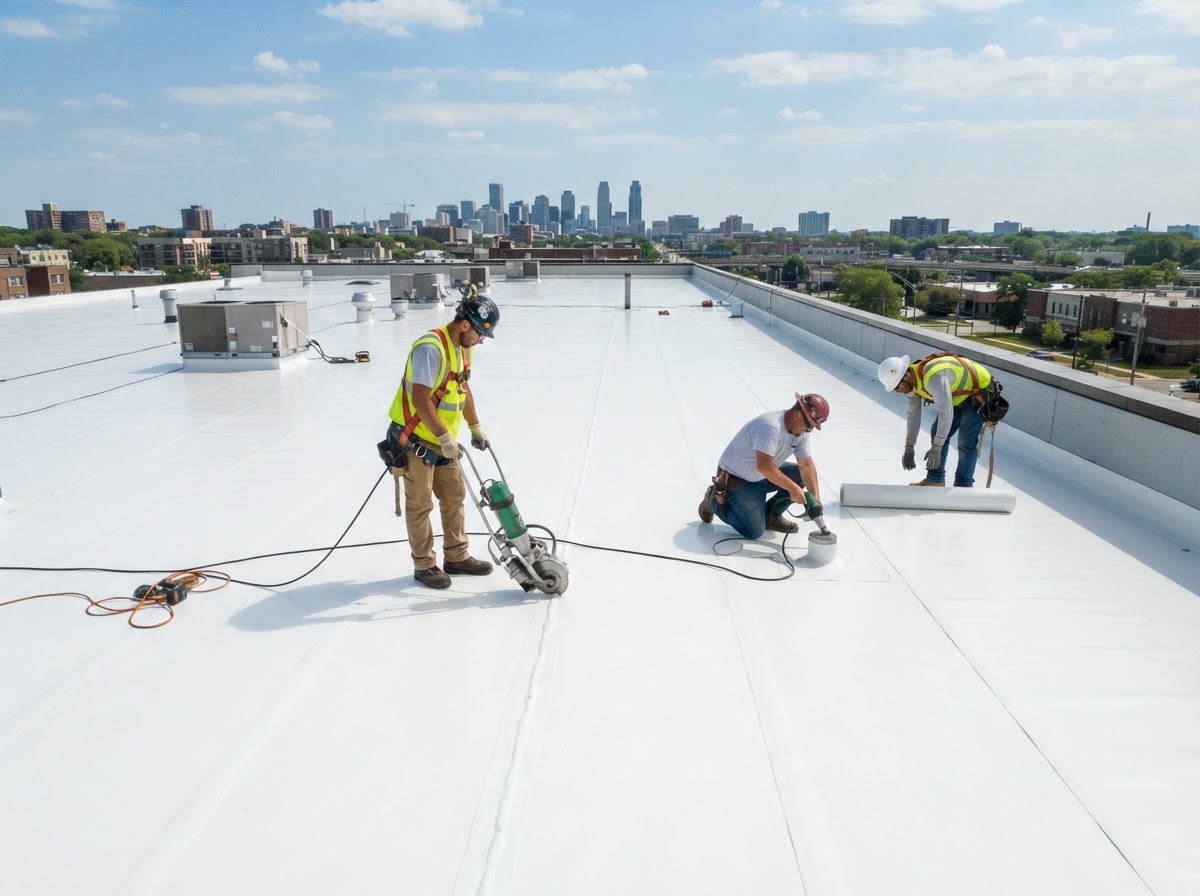
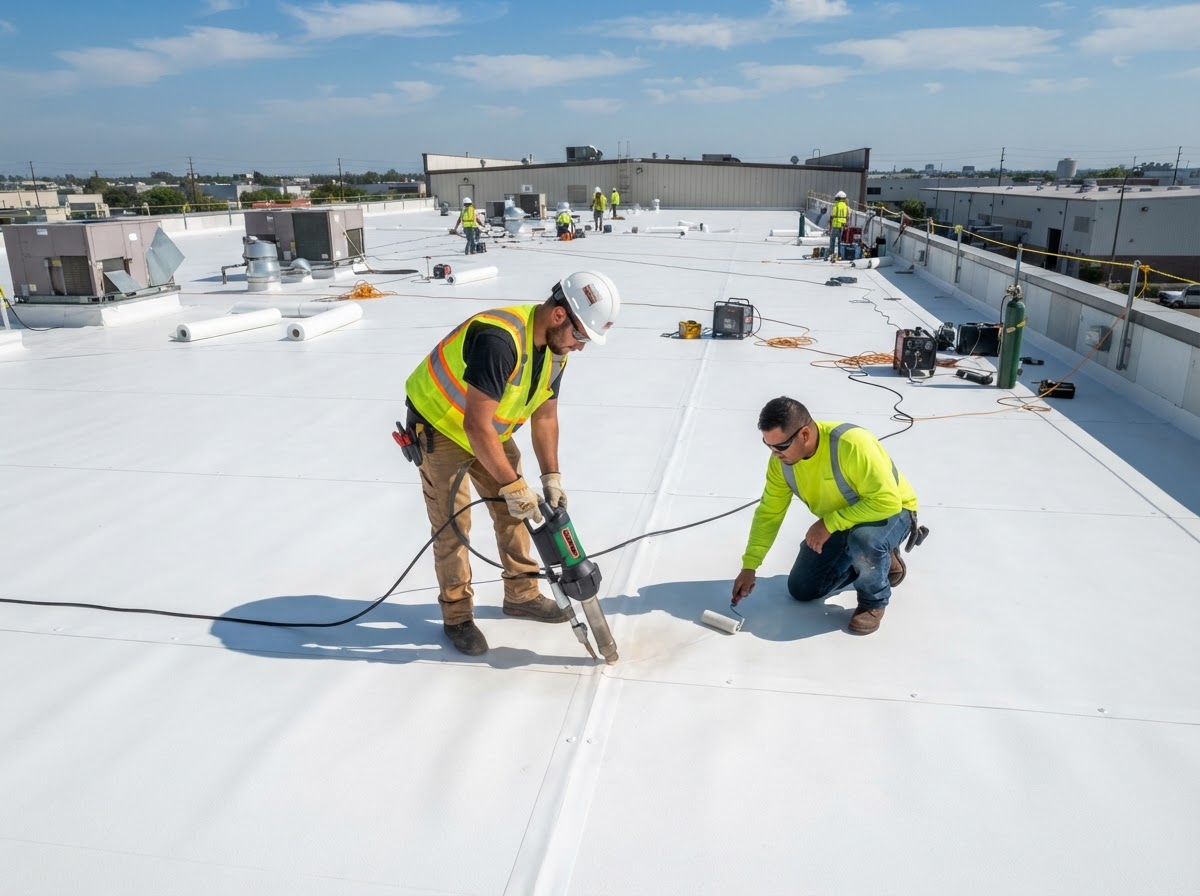
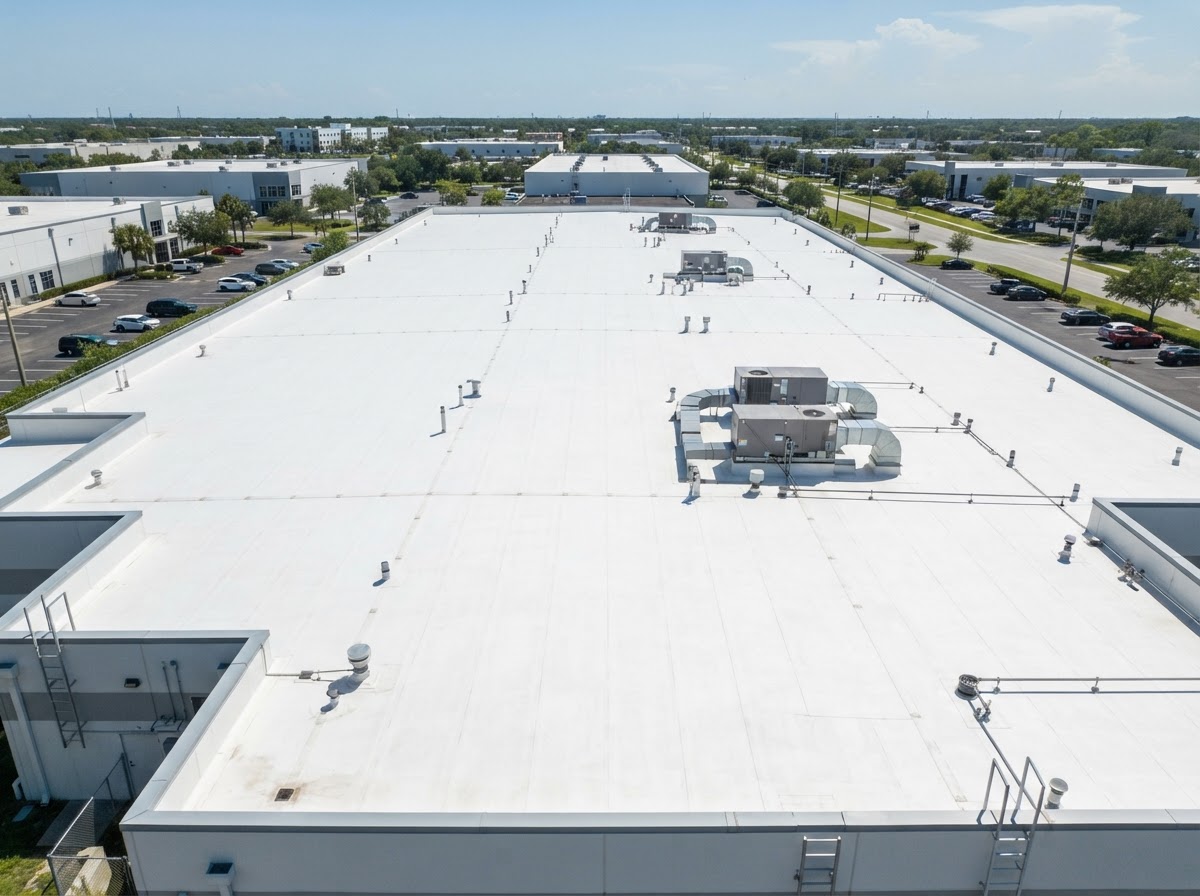
TPO (thermoplastic polyolefin) is a single-ply membrane used on appropriate low-slope commercial roofs. Reflective membrane options, mechanically attached or adhered systems, and heat-welded seams are characteristic of TPO installations.
Drainage, insulation, penetrations, and maintenance all shape performance. This site makes no universal energy-savings or lifespan promises for TPO — performance depends on the specific membrane, assembly, installation, and upkeep.
Benefits for Montgomery Property Owners
Commercial membrane options with reflective surfaces
PVC (polyvinyl chloride) is another thermoplastic membrane option for low-slope commercial roofs, with heat-welded seams and characteristics suited to certain building conditions. Compatible applications, drainage, and roof details drive the decision.
Like any single-ply system, PVC performance depends on membrane selection, insulation, flashing, penetrations, and maintenance — not on a one-size assumption across every building.
Benefits for Montgomery Property Owners
A commercial thermoplastic membrane option
Characteristics suited to certain building conditions
EPDM (ethylene propylene diene monomer) is a flexible rubber membrane used on low-slope commercial roofs. Installation methods, seams, edge details, and drainage differ from thermoplastic systems and have their own maintenance considerations.
Established repair methodologies make EPDM a serviceable option for appropriate buildings. Membrane specifications, seam systems, adhesive considerations, and flashing all factor into a sound installation.
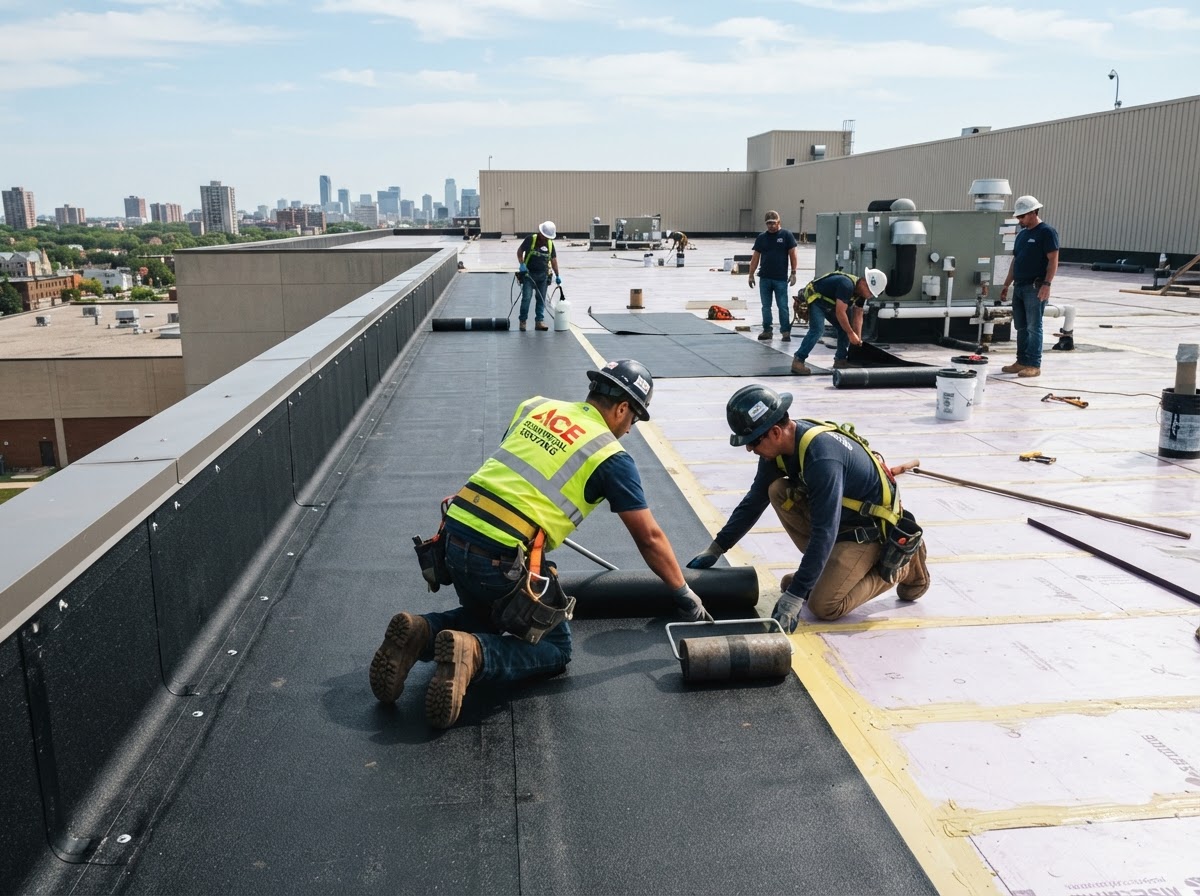
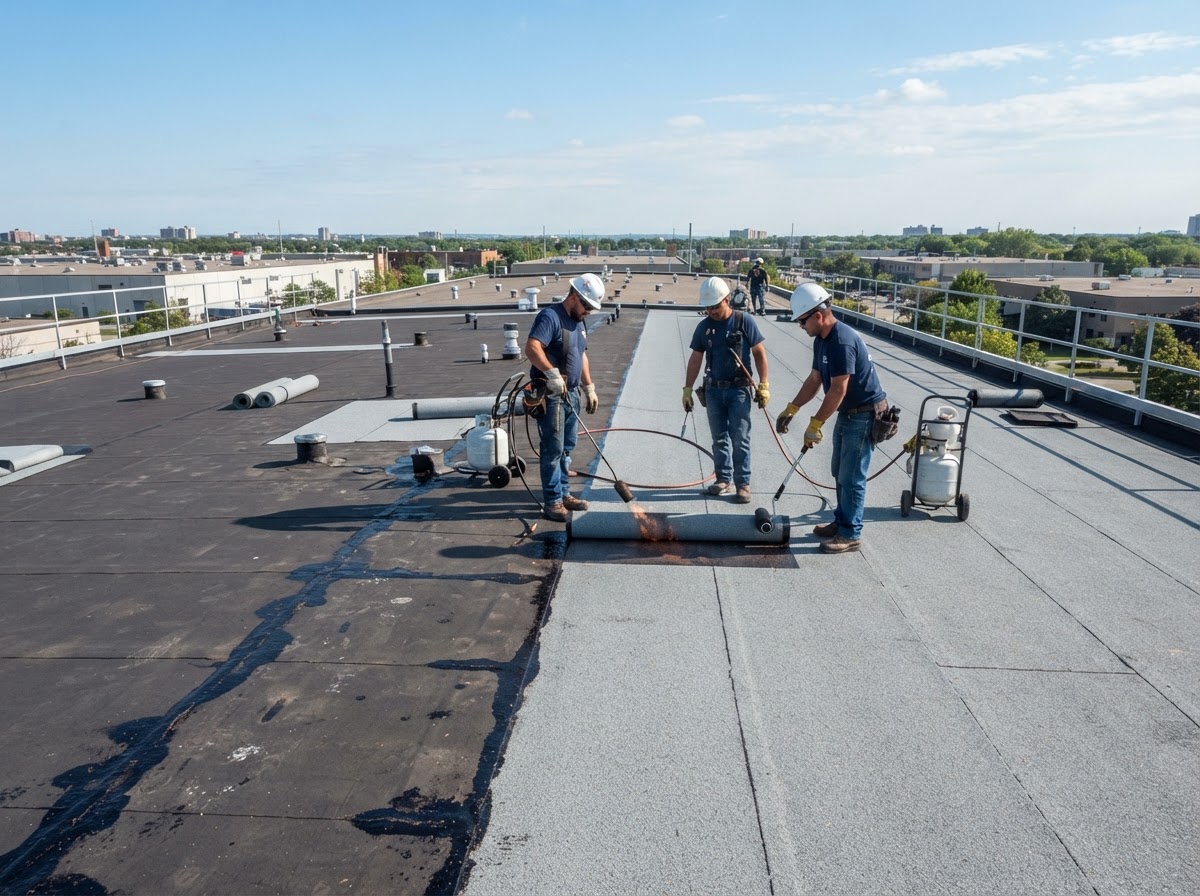
Modified bitumen is a multi-layer low-slope system built from bitumen-reinforced sheets, surfaced for protection. Installation methods, roof slope, base layers, and seam construction all shape how the system performs.
Multiple installation configurations make modified bitumen a versatile option for appropriate commercial applications. Drainage requirements and surfacing condition factor into maintenance planning.
Benefits for Montgomery Property Owners
Multiple installation configurations
Durable roofing-system options for appropriate applications
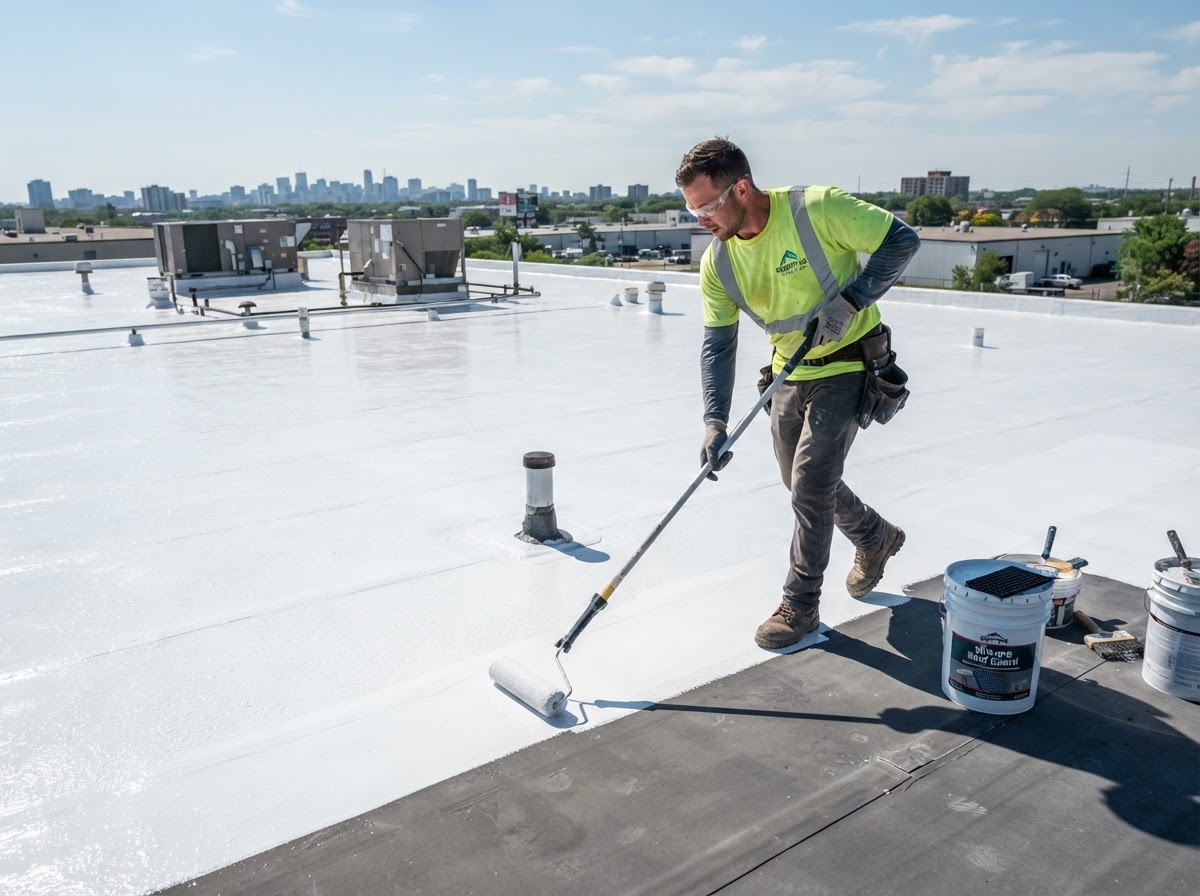
Silicone coatings can restore a suitable existing commercial roof without automatically requiring full replacement. Eligibility depends on existing membrane condition, substrate soundness, moisture, adhesion, and surface preparation.
Not every roof qualifies for coating. Where the core assembly is saturated or the substrate compromised, a coating can conceal a problem rather than resolve it. Thickness requirements and drainage remain part of a sound coating project.
Benefits for Montgomery Property Owners
Potential restoration option for suitable existing roofs
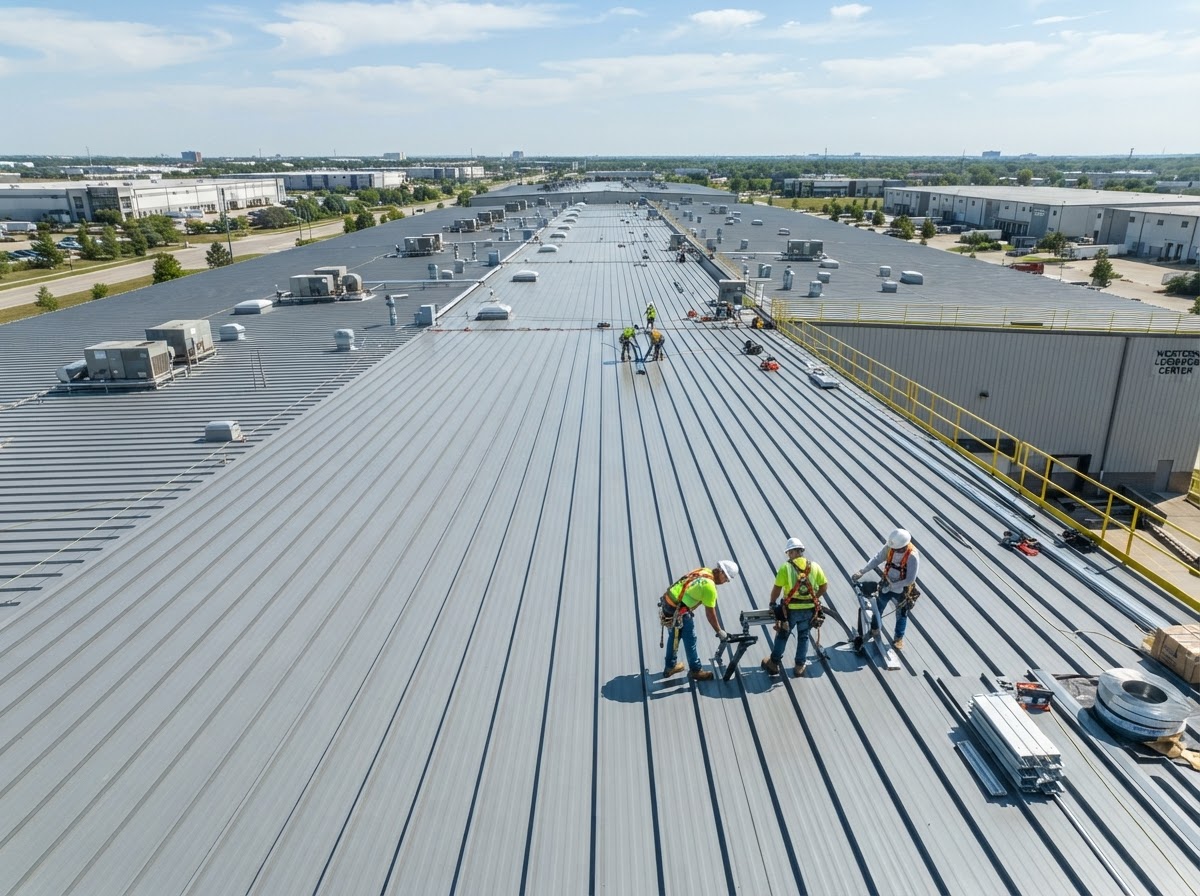
Metal roofing suits warehouses, retail structures, industrial properties, agricultural buildings, and other appropriate commercial buildings. Panel selection, fastening, roof slope, expansion, drainage, and flashing all shape performance.
Long-service-life material options and recognizable appearance make metal a versatile commercial choice. Insulation interfaces, penetrations, and flashing details require the same attention as any low-slope system.
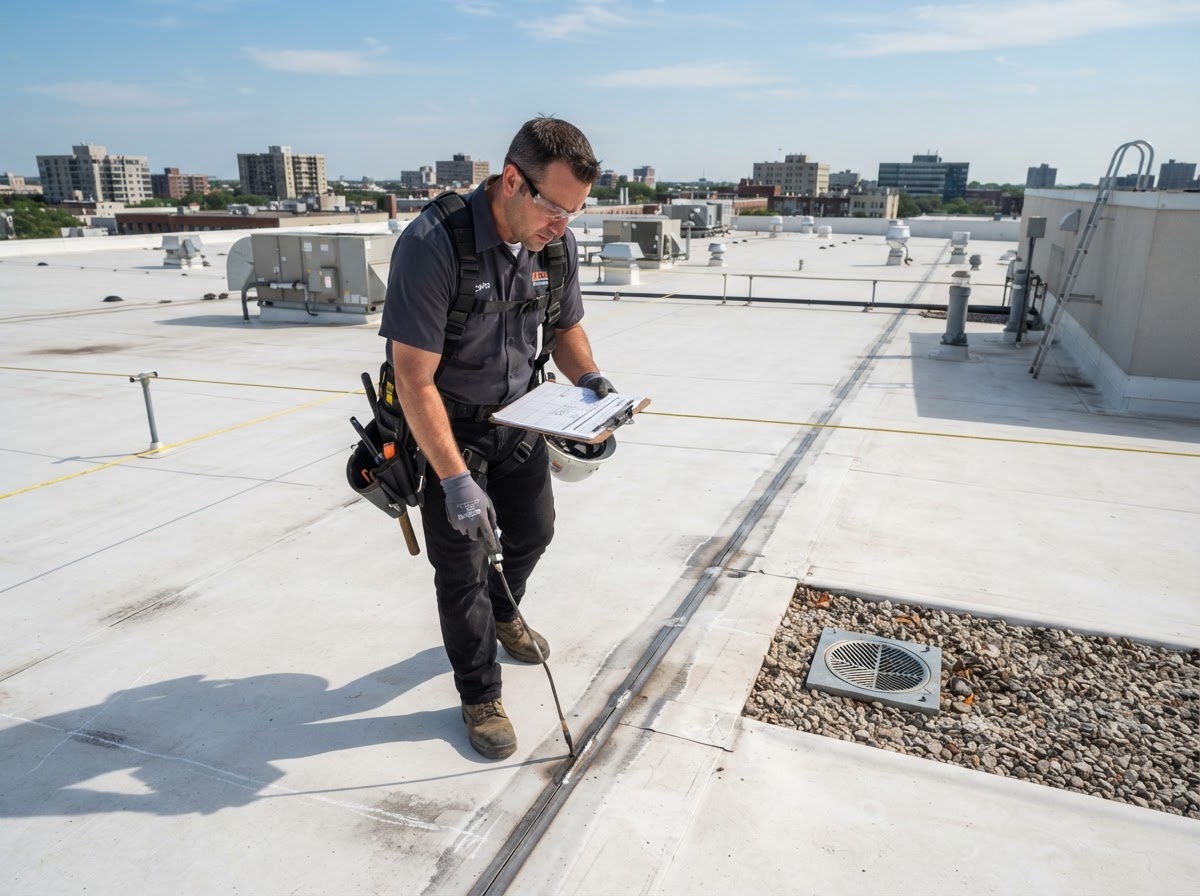
A commercial roof inspection documents roof-surface condition, membrane seams, flashing, drainage, rooftop equipment, visible damage, and maintenance history. The result informs repair prioritization and lifecycle planning.
Inspections help building owners and facility teams make better maintenance decisions and document observed concerns — distinct from an insurance adjustment or a coverage determination.
Metal roofing systems for residential and appropriate commercial properties — standing seam, exposed-fastener, metal-over-shingle conversions, and metal roof repair — with attention to panel type, fastening, slope, and maintenance.
Metal Roofing Installation & Replacement in Montgomery
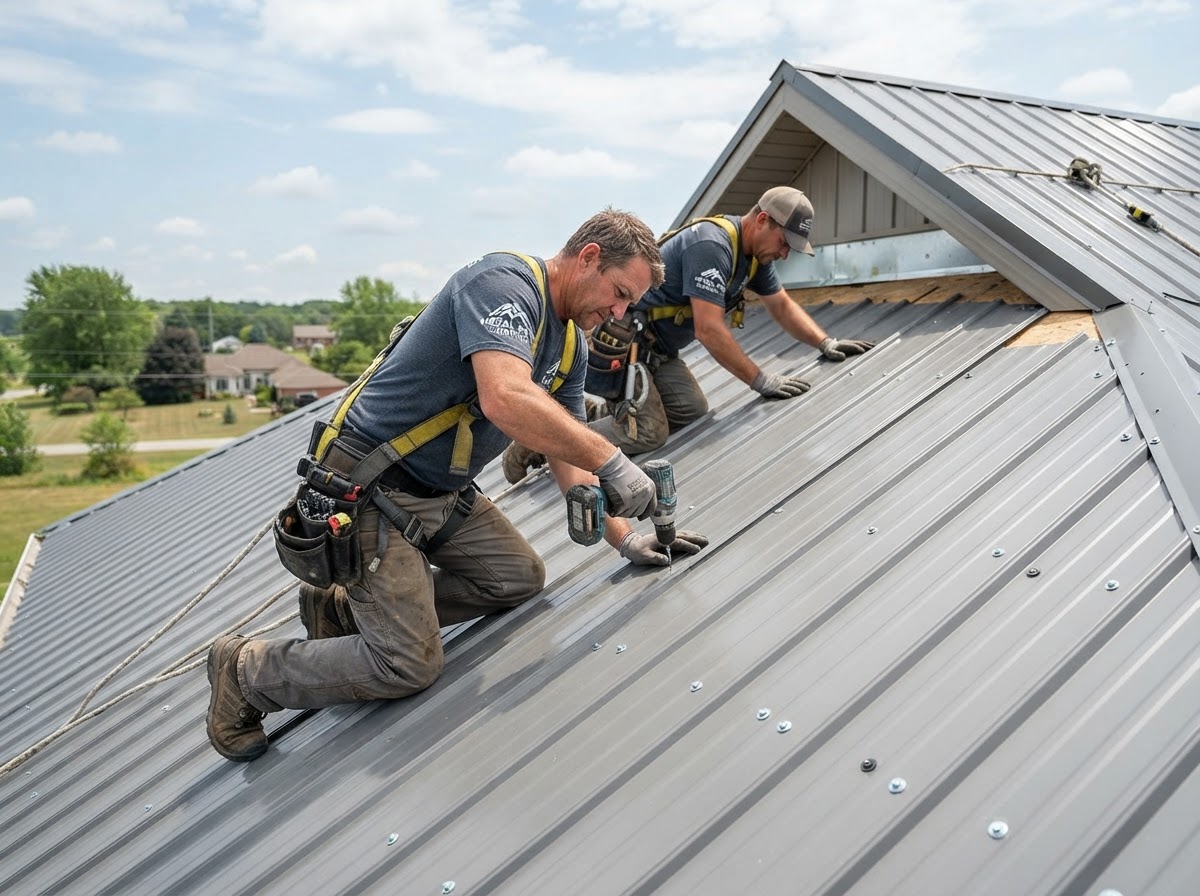
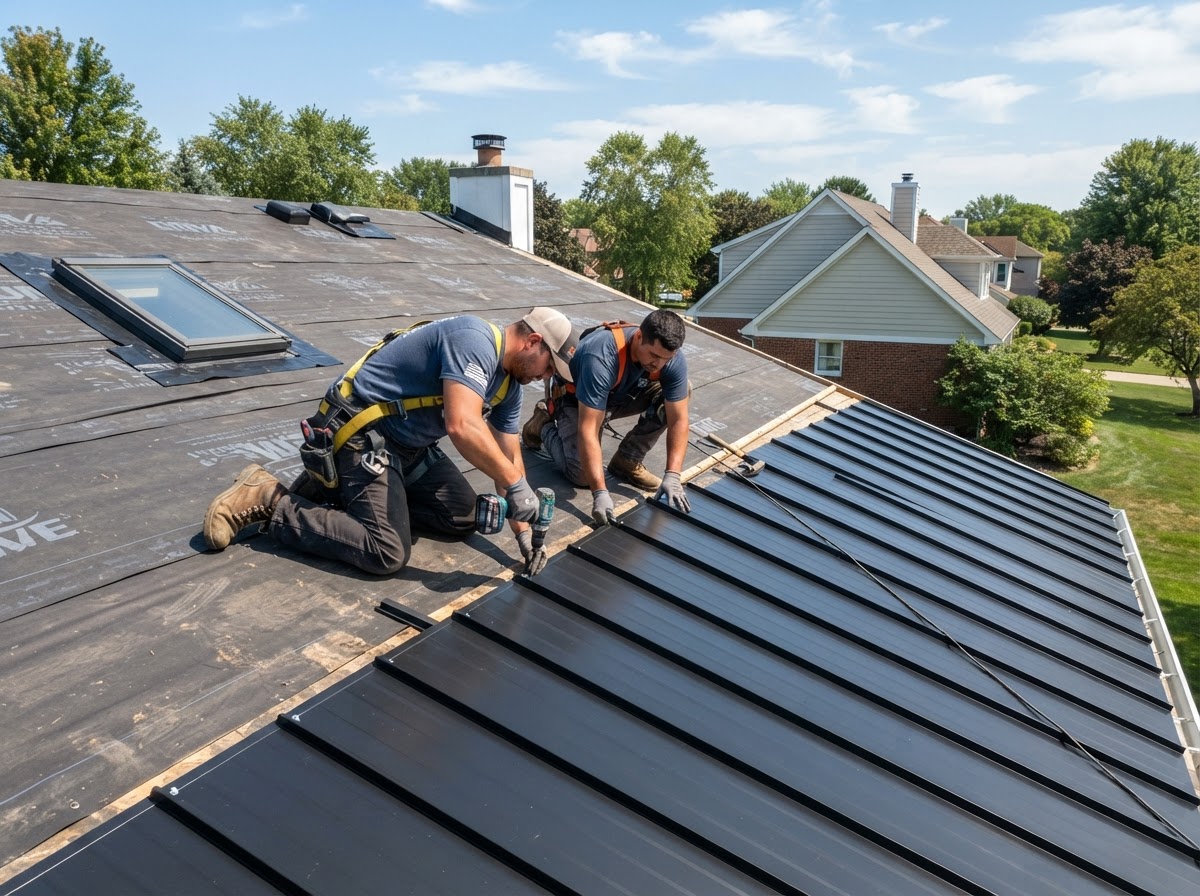
Metal roofing suits residential and appropriate commercial properties, with material options, roof pitch, panel types, fastening, underlayment, ventilation, and flashing all shaping the finished system.
Material longevity potential and design versatility make metal a consideration for many building types. Substrate preparation, fastening requirements, and thermal movement details are part of a sound installation.
Standing seam systems use concealed fasteners and clips that allow panels to move with thermal expansion, producing clean vertical lines and fewer exposed fastener penetrations. Panel profiles, clip systems, and roof slope drive the design.
Because attachment differs from exposed-fastener systems, standing seam and exposed-fastener roofs are not interchangeable. Penetrations, expansion details, and trim components require their own attention.
Exposed-fastener metal roofing — including 5V and R-panel systems — attaches with visible screws and washers. Panel overlap, fastener placement, gasket condition, roof slope, and maintenance all shape long-term performance.
These practical configurations suit residential, agricultural, and appropriate commercial structures. Fastener and washer condition over time is a maintenance consideration distinct from concealed-fastener systems.
Benefits for Montgomery Property Owners
Practical metal roofing configurations
Options for residential, agricultural, and suitable commercial structures
Installing metal over an existing asphalt shingle roof can be considered in some situations — but it is not always allowed. Existing roof condition, structural load, roof slope, moisture risks, decking condition, ventilation, and local code all matter.
Manufacturer installation requirements govern whether an overlay is permitted. Where conditions don't allow it, a complete tear-off followed by metal installation is the appropriate path. This site does not imply installation over shingles is always allowed.
Benefits for Montgomery Property Owners
An alternative roof-conversion approach when technically appropriate
Potential reduction in tear-off and disposal where permitted
A path to a metal roof on an existing residential property
Planned around the existing roof's condition
Roofing Features & Project Considerations
Existing-roof evaluation
Suitable attachment methods
Substrate considerations
Roof transitions and flashing
Popular Roofing Services & Solutions
Shingle-to-metal conversions
Approved metal reroofing configurations
Complete tear-off followed by metal installation when required
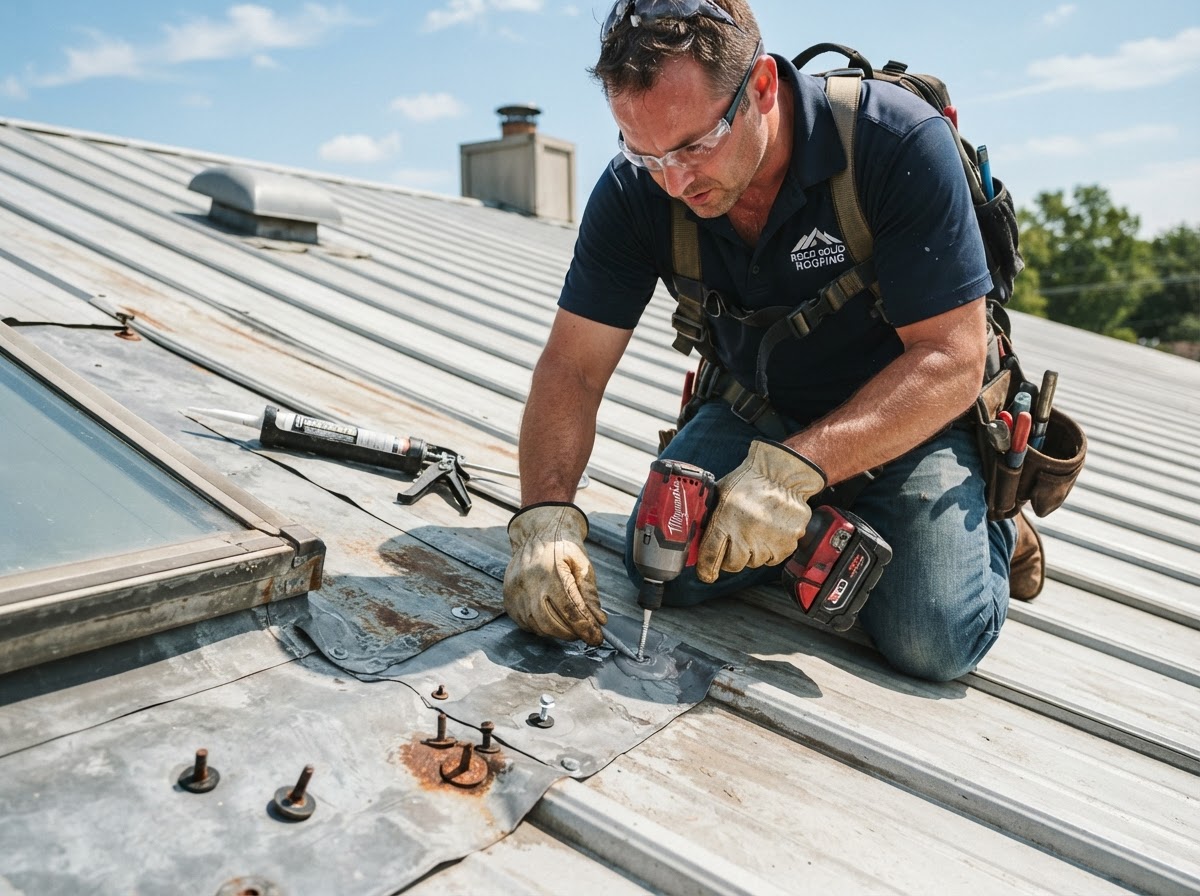
Metal roof repair addresses loose fasteners, damaged panels, corrosion concerns, flashing problems, penetrations, and sealant deterioration. Leak investigation on a metal roof looks at fasteners and seams as well as the panels themselves.
Material compatibility matters: replacement panels, fasteners, and sealants must suit the existing system. Panel assessment, fastener review, and flashing replacement support continued system performance.
Benefits for Montgomery Property Owners
Addressing localized metal roof problems
Supporting continued system performance
Compatible repair materials
An alternative to full panel replacement where feasible
Storm-related roofing work throughout Montgomery and Central Alabama — wind, hail, tornado, and emergency response — with attention to documentation, temporary protection, and repair planning. No 24/7 dispatch or guaranteed response times are claimed.
Storm Damage Roof Repair in Montgomery
Storm-related roof problems include missing roofing materials, damaged flashing, water intrusion, and displaced components. An inspection documents the damage, and temporary protection can reduce further exposure while permanent repairs are planned.
Safety comes first — avoid unsafe access to a compromised roof. This site does not invent storm dates or claim specific damaged neighborhoods; documented, verifiable events drive any event-specific content.
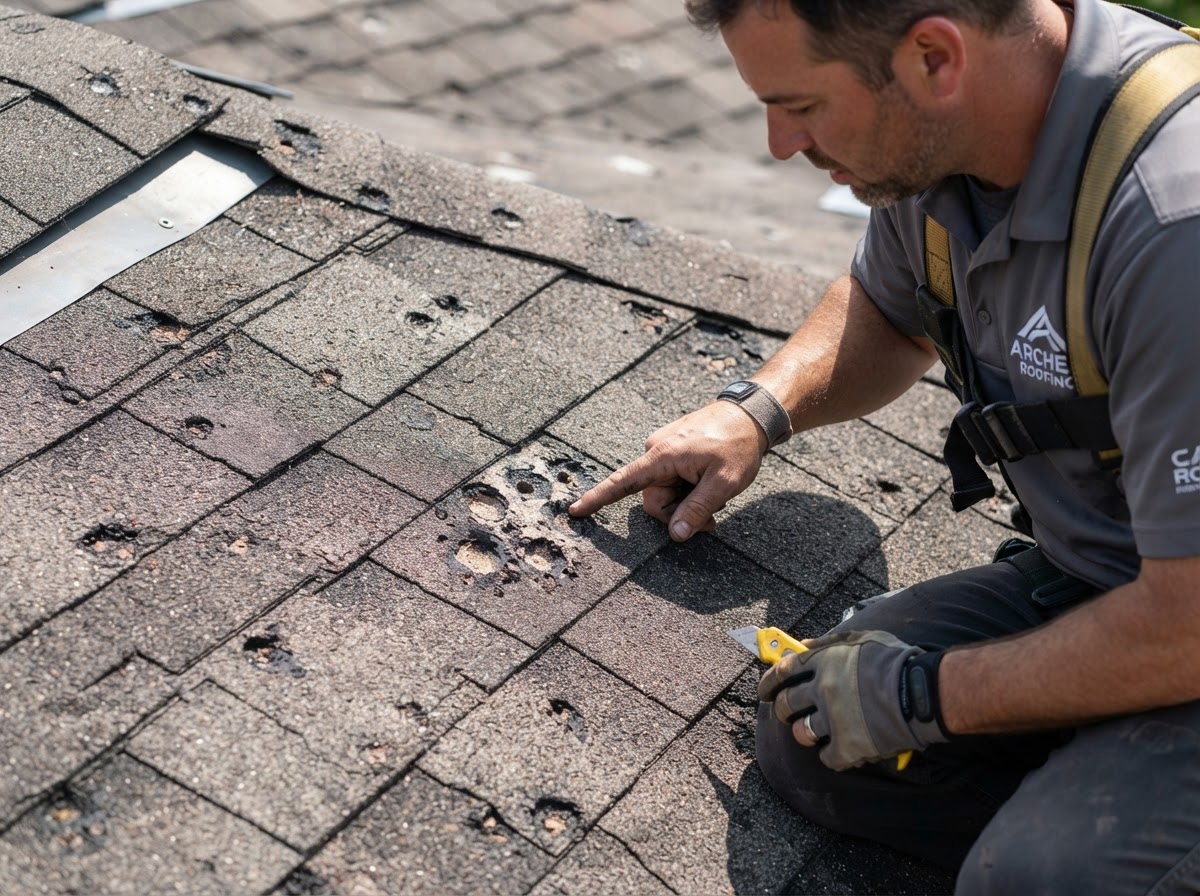
Hail can affect asphalt shingles and metal roofing differently — granule loss, bruising, and impact marks on shingles; denting on metal. Inspection considers the material, the visible impact, and the extent of the damage.
This site does not promise insurance coverage or claim hail damage is present without evidence. Repair options range from localized shingle replacement to roof-section replacement or full replacement where appropriate.
Wind can lift and remove shingles, damage ridge caps, displace flashing, and drive rain under roofing components. Roof-edge damage is common because edges take the first force. Repair assessment looks at fastening, ridge, edge, and flashing condition.
Compatible repairs replace displaced components and reduce the risk of ongoing exposure. Where damage is widespread, a larger section or full replacement may be warranted.
Benefits for Montgomery Property Owners
Correcting displaced roofing components
Reducing the risk of ongoing exposure
Restoring roof-edge and ridge integrity
An alternative to full replacement where damage is localized
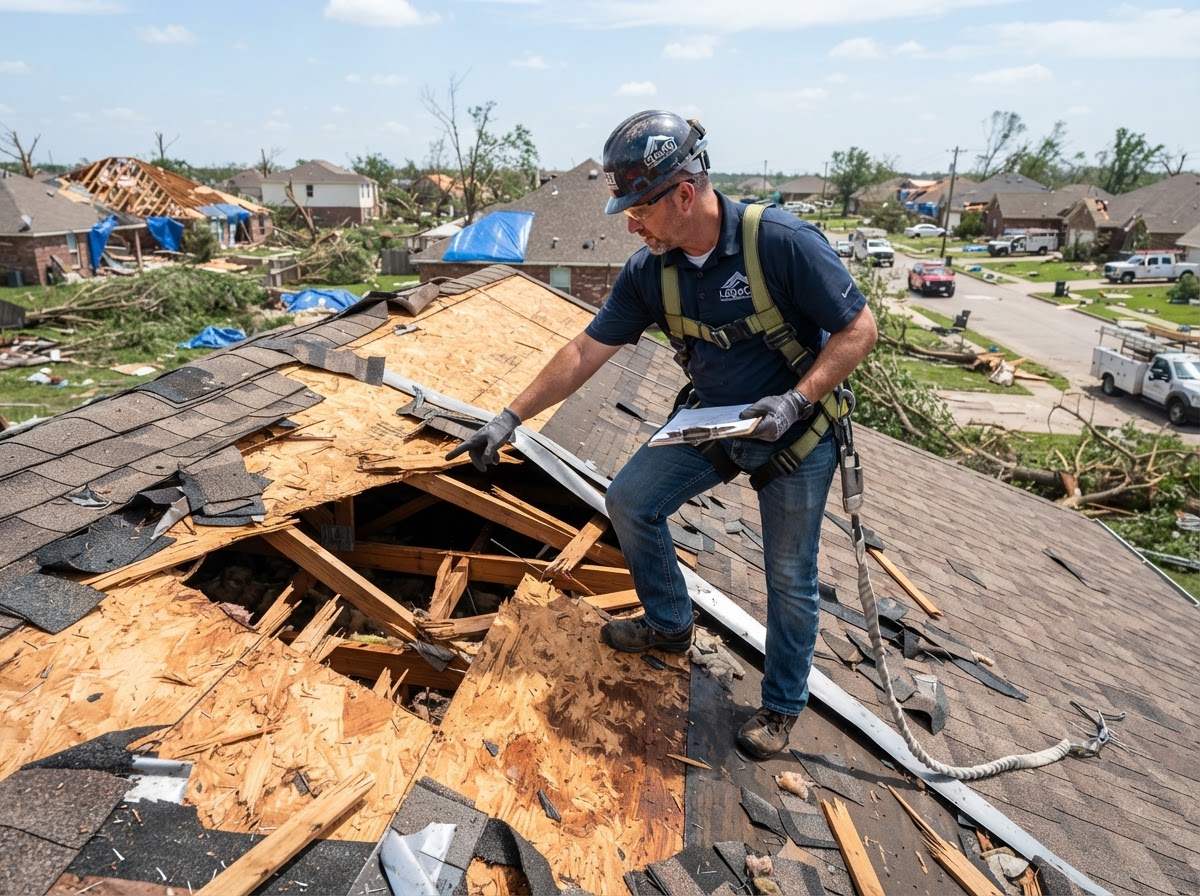
Tornado-related damage can include roof-covering loss, wind-driven debris, damaged decking, and exposed roof areas. Safety is paramount — not every damaged structure is safe to access, and structural concerns require specialist referral.
Temporary protection, visible damage documentation, and a structured repair or replacement plan follow assessment. Full replacement is warranted when the damage is extensive.
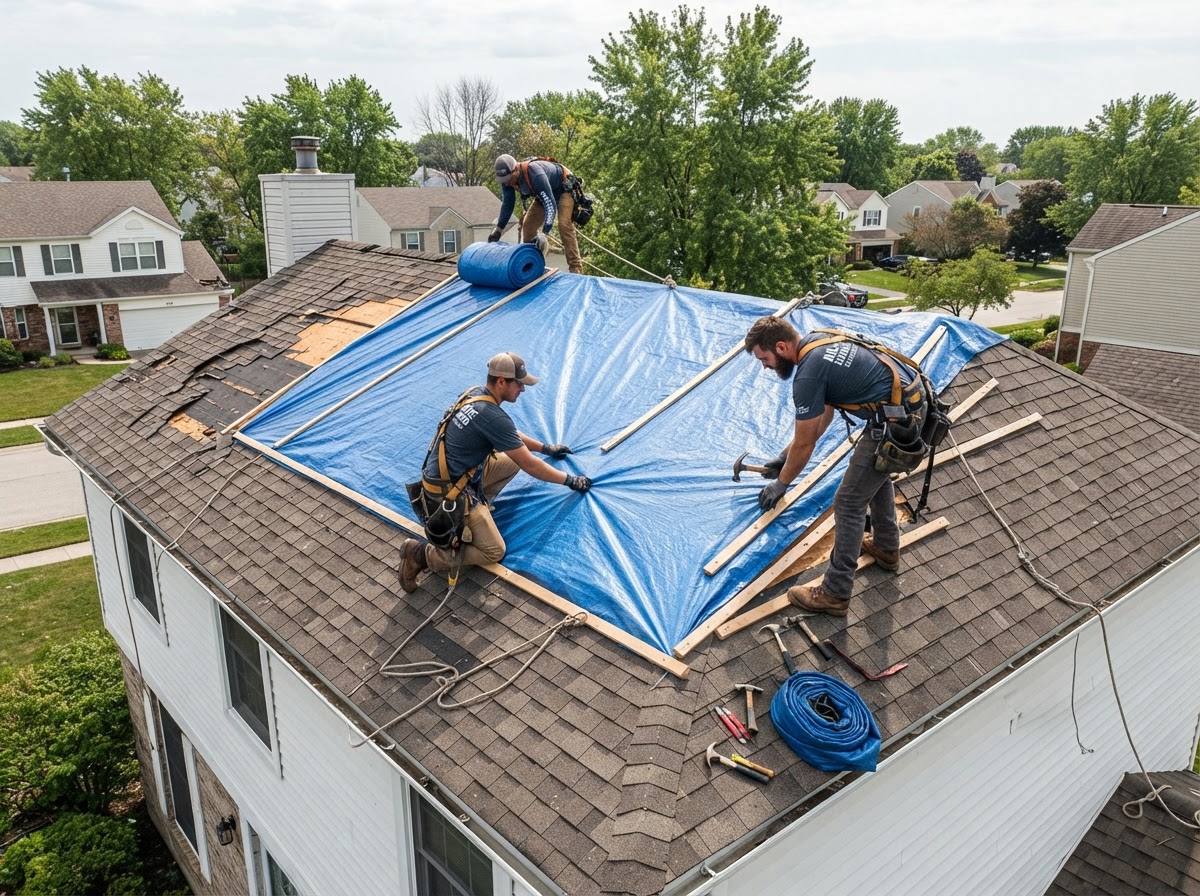
After severe weather, quickly assessing exposed roof areas matters: active water intrusion, missing materials, fallen debris, and the need for temporary protection. Emergency tarping, where available, can reduce further exposure.
This site does not claim 24/7 availability or guaranteed dispatch times without verification. Damage documentation and permanent repair planning follow the initial response.
Benefits for Montgomery Property Owners
Prompt evaluation where service availability allows
Understanding the Roof Replacement & Repair Process in Montgomery
General roofing project guidance — not an unverified guarantee about a specific contractor's internal operating procedures. The same steps frame most residential and commercial roofing inquiries.
1
Identify the Roofing Need
An active leak, a planned replacement, a material upgrade, a storm-related concern, commercial maintenance, or a property transaction. Defining the need shapes the questions worth asking.
2
Review Roof Conditions
Roofing material, slope, surface condition, flashing, drainage, penetrations, and visible deterioration — plus structural or decking concerns where observable. Some conditions can't be fully determined from photos or an exterior-only assessment.
3
Consider Appropriate Options
Localized repair, a larger repair scope, roof restoration where suitable, full replacement, a material conversion, or a commercial recover or retrofit. Suitability depends on the existing assembly, building conditions, applicable code, and manufacturer requirements.
4
Plan the Work
Material choice, work access, occupied-property concerns, weather, roof protection, debris management, commercial operating hours, and coordination around rooftop equipment.
5
Review the Completed Scope
Understanding the work performed, materials installed, documentation, maintenance recommendations, and any applicable warranty information provided by the actual contractor. No specific warranty is implied here.
Compare Shingle, Metal & Commercial Roofing Options in Montgomery
A clear comparison helps frame the choice between roofing systems without inventing a price list or promising specific material performance. Each option fits different properties, slopes, and maintenance expectations.
Asphalt Shingle Roofing
Common residential applications
Architectural appearance and profile
Material and product variations
Repair considerations
Ventilation and underlayment
Replacement scope
Standing Seam & Exposed-Fastener Metal
Panel profiles
Attachment methods
Appearance and maintenance differences
Thermal movement
Installation considerations
Project-specific suitability
Commercial Membrane Roofing
TPO, EPDM, PVC, and other approved systems
Commercial low-slope conditions
Drainage and penetrations
Insulation and assembly considerations
Seam and flashing detail
Replacement versus repair
Roof Coatings & Restoration
Appropriate candidate roofs
Existing substrate condition
Moisture concerns and compatibility
Preparation requirements
Manufacturer system requirements
Limits where replacement is the right call
Coatings Have Limits
A coating can extend the serviceable life of a sound roof, but it cannot automatically solve structural problems, saturated assemblies, or every leak. Where the core assembly is compromised, a coating over the top can mask the issue. A real assessment of the existing roof — not a surface application alone — is the honest starting point for deciding whether restoration is even an option.
What Affects Roof Replacement Cost in Montgomery?
Building size and roof area
Roof complexity and pitch
Roofing material selection
Existing roof condition
Tear-off and disposal requirements
Decking and substrate repairs
Flashing and penetration details
Insulation and ventilation considerations
Commercial roof access
Drainage and equipment coordination
Applicable permitting and code requirements
Weather and scheduling considerations
This site publishes no company price list and no guaranteed installation rates. If researched market ranges are introduced later, they will be distinguished from an actual business quote and documented with their date and sources. The accurate way to learn what your project would cost is to request a quote with the property and project details.
Roofing Resilience, Storm Readiness & Maintenance in Montgomery
Three educational themes that come up repeatedly for Montgomery and Central Alabama property owners — framed honestly, without unverified program credentials or guarantees.
Understanding FORTIFIED Roof Requirements in Alabama
FORTIFIED is a defined building-resilience program with specific standards and independent verification requirements. It addresses wind-resistance considerations, roof covering and roof deck requirements, installation documentation, and formal designation through an independent third-party evaluation.
Installing a roof does not automatically establish an official FORTIFIED designation, and this project does not claim approved FORTIFIED contractor or evaluator credentials, display certification badges without proof, or promise insurance discounts. Strengthen Alabama Homes grant availability is not presented as currently available to Montgomery property owners unless official eligibility and application status are independently verified.
Preparing Your Roof for Wind & Severe Weather Near Montgomery
Practical storm preparation starts from the ground: identifying visible deterioration from a safe ground-level observation, considering drainage and gutter conditions, documenting existing roofing conditions, and understanding emergency safety precautions.
Homeowners should not walk on a damaged roof. No roof is storm-proof, and no roof is guaranteed against severe weather. Knowing when a professional assessment may be appropriate — and documenting the current condition before storm season — are useful steps that don't require unsafe roof access.
Commercial Roofing Maintenance in Montgomery
Commercial property managers benefit from regular attention to roof drains, penetrations, seams, flashings, and rooftop equipment. Ponding-water conditions, visible membrane deterioration, and weather-related changes all warrant tracking.
Maintenance planning and inspection considerations help catch small issues before they become costly failures. This section does not guarantee leak prevention or a fixed roof life — commercial roof performance depends on the assembly, installation, and the maintenance it actually receives.
Roofing Questions Homeowners & Businesses Ask Near Montgomery
Direct, useful answers to the roofing questions that come up most often — without overstating what any specific contractor can guarantee.
How do I know whether my roof needs repair or replacement?
It depends on the pattern of the problem. Localized damage — a few missing shingles, a single flashing leak, one damaged vent — may be a repair. Broader material deterioration, recurring leaks in multiple areas, an aging roof assembly, or extensive storm damage point toward replacement. A full roof condition can't always be determined from photos or an exterior-only assessment; an inspection that accounts for the decking, underlayment, and flashing helps clarify the right call.
What are the differences between architectural shingles and metal roofing?
Architectural shingles and metal roofing differ in appearance, installation method, material characteristics, maintenance, project scope, and cost. Architectural shingles are laminated for a dimensional look and are common on residential slopes; metal systems — standing seam or exposed-fastener — offer a different profile and attachment approach. Neither is universally better; the right choice depends on the roof, the property, the owner's priorities, and budget.
Is standing seam metal roofing different from exposed-fastener metal roofing?
Yes. Standing seam uses concealed fasteners, allowing panels to move with thermal expansion and reducing exposed fastener points. Exposed-fastener metal roofing attaches with visible screws that may need periodic attention to seals and gaskets. The maintenance and longevity considerations differ between the two — they're not interchangeable systems.
What is TPO roofing, and where is it commonly used?
TPO (thermoplastic polyolefin) is a single-ply roofing membrane commonly used on appropriate low-slope commercial applications. Its installation involves seams (typically heat-welded), insulation, drainage, penetrations, and the broader roof assembly design. It's one of several commercial membrane options — EPDM, PVC, and modified bitumen among them — and the systems aren't interchangeable.
Can a leaking commercial flat roof be repaired instead of replaced?
Sometimes. Leak location, membrane condition, trapped moisture, prior repairs, insulation, and the overall roof condition all influence whether repair is suitable. A small, well-defined leak in an otherwise sound membrane may be a repair candidate; widespread moisture, failed seams across the field, or a saturated assembly often point toward recovery or replacement. An honest assessment starts with the actual roof condition, not a coating over the top.
Can metal roofing be installed over existing shingles?
It depends. Overlay feasibility depends on the existing roof layers, the condition of the current roof, the structure's capacity, applicable building code, the manufacturer's requirements, and the project design. Not every roof qualifies. Where an overlay isn't appropriate, a full tear-off and replacement is the correct path.
What should I do after wind or hail damage to my roof?
Prioritize safety first — avoid roof access where conditions are unsafe. From a safe location, document visible damage with photos, protect the property when appropriate, review your insurance obligations, and request a suitable assessment. Temporary protection like tarping can reduce further exposure while a durable repair or replacement is planned. No 24-hour dispatch or immediate-availability claim is made on this site.
Does homeowners insurance cover storm-related roof damage?
Coverage depends on the policy language, the cause of loss, exclusions, the deductible, the documentation provided, and the insurer's own determination. This site does not guarantee coverage or claim approval, and it doesn't promise deductible waivers, a free roof, or specific insurance savings. Insurance coverage is ultimately decided by the insurer under the policy — not by a roofing inquiry.
What factors influence the cost of a new roof in Montgomery?
Size, roofing material, roof complexity and pitch, existing condition, tear-off and disposal, decking and substrate repairs, flashing and penetration details, ventilation, insulation, and roof access all influence cost — plus permitting, code, and scheduling considerations. No prices are fabricated here. The accurate way to learn what a specific project would cost is to request a quote with the property and project details.
What does FORTIFIED roofing mean in Alabama?
FORTIFIED is a defined building-resilience program with specific standards and independent third-party evaluation for official designations. A roofing installation alone does not automatically earn a FORTIFIED designation, and not every roofing company can certify its own work — an independent evaluator is part of the process. This site presents FORTIFIED as education, not as a claimed credential.
Residential & Commercial Roofing Throughout Montgomery and Central Alabama
This site is intended to serve roofing inquiries from across Montgomery and the surrounding Central Alabama region — Montgomery neighborhoods, surrounding residential communities, nearby municipalities, commercial corridors, rural and agricultural properties, appropriate lake-region properties, and countywide service regions. The homepage is the Montgomery destination; the broader service-area pages planned across this project carry the community-specific context as those pages come online.
Whether the property sits inside Montgomery's city limits, just north in Prattville and Wetumpka, south toward Hope Hull and Pintlala, out toward Eclectic and Lake Martin-area communities, west toward Selma, or anywhere across Montgomery County, the inquiry form on this page is the consistent starting point for describing the roofing need.
Regional coverage context for Montgomery and Central Alabama. No fabricated office marker or invented coverage boundary; no specific drive or response times claimed.
Featured Central Alabama Service Areas
A selection of confirmed areas from the intended service geography. The complete service-area inventory is carried on the dedicated location pages as they come online — not as 55 empty homepage links.
MontgomeryPage planned
PrattvillePage planned
Hope HullPage planned
PintlalaPage planned
ElmorePage planned
EclecticPage planned
SelmaPage planned
Montgomery CountyPage planned
These featured locations are drawn from the approved project context. They are not a substitute for the complete 55-area registry, and the homepage does not duplicate Montgomery as a separate city page. Montgomery County remains its own approved geographic destination.
Planning Roof Repair or Replacement Near Montgomery?
Whether you're looking into a shingle roof replacement, standing seam metal roofing, a commercial TPO system, or repairs after roof damage, the right next step begins with understanding your property and the work you're considering. Share the roofing material, property type, location, and concerns so your inquiry can be reviewed with the appropriate project details. No specific contractor assignment or appointment time is guaranteed by submitting this form.