
Flashing Repair Montgomery
Flashing is the metal or membrane detail that manages water at the places a roof is most vulnerable — where it meets a wall, a chimney, a valley, a penetration, or an edge. When flashing fails, water enters at the joint, even if the surrounding shingles or panels look fine. This page covers how flashing problems are identified, what types of flashing are involved, and what repair scope may follow.
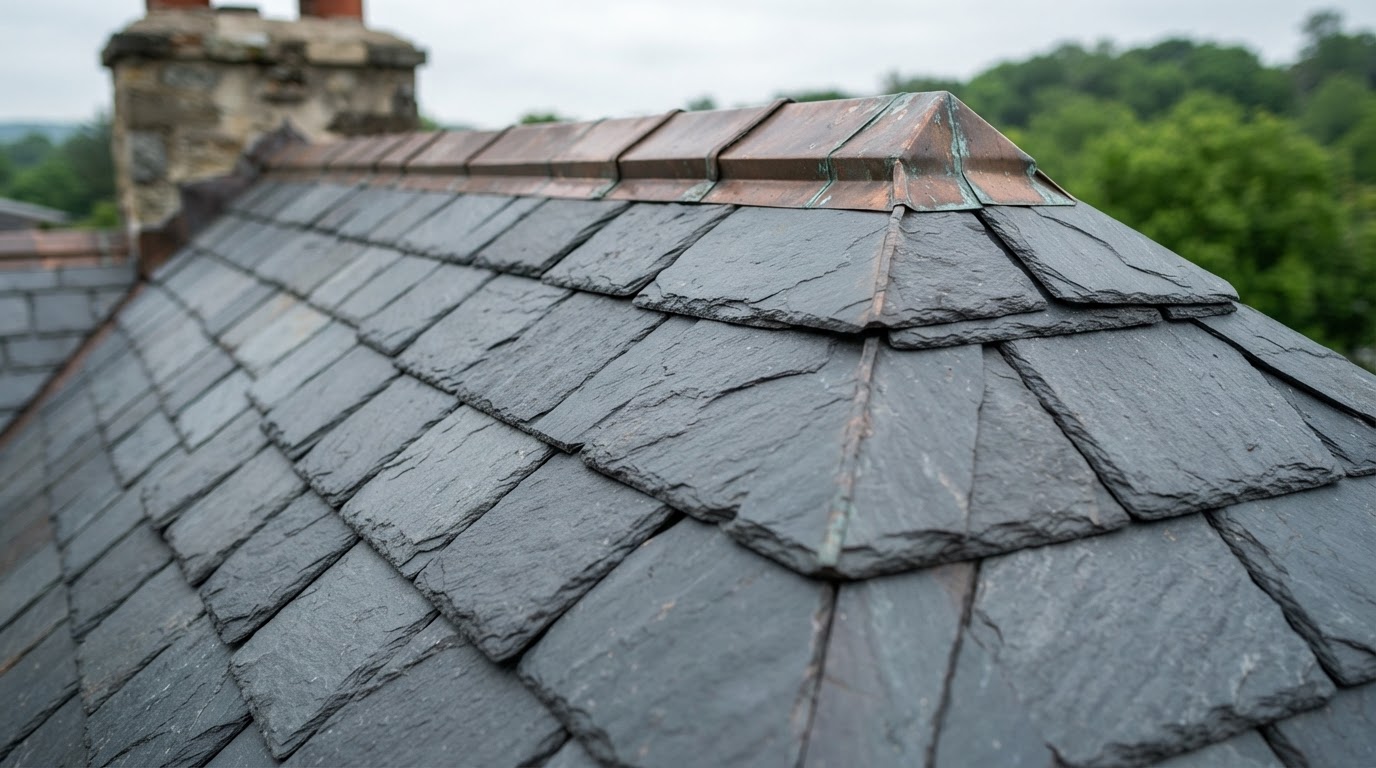
Signs of Roof Flashing Problems Near Montgomery
Loose Flashing
Flashing that has lifted away from the wall, chimney, or roof deck creates an open path for water. Wind, thermal movement, and age can all loosen flashing over time.
Corrosion or Material Deterioration
Metal flashing can corrode, pit, or thin, especially where dissimilar metals contact each other or where the coating has been damaged. Deteriorated flashing loses its water-shedding function.
Open Transitions
Gaps at roof-to-wall joints, valleys, or penetration curbs let water behind the flashing and into the building. Some gaps open seasonally with thermal movement.
Damaged Sealant
Sealant at flashing details — at chimneys, skylights, or penetrations — can dry, crack, or pull away from the substrate. Sealant is a secondary seal, not the primary water-shedder.
Storm-Related Displacement
Wind can lift flashing edges, debris can bend or break components, and hail can damage exposed metal. Storm damage to flashing may not be obvious from the ground.
Leaks Around Penetrations
Pipe boots, vent collars, and skylight curbs are common flashing failure points. Water at a penetration usually means the flashing or its seal has failed.
Repeated Moisture Near Walls
Water staining on interior walls near a roof line often points to a flashing problem at the roof-to-wall transition, not a shingle problem.
Problems After Previous Roofing Repairs
If leaks return after a repair that addressed shingles but not flashing, the flashing was likely the actual source. Repairs that do not address the failed component do not hold.
Flashing problems can occur even when the surrounding roof covering looks intact. The flashing detail, not the shingle or panel, is usually where the water gets in.
Evaluating Roof Flashing Repairs in Montgomery
Flashing assessment identifies the type of flashing, its condition, and how it integrates with the surrounding roofing. Because flashing overlaps and ties into shingles, metal panels, or membranes, repairs often affect more than the flashing alone.
Identify the flashing type
Step, counter, valley, pipe boot, skylight curb, drip edge — each is repaired differently.
Review adjacent roofing materials
Shingles, metal panels, or membrane around the flashing that may need to be disturbed or replaced.
Examine roof-to-wall transitions
Where the roof meets a sidewall, dormer, or chimney — a common flashing failure point.
Assess penetrations
Pipe boots, vent collars, and skylight curbs for seal failure, movement, or corrosion.
Check material compatibility
Dissimilar metals, incompatible sealants, or mismatched components that can cause corrosion or failure.
Review drainage paths
Whether water is directed away from the flashing detail or pools against it.
Identify concealed deterioration
Water damage beneath the flashing or in the substrate that is not visible without lifting the detail.
Consider surrounding roofing
Whether the shingles, panels, or membrane around the flashing must be removed or replaced to do the repair correctly.
Not every flashing problem can be solved with surface sealant. Some repairs require lifting or replacing the flashing detail and integrating it with the surrounding roofing material.
Types of Roof Flashing and Repair Options Near Montgomery
Step Flashing
L-shaped pieces installed in courses where a roof slope meets a vertical wall. Each step overlaps the one below and integrates with the shingle or panel course above it.
Counterflashing
Installed into or over a masonry wall to cover the top edge of step flashing, counterflashing completes the wall-to-roof transition and sheds water away from the joint.
Valley Flashing
Pre-formed or woven metal that carries water down a roof valley where two slopes meet. Valleys handle high water volume and are a common leak source when damaged.
Pipe and Vent Flashing
Boots, collars, and base flashing that seal the gap where a pipe or vent passes through the roof. These details age, crack, and fail over time.
Skylight Flashing
A curb or frame flashing kit designed for the specific skylight and roof type. Skylight leaks often involve the flashing, not the skylight itself.
Roof Edge and Transition Details
Drip edge, rake edge, eave flashing, and transition details that manage water at the roof perimeter. Different roofing systems handle these details differently.
Flashing Repair vs. Roof Replacement
Localized flashing work is appropriate when the flashing detail has failed but the surrounding roof is sound. When the roof covering, underlayment, or decking around the flashing is also deteriorated, a broader roof replacement may be the more durable choice.
Why Flashing Material Compatibility Matters
Flashing metal, fasteners, sealants, and the surrounding roofing material must be compatible. Dissimilar metals in contact can cause galvanic corrosion, and the wrong sealant can fail prematurely or damage the substrate. The manufacturer's requirements govern the combination.
Roof Flashing Repair Questions for Montgomery Homes
What does roof flashing do?
Flashing directs water away from the joints where a roof meets a wall, chimney, valley, penetration, or edge. Without it, water enters at those transitions even when the surrounding shingles or panels are intact.
Can damaged flashing cause a roof leak?
Yes. Failed flashing is one of the most common residential leak sources. Water at a chimney, wall, or penetration usually points to the flashing detail, not the shingles.
What is step flashing?
L-shaped metal pieces installed in overlapping courses where a sloped roof meets a vertical wall. Each step sheds water onto the course below and integrates with the shingle or panel above it.
How does counterflashing differ from step flashing?
Step flashing is the base layer that ties into the roofing; counterflashing covers the top edge of the step flashing from the wall side, completing the transition and shedding water away from the joint.
Can flashing be repaired without replacing the roof?
Yes, when the flashing detail has failed but the surrounding roof covering, underlayment, and decking are sound, the flashing can be repaired or replaced without a full roof replacement.
Is roof sealant enough to repair flashing?
No. Sealant is a secondary seal, not a primary water-shedder. A durable flashing repair addresses the metal or membrane detail that failed, not just the gap it left behind. Sealant alone is a temporary measure.
What factors affect flashing repair cost?
The flashing type, the extent of the damage, the surrounding roofing material that must be disturbed, access, and whether the repair is localized or part of a larger project. This page does not publish installed price ranges.
Need Roof Flashing Repair Near Montgomery?
Describe where the water appears, what the roof meets — a wall, chimney, valley, or penetration — and whether the flashing has been inspected. The right repair follows the type of flashing, the failure, and the surrounding roofing system.