
Shingle, Metal & Commercial Roofing Lake Martin
Lake Martin is a Tallapoosa River reservoir extending across the Tallapoosa, Elmore, and Coosa County region — a multi-county lake region, not a municipality. This is a premium lake-region roofing page focused on residential roofing, appearance and durability considerations, and property-specific material selection: architectural shingle replacement, standing-seam metal, exposed-fastener metal maintenance, roof replacement for lakefront and nearby primary residences, seasonal-use properties, flashing, valleys, and penetrations, roof runoff and drainage, and roofing for qualifying detached buildings. Not every Lake Martin property is a luxury home, vacation rental, waterfront estate, or subject to an HOA — those are property-specific, not assumptions. Architectural shingles and standing-seam metal are compared on appearance, existing roof structure, slope, material compatibility, installation complexity, maintenance, flashing details, warranty distinctions, and repairability — without promising a specific lifespan or asserting that one system is always more suitable near water. The discussion stays on roofing, reroofing, drainage, and maintenance — not dock, boathouse construction, or shoreline improvements. Because Lake Martin spans multiple counties and communities, the actual property jurisdiction is identified before any permit requirement is discussed; for regulated shoreline structures, Alabama Power's Shorelines resources are the appropriate reference, but shoreline approval is not implied as universally required for ordinary roof replacements. No lake-specific material mandates, HOA rules, flood-zone classifications, or insurance discounts are invented.
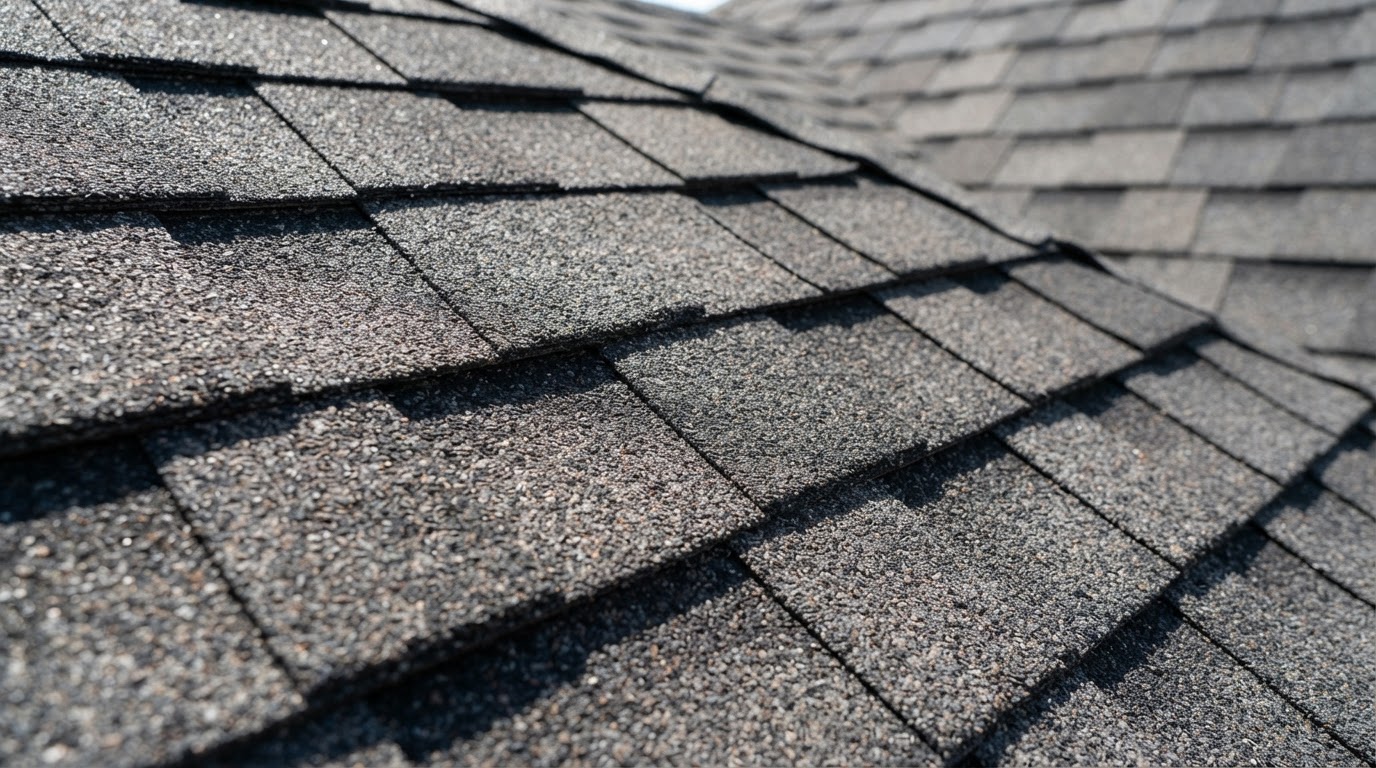
Shingle Roof Replacement and Repair Around Lake Martin
Architectural shingle replacement, standing-seam and exposed-fastener metal, leak repair, flashing, drainage, and roof inspections for lakefront, nearby, and seasonal-use homes.
Residential Roof Replacement
A full re-roof evaluates existing layers, decking, underlayment, flashing, valleys, and ventilation before a new shingle system is installed.
Learn moreArchitectural Shingle Roofing
Architectural shingles selected against slope, style, and substrate — compared with metal on appearance, budget, and maintenance, not as a universal default.
Learn moreStanding-Seam Metal Roofing
Concealed-fastener standing seam selected against roof slope, style, and compatibility with the existing assembly.
Learn moreExposed-Fastener Metal Repair
Through-fastened panels need washer, fastener, and seal inspection as they age — evaluated separately from standing seam.
Learn moreRoof Leak Repair
Water entry is traced to the likely source — flashing, penetration, valley, or drainage — rather than assumed from an interior stain.
Learn moreFlashing & Valley Repairs
Flashing at valleys, roof-to-wall transitions, and penetrations is traced to the actual entry point rather than assumed.
Learn moreRoof Inspections
A documented condition assessment supports repair, replacement, or maintenance decisions for the specific roof.
Learn moreGarage & Detached-Structure Roofing
Roofing, reroofing, drainage, and maintenance for qualifying detached structures — not dock or shoreline construction.
Learn moreRoofing Materials for Lakefront and Nearby Homes
Material-selection considerations for homes where appearance and maintenance matter — architectural shingles and standing-seam metal compared on appearance, structure, slope, compatibility, installation, maintenance, flashing, warranty, and repairability.
Material selection around Lake Martin is about appearance, durability, and the property's actual roof — not a universal rule. Architectural shingles and standing-seam metal are compared on appearance, the existing roof structure, slope, material compatibility, installation complexity, maintenance, flashing details, warranty distinctions, and repairability. No specific lifespan is promised, and no system is asserted as always more suitable near water. The two metal systems (standing-seam and exposed-fastener) are treated as distinct, with different installation methods and upkeep, and metal is not noise-free or maintenance-free. Existing roof structure, substrate condition, and roof slope affect what the roof will accept — a material change may require more than replacing the visible covering.
Not every Lake Martin property is a luxury home, vacation rental, waterfront estate, or subject to an HOA — those are property-specific, not assumptions. Lakefront, nearby primary, and seasonal-use homes each have their own slope, existing material, flashing condition, drainage, and exposure. Seasonal-use properties add a maintenance-planning consideration: a documented maintenance and inspection approach can help identify a leak before prolonged water intrusion causes further damage when the home is not occupied year-round — but no unverified maintenance subscription is offered, and the value is in the documented approach, not a marketed program. Roofing for qualifying detached buildings stays on the roof: panel and fastener condition, flashing, drainage, and the existing assembly. The discussion does not extend to dock, boathouse construction, or shoreline improvements, and no authorization to construct those is implied.
Material selection is property-specific
Roof Flashing and Drainage Considerations for Lake Martin Properties
An understandable sequence — from inquiry through documented findings, repair-versus-replacement discussion, and a written scope — without promising free inspections or fixed response times.
1. Describe the Property and Concern
The roofing problem, the property location, whether the property is lakefront, nearby primary, or seasonal-use, the roof material if known, and any access notes.
2. Arrange an Assessment
An appropriate roof assessment is arranged, subject to availability — not promised as same-day or free.
3. Document Visible Conditions
The covering, flashing, valleys, penetrations, drainage, ventilation, and decking are documented for the specific roof.
4. Evaluate the Existing Roof Structure
Existing structure, substrate condition, slope, and material compatibility are evaluated — a material change may require more than replacing the visible covering.
5. Weigh Repair and Replacement
A localized defect with sound neighbors may be repairable; widespread deterioration, repeated leaks, or soft decking may favor replacement.
6. Compare Materials on Merit
Architectural shingles and standing-seam metal are compared on appearance, structure, slope, compatibility, installation, maintenance, flashing, warranty, and repairability — not on a promised lifespan.
7. Prepare a Written Scope
A written scope reflects the actual findings — including any flashing, valley, drainage, or penetration work — rather than a generic package.
8. Coordinate Access and Approvals
Property access, material delivery, and any applicable approvals are coordinated for the specific parcel and jurisdiction.
No free-inspection or fixed-response promise
Seasonal Home Roof Maintenance Near Lake Martin
Because Lake Martin spans multiple counties and communities, the actual property jurisdiction is identified before any permit requirement is discussed — and shoreline approval is not implied as universally required for ordinary roof replacements.
Lake Martin is a Tallapoosa River reservoir extending across the Tallapoosa, Elmore, and Coosa County region, so the actual property jurisdiction is identified before any permit requirement is discussed. Relevant authorities may include municipal or county offices depending on the actual address, and no Lake Martin municipal government or uniform building code is invented. The applicable authority is confirmed per parcel through current official sources before any permit rule is stated as definite; the City of Montgomery's published guidance is not automatically applied to a Lake Martin address. No lake-specific material mandate, HOA rule, flood-zone classification, or insurance discount is invented.
For projects involving regulated shoreline structures — docks, seawalls, or other shoreline improvements — Alabama Power's official Shorelines resources are the appropriate reference. Shoreline approval is not implied as universally required for ordinary roof replacements; the proposed scope is what determines whether shoreline review applies, and no technical shoreline permitting instruction is provided without confirming the scope. Seasonal-use property owners may benefit from a documented maintenance and inspection approach — identifying a leak before prolonged water intrusion causes further damage matters more when the home is not occupied year-round — but no unverified maintenance subscription is offered. Property owners are not directed onto damaged or unsafe roofs; safe observation from the ground and documentation of visible conditions are appropriate.
Roof Replacement and Maintenance for Lake Martin Area Homes
Roofing choices for primary and seasonal homes, protecting complex residential roof details, and planning roofing projects on individual properties around Lake Martin.
Roofing Choices for Primary and Seasonal Homes
Lake Martin is a Tallapoosa River reservoir spanning multiple counties and communities rather than a municipality, and the homes around it range from primary residences to seasonal-use properties — so the roof system follows the individual building rather than a single lake template. Architectural shingles suit steep-slope roofs where the slope and style fit, and standing-seam metal is considered where the geometry, the home's design, and the owner's maintenance preference suit it. Each metal system is distinct: standing-seam conceals its fasteners, while exposed-fastener panels are through-fastened with their own washer and fastener upkeep — never treated as a cheaper standing seam. The comparison weighs appearance, maintenance, and long-term planning, and no material is described as universally superior. The standing-seam metal roofing and premium residential roof replacement pages describe how each system is compared.
Protecting Complex Residential Roof Details
Roof performance depends on the components that carry and seal water, and a complex residential roofline has more of them. Valleys where roof planes meet, dormers where present, roof penetrations where vents pass through, covered outdoor living areas, the flashing that seals each transition, and the gutters that move water off the edge all work together. A covering only performs when those details are sound, and a ceiling stain rarely maps directly to the entry point above it. These components are evaluated on the specific roof rather than assumed from the address — not every Lake Martin home is a luxury estate, a vacation property, or directly on the shoreline, and no lake-specific storm damage, universal HOA requirement, or shoreline construction permission is assumed.
Planning Roofing Projects on Individual Properties
A roofing project's scope follows what an on-site assessment actually finds. Access, roof configuration, and the condition of the existing material and underlying decking all shape whether a localized repair or a broader replacement is appropriate, and the scope is established before replacement begins. A localized repair suits a single failed detail with sound surrounding material, while widespread deterioration or soft decking favor replacement. Ordinary roofing work does not always need a lake-specific permit; where a project involves regulated shoreline property or structures, the owner verifies applicable requirements with the relevant authority before proceeding. The scope is built from the roof, the structure, and the owner's goals for the actual property that is there.
Roofing Questions About Lake Martin
Local questions on roof-material selection, standing-seam versus architectural shingles, metal repair, seasonal maintenance, flashing, detached structures, access, and permit or shoreline approvals.
What roof-material considerations matter for a Lake Martin home?
Material selection is property-specific. Architectural shingles and standing-seam metal are compared on appearance, the existing roof structure, slope, material compatibility, installation complexity, maintenance, flashing details, warranty distinctions, and repairability. No specific lifespan is promised, and no system is asserted as always more suitable near water. The existing roof structure and substrate condition may mean a material change requires more than replacing the visible covering. The recommendation follows the actual roof, the structure's use, and the owner's goals.
How do standing-seam metal and architectural shingles compare around Lake Martin?
Standing seam offers a distinct profile with concealed clips and a continuous folded seam that hides the fasteners and allows thermal movement; architectural (laminated) shingles offer a dimensional asphalt appearance at a different price and maintenance profile. The two are compared on appearance, structure, slope, compatibility, installation, maintenance, flashing, warranty, and repairability — not on a promised lifespan or an assertion that one is always more suitable near water. The roof's slope, the existing substrate, and the owner's goals decide.
Can an existing metal roof be repaired?
Yes, where the surrounding material is sound and compatible. On a standing-seam roof, a seam or clip issue is evaluated; on an exposed-fastener roof, a fastener or washer leak is evaluated separately from a panel defect. Exposed-fastener and standing-seam systems are distinct, with different installation methods and upkeep, and metal is not treated as maintenance-free. The repair recommendation follows what the specific roof shows — a localized defect may be repairable; widespread panel or fastener deterioration may favor replacement.
What about roof maintenance for a seasonal-use property near Lake Martin?
A documented maintenance and inspection approach can help identify a leak before prolonged water intrusion causes further damage — which matters more when the home is not occupied year-round. The value is in the documented approach, not a marketed subscription, and no unverified maintenance program is offered. Leak assessment distinguishes the visible interior evidence from the likely exterior source, and the actual source is identified before any repair is prescribed.
How are flashing and water intrusion evaluated?
The visible evidence is traced to the likely entry point — a valley, roof-to-wall transition, chimney, or penetration — rather than assumed from an interior stain alone. Flashing is inspected because that is where many leaks originate, and caulking is not treated as a universal durable repair. Roof-water entry is distinguished from wider site drainage concerns before a scope is developed, and the actual source is identified before any repair is prescribed.
Can you roof a qualifying detached waterfront structure?
Roofing, reroofing, drainage, and maintenance for a qualifying detached building are within scope where the structure allows, and the material and assembly are selected against that structure's slope, framing, substrate, and exposure. The discussion stays on the roof — panel and fastener condition, flashing, drainage, and the existing assembly — and does not extend to dock or boathouse construction or shoreline improvements. No authorization to construct shoreline structures is implied.
How does access and scheduling work around a lake property?
Property access and material delivery are coordinated against the actual site — lakefront and seasonal-use properties may have different staging constraints or access considerations than a typical subdivision lot. Access constraints are noted up front so the responding provider can plan safely, and an assessment is arranged subject to availability rather than promised as same-day or free. Property owners are not directed onto damaged or unsafe roofs.
How do I verify permit and shoreline approvals for a Lake Martin property?
Lake Martin spans the Tallapoosa, Elmore, and Coosa County region, so the actual property jurisdiction is identified before any permit requirement is discussed — no Lake Martin municipal government or uniform building code is invented. The applicable municipal or county authority is confirmed per parcel through current official sources. For projects involving regulated shoreline structures, Alabama Power's official Shorelines resources are the appropriate reference, but shoreline approval is not implied as universally required for ordinary roof replacements — the proposed scope determines whether shoreline review applies. No lake-specific material mandate, HOA rule, flood-zone classification, or insurance discount is invented.
Lake Martin in the Region
An accurate multi-county Tallapoosa River reservoir reference and related nearby service areas.
Lake Martin is a Tallapoosa River reservoir extending across the Tallapoosa, Elmore, and Coosa County region of Alabama. This page describes roofing considerations for lakefront, nearby, and seasonal-use properties around the lake — it does not represent a branch office, no Lake Martin municipal government is invented, and the lake is not treated as the same body of water as Lake Jordan. Not every Lake Martin property is a luxury home, vacation rental, waterfront estate, or subject to an HOA. Nearby completed service areas are linked only where the geographic relationship is genuine.
Regional coverage context only · Tallapoosa River reservoir · multi-county · not a contractor office, municipal government, or fabricated boundary
Request a Roofing Quote Around Lake Martin
Share the property location, the roofing concern, whether the property is lakefront, nearby primary, or seasonal-use, and any access notes. An assessment documents the visible conditions, weighs repair against replacement, compares architectural shingles and standing-seam metal on the roof's actual structure and slope, and confirms the applicable municipal, county, or shoreline authority for the specific parcel — without inventing a Lake Martin government the region does not have, an HOA rule the property does not have, or a shoreline approval ordinary roof replacements do not require.