
Roof Inspection Montgomery
Understanding the condition of a roof is the step that comes before choosing repair or replacement. A roof inspection in Montgomery looks at the visible condition of the covering, flashing, drainage, and ventilation — and helps a homeowner decide whether a localized repair, a broader evaluation, or no action is the right next step. This page is about understanding roof condition, not about a specific free offer or a guaranteed certification.
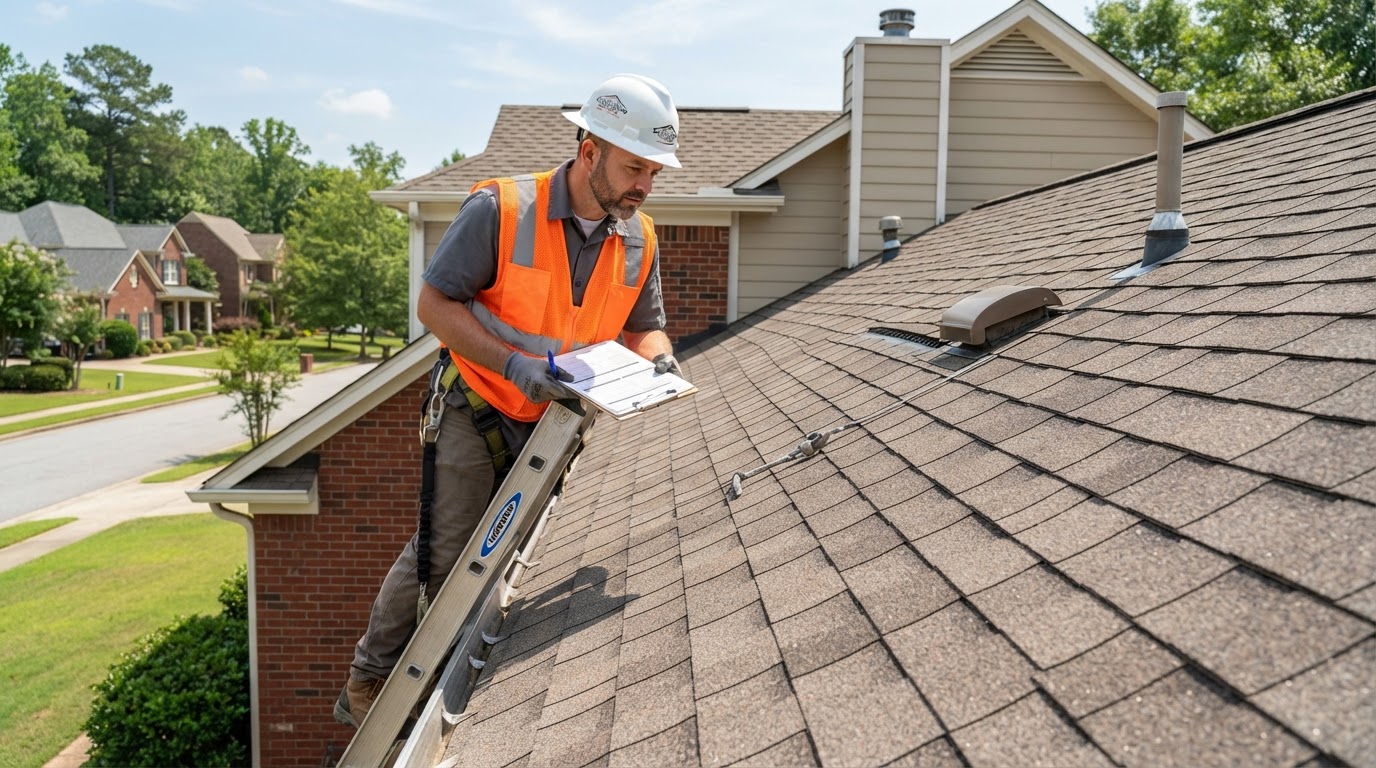
What May Be Reviewed During a Roof Inspection Near Montgomery
Roof Covering
Shingles or panels across the field of the roof, along with edges and ridge details — looking for displacement, cracking, granule loss, and visible wear that affects how the covering sheds water.
Flashing
Step, apron, valley, and penetration flashing at chimneys, sidewalls, and roof transitions — areas where most leaks begin and where layered installation matters most.
Drainage
Gutters, downspouts, valleys, and the roof's overall drainage path — conditions that affect how water leaves the roof and where it could pool or back up.
Ventilation
Visible attic intake and exhaust ventilation where accessible and relevant — ventilation affects long-term shingle and attic performance more than most homeowners realize.
Roof Decking
Observable symptoms of deck deterioration — sagging, softness, or interior staining — with the understanding that concealed conditions may need further investigation.
Storm-Related Damage
Visible material displacement, debris impacts, and damage to flashing or edge components following weather — without reference to any specific Montgomery storm event.
Some conditions cannot be assessed without access or without further investigation. Concealed moisture, decking integrity behind walls, and conditions under an existing overlay may require more than a visual review.
Understanding Residential Roof Assessments in Montgomery
An assessment is shaped by its purpose — a pre-purchase review, a check after severe weather, a recurring leak, or routine maintenance planning each call for a different focus. The process generally follows a similar shape.
- 1
Review the owner's concerns
Understand what prompted the inspection — the symptom, when it appeared, and any history.
- 2
Document visible symptoms
Record what can be seen: displacement, staining, deterioration, drainage conditions.
- 3
Examine accessible components
Look at the covering, flashing, drainage, and ventilation that can be reached and reviewed safely.
- 4
Identify areas needing closer review
Flag conditions that warrant follow-up — suspected deck issues, concealed moisture, or complex transitions.
- 5
Consider material and overall condition
Weigh the roof's age, material, and remaining serviceable life alongside the specific findings.
- 6
Determine possible next steps
Whether a repair, a replacement evaluation, or simply continued monitoring makes sense for the property.
Inspections vary by purpose, scope, access, and the qualifications of the person performing them. This page does not promise drone, infrared, laboratory, structural-engineering, or moisture-mapping services unless a specific capability is confirmed. Where specialized evaluation is needed, an inquiry helps determine the right next step.
When Should Homeowners Consider a Roof Inspection?
Roof Inspection vs. Roof Certification
A general condition assessment describes what is observed and what it may mean for repair or replacement decisions. It is not automatically an engineering report, an insurance approval, a warranty certification, or a FORTIFIED evaluation — each of those is a separate process with its own standards and qualifications. This page does not claim that independent FORTIFIED evaluations are performed here unless specific credentials are confirmed.
Roof Inspection Questions for Montgomery Homes
What may be included in a residential roof inspection?
A review of the visible covering, flashing, drainage, penetrations, and ventilation where accessible, along with documentation of observed conditions. The scope depends on the purpose — a pre-purchase review, a post-storm check, or a recurring-leak investigation each focus differently.
Can an inspection identify the source of a roof leak?
Often, yes. An assessment can narrow a leak to a likely entry area by tracing visible symptoms back to flashing, penetrations, or covering conditions. Some leaks involve concealed conditions that need further investigation rather than a single visual confirmation.
Should I request an inspection after severe weather?
A post-storm inspection is reasonable when visible damage or recurring leaks appear, or when a property owner wants to understand a roof's condition before problems develop. It is not required after every storm — it depends on what was observed and the roof's existing condition.
Can a roof assessment help compare repair and replacement?
Yes. Understanding overall condition, material age, and the extent of any deterioration is exactly what informs whether a localized repair is reasonable or whether replacement makes more sense. The assessment frames the decision; it does not make it for the homeowner.
Does a roof inspection include attic ventilation?
Visible attic ventilation is typically reviewed where accessible and relevant, because ventilation affects long-term shingle and attic performance. Full ventilation design or balancing is a separate consideration that may follow from what an inspection finds.
Is a roof inspection the same as an insurance inspection?
No. A general condition assessment is not an insurance inspection, engineering report, or claim approval. Insurance determinations depend on policy language, the cause of loss, documentation, and the insurer's own process. This page does not promise insurance approval.
Is a general roof inspection the same as a FORTIFIED evaluation?
No. FORTIFIED is a defined building-resilience program with specific standards and independent evaluation for an official designation. A general roof inspection describes condition; it does not confer a FORTIFIED designation. Independent FORTIFIED evaluator credentials are not claimed here unless confirmed.
Questions About Your Roof's Condition in Montgomery?
Share the property location, the roofing material if known, and what prompted the question — a leak, recent weather, a planned purchase, or routine maintenance. Requesting an assessment does not guarantee scheduling or a free service; the next step is confirmed through the inquiry process.