
Standing Seam Metal Roofing Montgomery
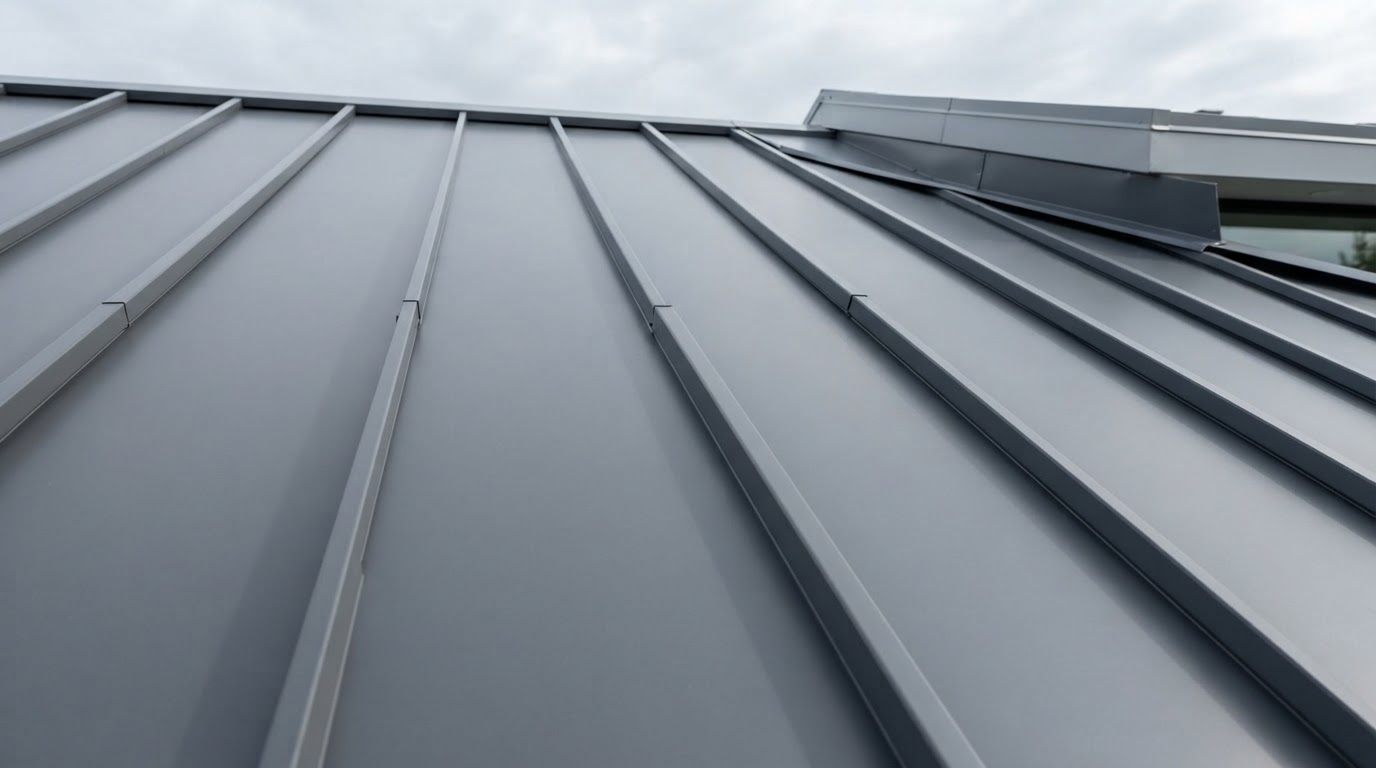
Standing seam metal roofing is recognizable by its continuous raised seams and the fact that the fasteners are concealed beneath them. That vertical-seam appearance is the visible signature; the clip-and-attachment system underneath is what makes it behave differently from an exposed-fastener roof. This page focuses on standing seam specifically — the panel systems, the installation planning, and how hips, valleys, and penetrations shape the project — rather than repeating the broader metal roofing overview.
Understanding Standing Seam Metal Roof Systems Near Montgomery
Standing seam is a category that contains several proprietary systems. The shared trait is a raised seam that conceals the attachment; the differences are in how the seam is formed, how the panel moves, and how the clip engages the substrate.
Raised seams
The vertical legs that form the seam and hide the fastener attachment from view and weather.
Concealed attachment
Clips engage the panel and fasten to the substrate without penetrating the weathering face.
Panel profiles
Width, rib height, and flat-between-seams dimensions that vary by product and architectural intent.
Seam configurations
Different seam heights and shapes carry different performance and appearance characteristics.
Snap-lock systems
Panels that snap over the clip without specialty tooling — one common standing seam approach.
Mechanically seamed systems
Panels field-rolled and seamed with equipment for a continuous, formed seam.
Panel movement
The clip design allows the panel to move with thermal expansion and contraction.
Finish and color options
Painted steel, aluminum substrates, and a range of colors and gloss levels.
Standing seam is a category, not one identical product. A snap-lock panel and a mechanically seamed panel share the raised-seam look but differ in how the seam forms, how the clip engages, and what equipment the installation requires. Each system has its own product specifications — not every standing seam panel installs the same way.
Standing Seam Roof Installation Considerations in Montgomery
Roof slope and geometry
Panel systems carry minimum-slope requirements; hips, valleys, and dormers shape panel runs and flashing.
Substrate and decking
Solid sheathing or skip-sheathing depending on the system, with structural condition verified.
Panel selection
Width, rib height, substrate, and finish chosen for the roof and the architectural intent.
Clip and attachment systems
The clip type and spacing specified by the panel manufacturer for the slope and wind exposure.
Thermal expansion and contraction
The clip must allow panel movement without stress at the seams or fasteners.
Eaves and rakes
Trim, drip, and edge details that close the panel system at the perimeter.
Valleys
Open or closed valley details coordinated with the panel system and drainage.
Ridge transitions
Ridge caps and vented ridge details that close the peak while allowing ventilation where designed.
Wall flashing
Step, apron, and reglet flashing where the roof meets vertical walls.
Roof penetrations
Vents, skylights, and chimneys flashed in coordination with the panel seams.
Ventilation
Intake and exhaust ventilation that affects condensation and long-term performance.
Drainage
How water leaves the roof and where it could pond or back up.
This page does not prescribe a universal clip spacing, seam height, or minimum slope. Those follow the selected panel, the roof assembly, applicable code, and the manufacturer's installation instructions.
Standing Seam Metal Roofing Options for Montgomery Homes
Standing seam options span panel widths and profiles, color finishes, steel versus aluminum substrates, and the architectural compatibility of the linear raised-seam look with the home. Roof complexity, penetration details, and the flashing transitions at every edge shape both the installation and the cost.
Cost reflects roof geometry and area, the panel and substrate, flashings and penetration details, and access. This page does not publish prices — scope and cost are established through an inquiry and assessment. No standing seam roof is promised to be maintenance-free or to last a fixed number of years.
Standing Seam vs. Exposed-Fastener Metal Roofing
The difference is attachment. Standing seam conceals the fasteners and lets the panel move with the clip; exposed-fastener panels are through-fastened with visible screws and washers. Standing seam carries a cleaner roof plane and different maintenance attention; exposed-fastener requires ongoing fastener and washer review.
Standing Seam Roofing for Complex Roof Designs
Hips, valleys, transitions, skylights, and dormers each add flashing detail and sequencing. A simple gable differs considerably from a roof with multiple planes and penetrations — complexity shapes both planning and cost, and not every roof geometry is equally suited to a given standing seam system.
Standing Seam Metal Roofing Questions for Montgomery Homes
What is a standing seam metal roof?
A metal panel system with raised, continuous seams that conceal the fastener attachment. The clip engages the panel and fastens to the substrate beneath, so the fasteners are not visible on the weathering face. The category includes different proprietary systems with their own panel widths, seam heights, and clip designs.
Are standing seam fasteners visible?
No — that is the defining feature. The attachment is concealed beneath the raised seam, which is what distinguishes standing seam from exposed-fastener panels where screws pass through the face of the panel.
What is the difference between snap-lock and mechanically seamed panels?
Snap-lock panels snap over the clip without specialty tooling for a faster installation. Mechanically seamed panels are field-rolled and seamed with equipment to form a continuous, tighter seam. Both are standing seam; they differ in how the seam is formed and what installation the system requires.
Is standing seam roofing suitable for all roof slopes?
No. Each standing seam system carries a minimum-slope requirement set by the manufacturer, and suitability also depends on roof geometry, substrate, and the panel profile. A system appropriate for one roof may not suit another — the slope is evaluated against the specific product, not assumed.
What affects standing seam installation cost?
Roof area and complexity, the panel and substrate selected, flashings and penetration details, removal requirements, and access. This page does not publish prices; scope and cost are established through an inquiry and assessment.
What maintenance does standing seam metal roofing require?
Attention to seams, clips, flashing transitions, finish condition, drainage, and penetration flashing. Standing seam generally avoids the fastener-washer review exposed-fastener roofs need, but no metal roof is maintenance-free. Periodic review of the roof's condition is still appropriate.
How does standing seam compare with exposed-fastener metal?
Concealed versus visible attachment is the core difference. Standing seam hides fasteners and lets the panel move with the clip; exposed-fastener panels show screws and washers and need ongoing fastener review. The two differ in appearance, how they handle thermal movement, and where maintenance attention is needed.
Planning a Standing Seam Metal Roof Near Montgomery?
Share the roof's slope, the panel and substrate being considered, the property type, and what prompted the question. The right standing seam system follows the roof geometry, the substrate, and the flashing details at every edge — not a panel name alone.