
Metal Roof Over Shingles Montgomery
Installing a metal roof over an existing asphalt shingle roof is a roof recover — and whether it is an option depends on the property, the existing assembly, the structure, local code, and the manufacturer's installation requirements. This page explains how an overlay is evaluated, what can make a tear-off more appropriate, and why a metal-over-shingles decision is not automatic for any Montgomery home.
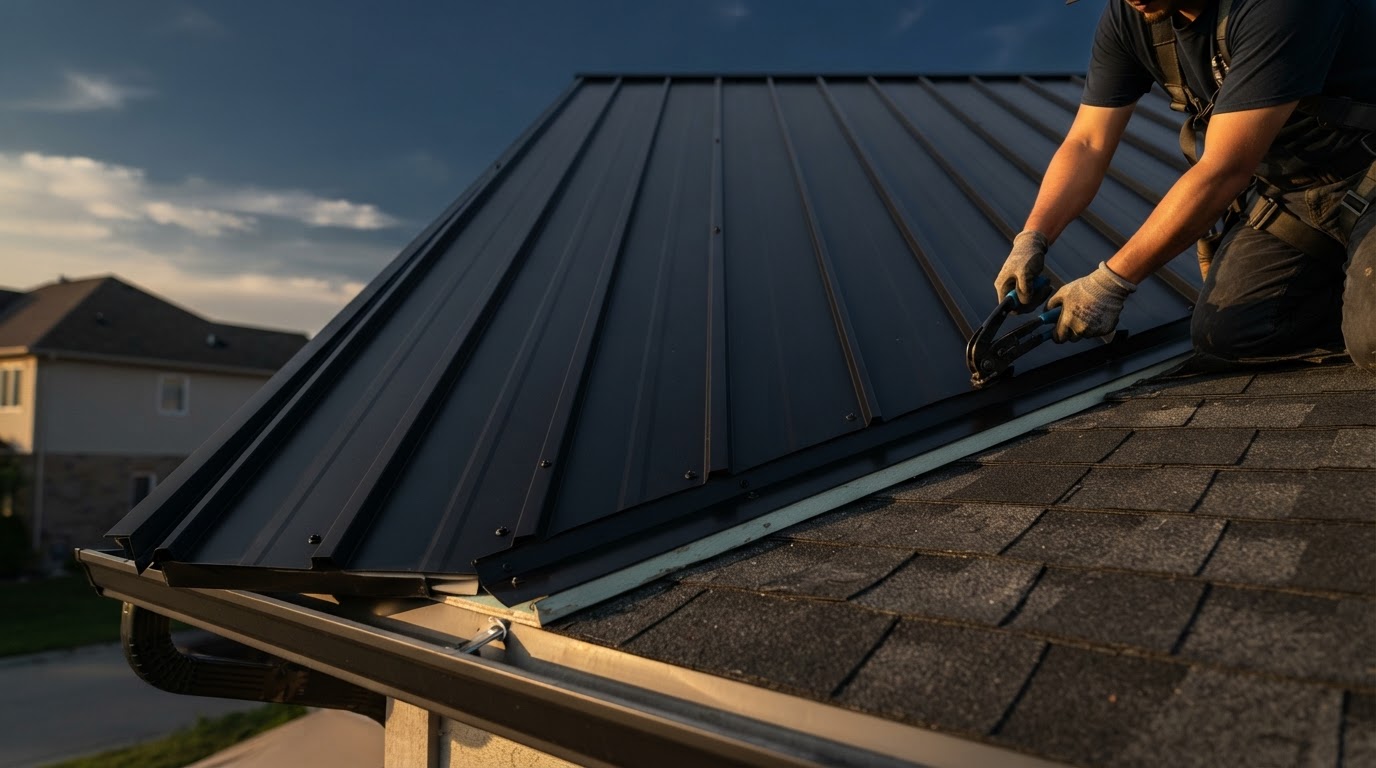
Can You Install a Metal Roof Over Shingles Near Montgomery?
A metal-over-shingles installation means leaving the existing roofing in place and fastening an approved metal system over it. That differs from a complete tear-off and replacement, a structural retrofit, or a manufacturer-specific recover system — and the right answer depends on what is actually on the roof and beneath it.
Existing roofing layers
How many layers are already installed; most codes cap the number allowed before removal is required.
Roof deck condition
Whether the decking beneath the shingles is sound — a compromised deck must be repaired or replaced, not covered.
Structural capacity
Whether the framing can carry the added load of a second roof system and any supporting members.
Existing moisture damage
Wet decking or saturated underlayment cannot be sealed in beneath a new metal roof.
Shingle deterioration
Cupped, curled, or severely deteriorated shingles may not provide an even substrate for an overlay.
Roof slope
The panel system's minimum-slope requirement must be met by the actual roof.
Roof geometry
Valleys, hips, dormers, and penetrations change how an overlay can be detailed and flashed.
Local building requirements
Permitting and code requirements in the jurisdiction govern what recover work is allowed.
Manufacturer requirements
The metal system's installation instructions define whether and how it may cover an existing roof.
Flashing and ventilation
Overlay details must address transitions and attic ventilation, which an overlay can complicate.
Some roofs require complete removal of the existing roofing before any new system can be installed. An overlay is not automatically cheaper, faster, or appropriate — and the decision depends on an assessment of the actual roof, not a product name.
Evaluating a Metal Roof Overlay in Montgomery
Evaluating an overlay means looking past the surface. A proposed metal-over-shingles installation may need to account for the conditions the existing roof has been hiding.
Existing shingle surface
Whether the shingles provide an even, compatible bearing surface for the metal system.
Decking integrity
Sound, dry, solid decking — or signs of rot, movement, or soft spots that need repair first.
Concealed deterioration
Damage that is not visible from above and may only be found once the roof is opened.
Roof layers
The number of existing layers present, which affects weight and code eligibility.
Fastening support
How the metal system will attach and whether the substrate can hold the fasteners or clips.
Structural loads
Whether the framing can accept the combined weight of the existing and new roof.
Flashing transitions
How valleys, walls, and penetrations will be flashed over an existing roof.
Ridge and eave details
How the ridge and eaves terminate when a second layer is added.
Ventilation
Whether the attic ventilation path is preserved or obstructed by the overlay.
Moisture management
Preventing the existing roof from trapping condensation beneath the new one.
Drainage
How water leaves the roof and whether the overlay changes the drainage path.
Covering an existing roof can make some concealed conditions harder to assess or address. An evaluation that weighs these factors is what determines whether an overlay is reasonable — and where a tear-off is the better path.
Metal Roof Over Shingles Installation Options Near Montgomery
Approved Direct-to-Deck Recover Systems
Certain metal systems are approved for installation over existing roofing when specified conditions are met — sound decking, an acceptable substrate, the right slope, and compatible flashing. Approval follows the manufacturer's installation instructions and applicable code, not a general preference for leaving the old roof.
Furring or Support Systems
Some designs add approved supporting members — battens or framing — between the existing roof and the new metal system to create a compatible substrate, a vented cavity, or a means of attaching clips. Whether that is appropriate depends on the structure and the system.
Tear-Off and New Metal Roofing
Removing the existing roof exposes the decking for repair, lets the new system attach to a verified substrate, and addresses concealed conditions. For roofs with multiple layers, damage, or structural concerns, a tear-off may be required rather than optional.
Standing Seam vs. Exposed-Fastener Considerations
Standing seam and exposed-fastener systems attach differently and carry different overlay eligibility, slope, and maintenance characteristics. Each system is evaluated against its own installation requirements, not as interchangeable products.
Metal Roof Over Shingles vs. Complete Replacement
An overlay leaves the existing assembly in place; a complete replacement opens the roof to the decking. The difference matters for access to hidden conditions, the ability to repair substrate damage, the materials required, and the overall project scope. This page does not prescribe a method without a site-specific assessment, and it does not promise an overlay is cheaper or faster.
Metal Roof Over Shingles Questions for Montgomery Homes
Can metal roofing be installed directly over existing shingles?
It can be possible, but it is not automatic. Eligibility depends on the number of existing layers, deck condition, structure, slope, the metal system's installation instructions, and local code. A roof that already has multiple layers or concealed damage may require removal rather than overlay.
How many roofing layers may be allowed?
Most codes limit the number of roofing layers permitted before the existing roof must be removed. The exact limit depends on the jurisdiction and the roof's structure. A roof with an existing second layer often cannot receive a third.
What if the existing roof deck is damaged?
A damaged deck must be repaired or replaced — it cannot be covered over. Covering rot or moisture damage traps the problem beneath the new roof and can compromise the fastening and the assembly. Decking condition is evaluated before an overlay is approved.
Does installing metal over shingles hide existing moisture problems?
It can. An existing roof with wet decking or saturated underlayment should not be sealed beneath a new system. Moisture trapped under a metal roof can continue to damage the deck and the structure. The existing assembly is assessed for moisture before an overlay is considered.
Can standing seam metal be installed over shingles?
Standing seam can be installed over an existing roof only when the system, slope, substrate, and structure meet the manufacturer's requirements. Some standing seam systems use clips that need a compatible substrate. Eligibility is evaluated for the specific roof, not assumed.
When is removing the old roof the better option?
A tear-off is often preferred or required when the existing roof has multiple layers, concealed damage, a compromised deck, or when the structure or manufacturer instructions do not permit a recover. Removing the old roof also lets the new system attach to a verified substrate.
What affects the cost of a metal roof overlay?
Roof area and complexity, the metal system selected, any supporting members required, flashing and penetration details, and the existing assembly's condition. An overlay is not automatically less expensive than a tear-off — scope and cost are established through an inquiry and assessment.
Considering Metal Roofing Over Shingles Near Montgomery?
Share the existing roofing, the roof's slope, the number of layers, and the property details. Whether an overlay is reasonable — or a tear-off is the better path — follows the actual roof, the structure, and the manufacturer's installation requirements, not the product name alone.