
Black Streaks on Your Roof in Montgomery
Dark streaks on an asphalt shingle roof are usually algae — a common, largely cosmetic condition. This guide explains what causes the streaks, when they matter, and why aggressive cleaning can do more harm than good.
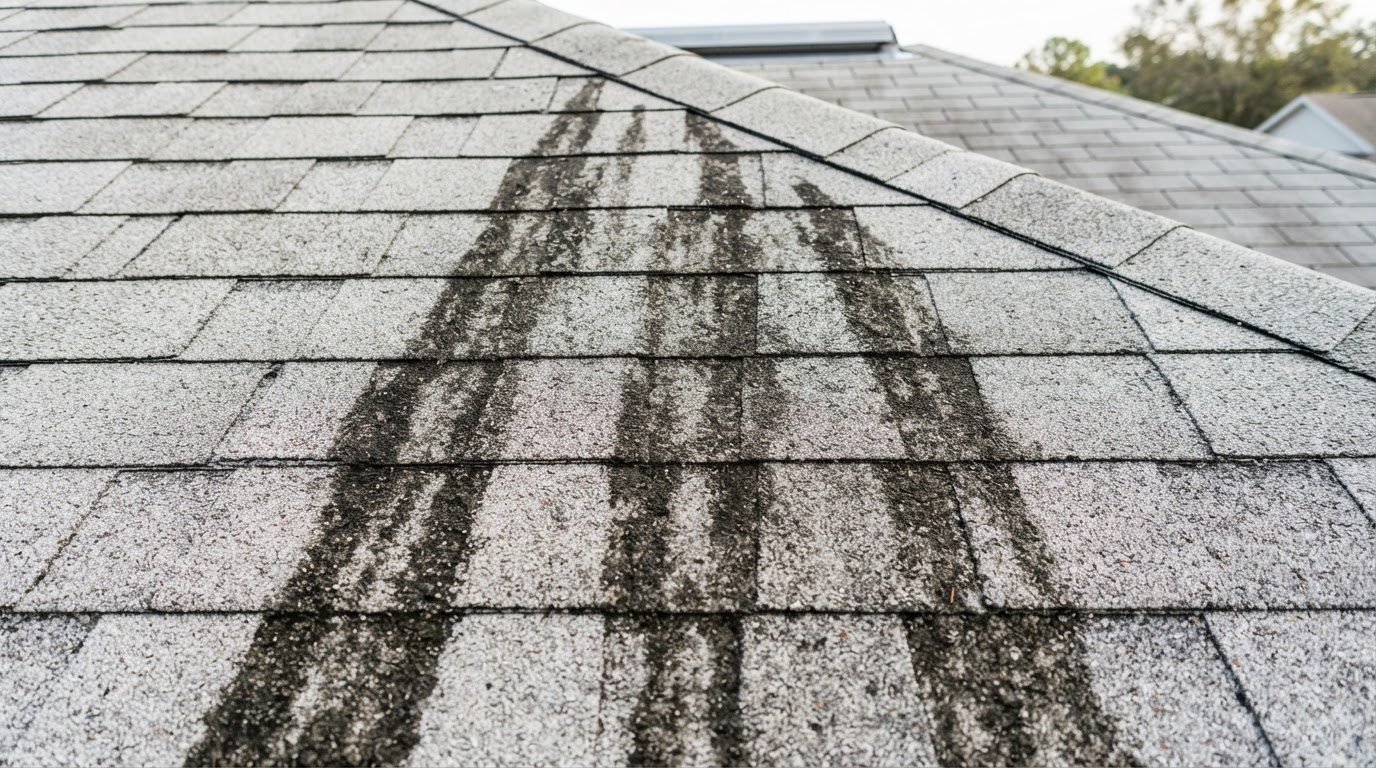
What Causes Black Streaks on Asphalt Shingles?
Algae is the most common cause — but not the only one.
The dark, vertical streaks that appear on many asphalt shingle roofs are most often caused by algae growth. A type called Gloeocapsa magma thrives on the limestone filler used in many shingles and on the moisture that lingers on shaded roof slopes. The Asphalt Roofing Manufacturers Association (ARMA) recognizes algae discoloration as a common condition and publishes guidance on it.
It is important not to assume that every black mark is algae, however. Dirt, soot, rust runoff, moss, and other sources can all produce darkening. The streak pattern, its location, and whether it grows or washes away all help distinguish algae from other causes — and a visual impression alone is not always conclusive.
Not every dark mark is algae
Algae, Moss, Dirt, Soot, and Other Discoloration
Comparing the common sources of dark roof staining.
| Possible Cause | Typical Appearance | Notes |
|---|---|---|
| Algae (Gloeocapsa magma) | Dark vertical streaks, often on north- or shade-facing slopes | The most common cause of black streaking on asphalt shingles |
| Moss | Green, fuzzy, raised growth that holds moisture against shingles | Can lift shingle edges and retain water; a separate concern from algae |
| Dirt and debris | Uneven staining, often washes away with rain | Typically superficial and not a sign of roof failure |
| Soot or exhaust staining | Localized darkening near a flue or vent | Warrants checking the source of the exhaust |
| Other discoloration | Varies — could be runoff, rust, or material aging | Visual appearance alone may not establish the cause |
We do not label ordinary roof discoloration as toxic mold or make health diagnoses based on appearance. Indoor air-quality concerns are a separate matter for an appropriate indoor-environment professional.
Why Some Roof Areas Show More Streaking
Moisture, shade, and orientation drive where algae grows.
Algae tends to flourish where a roof stays damp longest. North-facing slopes in the northern hemisphere receive less direct sun, so they dry more slowly and often streak first. Areas shaded by trees or neighboring structures also retain moisture longer, creating favorable conditions. The shingle material itself plays a role, since the limestone filler that algae feeds on is present in many asphalt shingles.
Roof orientation and drying conditions vary from one property to the next, so it would be wrong to assume uniform streaking across Montgomery neighborhoods. Two homes on the same street can show very different discoloration depending on shade, slope, and surrounding trees.
Can Black Streaks Damage Shingles?
Discoloration is usually cosmetic — but it can coincide with real problems.
Algae discoloration itself is primarily a cosmetic issue. It does not, on its own, mean a roof is failing. The concern is that streaking can coexist with — or sometimes be mistaken for — separate conditions that do affect performance.
Discoloration alone
- • Primarily a cosmetic change
- • Does not automatically require replacement
- • May be addressed with careful cleaning
Worth a closer look
- • Missing granules exposing the mat
- • Moss holding moisture against shingles
- • Damaged flashing or active leaks
Roof Cleaning and Material Protection
How cleaning is done matters as much as whether it is done.
When cleaning is appropriate, the method is critical. ARMA and shingle manufacturers generally warn against pressure washing, which can strip protective granules and shorten a roof's service life. Manufacturer-approved approaches typically involve low-pressure application of an appropriate cleaning solution followed by gentle rinsing, and they should follow the specific product's guidance.
We do not provide do-it-yourself roof-cleaning instructions, and we do not recommend that homeowners climb onto a roof to clean it — falls from roofs are a serious safety hazard. Professional roof cleaning is a service that should be performed only by a provider who actually offers it and follows manufacturer guidance. Whether cleaning is available as a service should be confirmed directly.
Caution: Aggressive or improper cleaning can void product requirements and damage the very shingles you are trying to protect. When in doubt, follow the manufacturer's published cleaning guidance.
Algae-Resistant Shingles and Replacement Planning
Product selection can reduce — but not eliminate — future staining.
If a roof is already approaching replacement, discoloration is a good reason to consider algae-resistant shingles for the next roof. Many manufacturers offer products with built-in algae resistance, often using copper or zinc granules that help slow discoloration. These products can reduce how often streaking appears, but no product can promise permanent, stain-free performance — resistance is a matter of degree.
If the existing roof is otherwise sound, cleaning is usually a more appropriate first step than replacement. The decision between cleaning, repair, and replacement should rest on the roof's actual condition, not on the streaks alone.
Frequently Asked Questions About Black Roof Streaks
Clear answers about algae, cleaning, and when streaking matters.
01.What causes black streaks on asphalt shingles?
The most common cause of black or dark streaks on asphalt shingles is algae growth — particularly a type called Gloeocapsa magma, which feeds on the limestone filler used in many shingles. The streaks often appear on slopes that stay damp and shaded longer. The Asphalt Roofing Manufacturers Association (ARMA) publishes guidance recognizing algae discoloration as a common, primarily cosmetic condition. Not every dark mark is algae, though, so the pattern and location matter.
02.Are black streaks always mold?
No. Algae and mold are different organisms, and the dark streaks homeowners see on roofs are far more often algae than mold. Labeling ordinary roof discoloration as toxic mold is not supported by appearance alone and can cause unnecessary alarm. If you have a genuine indoor mold concern, that is a separate issue best addressed by an appropriate indoor-environment professional — not something a roof stain can diagnose.
03.Does algae discoloration mean my roof is failing?
Not necessarily. Algae discoloration is largely a cosmetic condition and does not by itself mean a roof is failing or needs replacement. It becomes a concern only when it coincides with other problems — missing granules, lifted shingles, leaks, or damaged flashing. A roof can look streaked and still shed water effectively, and a roof can look clean and still have hidden issues.
04.Can black roof streaks be cleaned?
Often yes, but the method matters. ARMA and shingle manufacturers generally caution against aggressive cleaning, especially pressure washing, which can strip granules and shorten shingle life. Manufacturer-approved cleaning approaches typically use low-pressure application of appropriate cleaning solutions followed by gentle rinsing. Because improper cleaning can damage the roof and may affect product requirements, cleaning is best handled carefully and, where offered, by a qualified professional.
05.Is pressure washing safe for shingles?
Generally no. High-pressure washing can dislodge the protective granules that shield the shingle's asphalt from ultraviolet light, effectively shortening the roof's service life. It can also force water beneath shingle tabs. Manufacturer guidance typically advises against it. If cleaning is needed, low-pressure chemical application designed for roofing is the safer approach, and it should follow the product manufacturer's recommendations.
06.Can algae-resistant shingles prevent future staining?
Some shingles are manufactured with algae-resistant features, often incorporating copper or zinc granules that help resist discoloration. These products may reduce the rate of streaking, but no shingle can promise permanent stain prevention — algae resistance is a matter of degree, not an absolute. If staining is a recurring concern, algae-resistant products are worth discussing during replacement planning.
07.Should I replace a roof because of black streaks?
Staining alone is rarely a reason to replace a roof. Replacement is driven by the roof's actual condition — shingle flexibility, granule loss, flashing integrity, leaks, and storm damage — not by appearance alone. If the streaks bother you, cleaning may be an option. If the roof also shows signs of aging or damage, an assessment can help you weigh cleaning, repair, and replacement on their actual merits.
Related Roofing Resources
Continue exploring shingle condition, cleaning, and maintenance:
Request a Roof Evaluation
If black streaks have you wondering about your roof's condition, an on-site evaluation can separate cosmetic algae from real performance concerns — and help you decide whether cleaning, repair, or replacement is the right next step.