
Overflowing Gutters and Foundation Damage on Clay Soil in Montgomery
Gutters that overflow concentrate roof runoff near the building, and on some moisture-sensitive soils that can be relevant to foundation conditions. This guide explains the connection — and its limits — without claiming that overflowing gutters automatically cause foundation damage or that every Montgomery property sits on expansive clay.
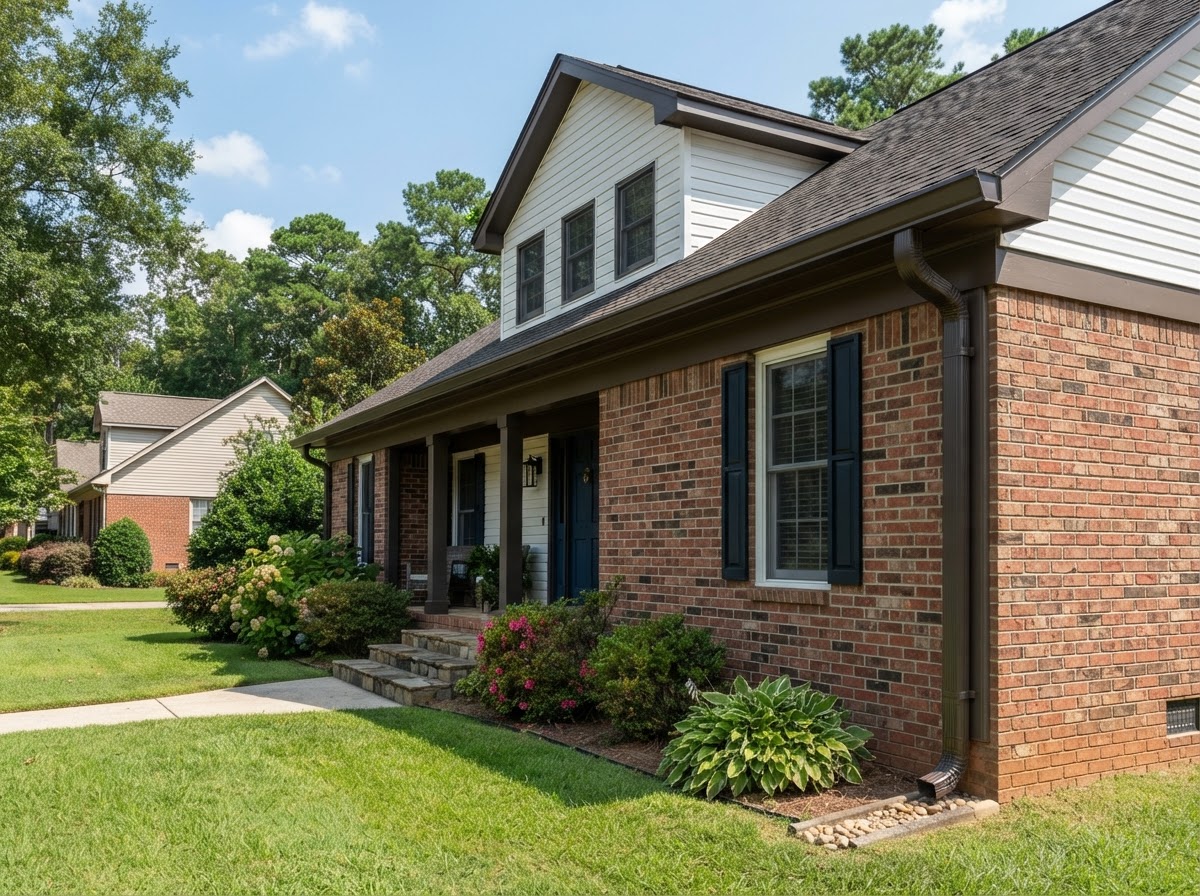
What Roof Runoff and Gutter Overflow Mean in Montgomery
Managing roof water is one part of protecting a foundation — not the whole story.
A roof sheds a large volume of water during a storm, and the gutter system is designed to collect that runoff and carry it away from the building through downspouts. When gutters overflow — because they are clogged, undersized, out of slope, or discharging at the wrong point — that water concentrates near the foundation instead of being routed away.
Concentrated water near a foundation can be relevant to foundation conditions on some moisture-sensitive soils. But it is one factor among many, and a foundation problem is not assumed to come from the gutters without evaluating the soil, the drainage, and the structure together.
Gutters are not automatically the cause
Common Gutter Overflow Problems
Overflow usually points to one of several drainage conditions.
Clogged gutters
Leaves, pine needles, and debris fill the gutter so water cannot flow to the downspout and instead spills over the edge.
Undersized or poorly configured drainage
A gutter or downspout sized too small for the roof area it drains overflows in heavy rain even when clean.
Improper gutter slope
A gutter installed out of pitch holds water in sections and can overflow at a low point rather than draining.
Blocked downspouts
A downspout clogged with debris or blocked at its discharge backs water up until the gutter overflows.
Damaged hangers or separated sections
Sagging or pulled-away gutter sections no longer carry water and discharge it concentrated at the gap.
Roof valleys concentrating runoff
A valley that funnels a large roof area into one gutter section can overwhelm it in a downpour.
Downspout discharge beside the foundation
A downspout that empties directly beside the building concentrates water at the perimeter rather than carrying it away.
Separated or damaged gutter seams
Leaky or separated joints dump water at the seam rather than routing it to the intended drainage point.
We do not prescribe one universal gutter size for every building. The right size and configuration depend on the roof area being drained, the number of downspouts, the valley layout, and the local rainfall intensity.
Clay Soil and Moisture Movement
Some soils change volume with moisture — but not every property has them.
Some clay-rich soils shrink as they dry and swell as they absorb water, so their volume changes with moisture content. When roof runoff is concentrated near a foundation on such a soil — a downspout discharging at the perimeter, for example — the repeated wetting and drying cycle can be relevant to foundation movement on certain soil and foundation types.
Not every Montgomery property has expansive clay. Soil conditions vary across the area, and some soils are far less reactive to moisture changes. We do not claim that every Montgomery property sits on expansive clay or that gutters are the cause of any observed settlement or cracking. Soil conditions and structural effects require property-specific evaluation by qualified professionals.
Visible Property Concerns
Signs worth noting — without diagnosing structural damage from symptoms alone.
We do not diagnose structural damage from these symptoms alone. Where cracking or movement is present, a qualified structural or foundation evaluation is appropriate.
Potential Drainage Improvements
Roof and gutter work manages runoff — it does not reverse structural damage.
Roofing and gutter work does not reverse structural foundation damage. We do not promise that gutter or roof work corrects settlement or cracking, and we do not propose universal downspout-extension lengths or grading specifications. Where foundation movement is present, the structural evaluation is a separate discipline.
Roofing Versus Foundation Responsibilities
Roof drainage, soil evaluation, and structural repair are separate disciplines.
Managing roof runoff and evaluating a foundation are different responsibilities. Roofing and gutter work addresses how water leaves the roof and where downspouts discharge it. Site drainage assessment looks at how water moves across the property. Soil evaluation and structural engineering assess the ground and the foundation itself. Foundation repair corrects movement that has already occurred.
We do not imply that the business provides engineering, foundation repair, or geotechnical services without confirmation. Where those disciplines are needed, they are performed by the appropriately qualified professionals, and gutter and roof work is one part of the broader moisture-management picture.
Frequently Asked Questions About Gutters and Clay Soil
Clear answers about overflow, soil moisture, foundation movement, and who handles what.
01.Can overflowing gutters damage a foundation?
Overflowing gutters can contribute to foundation moisture problems when they concentrate roof runoff near a building, and on some moisture-sensitive soils that can be relevant to foundation movement. But gutters do not automatically cause foundation damage — many factors affect a foundation, and the relationship depends on the soil, the drainage, the foundation type, and the structure. A crack or movement is not assumed to come from the gutters without evaluating the property.
02.How does clay soil react to changes in moisture?
Some clay-rich soils shrink as they dry and swell as they absorb moisture, changing volume with their water content. When water is concentrated near a foundation on such a soil — by a downspout discharging at the perimeter, for example — that repeated wetting and drying can be relevant to foundation movement. Not all soils behave this way, and the effect depends on the specific soil, which is why soil conditions are evaluated rather than assumed.
03.Are all Montgomery foundations built on expansive clay?
No. Soil conditions vary across Montgomery and Central Alabama, and not every property sits on moisture-sensitive expansive clay. Some areas have soils that are much less reactive to moisture changes. We do not claim that every Montgomery property has expansive clay soil or that gutters are the cause of any observed settlement or cracking. Soil conditions and structural effects require property-specific evaluation.
04.Why do my gutters overflow during heavy rain?
Heavy-rain overflow usually points to a gutter that is clogged, undersized for the roof area, out of slope, or backed up at the downspout — or to a valley that funnels too much roof area into one gutter section. The cause can be one or several of these together. Cleaning, resizing, or correcting the drainage path addresses overflow, but the right fix depends on which condition is actually present.
05.Can clogged gutters cause roof or fascia damage?
Yes. A gutter that overflows or holds standing water keeps the fascia, roof edge, and sometimes the lower roof covering wet, which over time can rot wood trim, stain siding, and contribute to deterioration at the roof edge. Keeping drainage clear protects the roof edge and the building envelope — it is not only a foundation question.
06.Will extending downspouts fix foundation movement?
Extending or redirecting downspouts can reduce concentrated water near the foundation, which may help where moisture is a contributing factor. It does not reverse structural movement that has already occurred, and it is not a foundation repair. Where movement, cracking, or settlement are present, a qualified structural or foundation evaluation is appropriate — gutter work is one part of managing roof runoff, not a structural solution.
07.When should I contact a structural engineer?
When there is visible foundation movement — significant cracking, doors or windows out of alignment, sloping floors, or separation in the structure — a structural engineer or qualified foundation professional should evaluate the property. Gutter and roof drainage work can address runoff, but diagnosing and correcting structural movement is a separate discipline. We do not imply the business provides engineering, foundation repair, or geotechnical services without confirmation.
08.How often should gutters be inspected for debris?
Gutters generally benefit from inspection and cleaning at least once or twice a year and after major leaf drop, with more frequent attention where overhanging trees — especially pines — shed needles into the drainage system. Properties with heavy tree cover may need cleaning several times a year to keep water moving to the downspouts. The right interval depends on the property and its surroundings.
Related Roofing Resources
Continue exploring gutter, drainage, and roof repair topics:
Request a Roofing and Gutter Assessment
If your gutters overflow or your downspouts discharge near the foundation, an on-site assessment can evaluate the roof drainage, the gutter and downspout condition, and where the runoff is going — and outline gutter or drainage corrections based on what the property shows, without claiming that roof work reverses existing foundation movement or that every Montgomery property sits on expansive clay.