
Pine Tree Roof Damage and Needle Buildup Montgomery
Pine trees near a Montgomery roof create two different problems: sudden impact from fallen limbs and gradual accumulation of needles in valleys and gutters. This guide explains each, what to evaluate, and how roofing work fits with tree maintenance — without implying a tree-removal crew or guaranteeing insurance coverage.
Two Different Problems From Pine Trees Near Montgomery
Sudden impact and gradual debris accumulation need different responses.
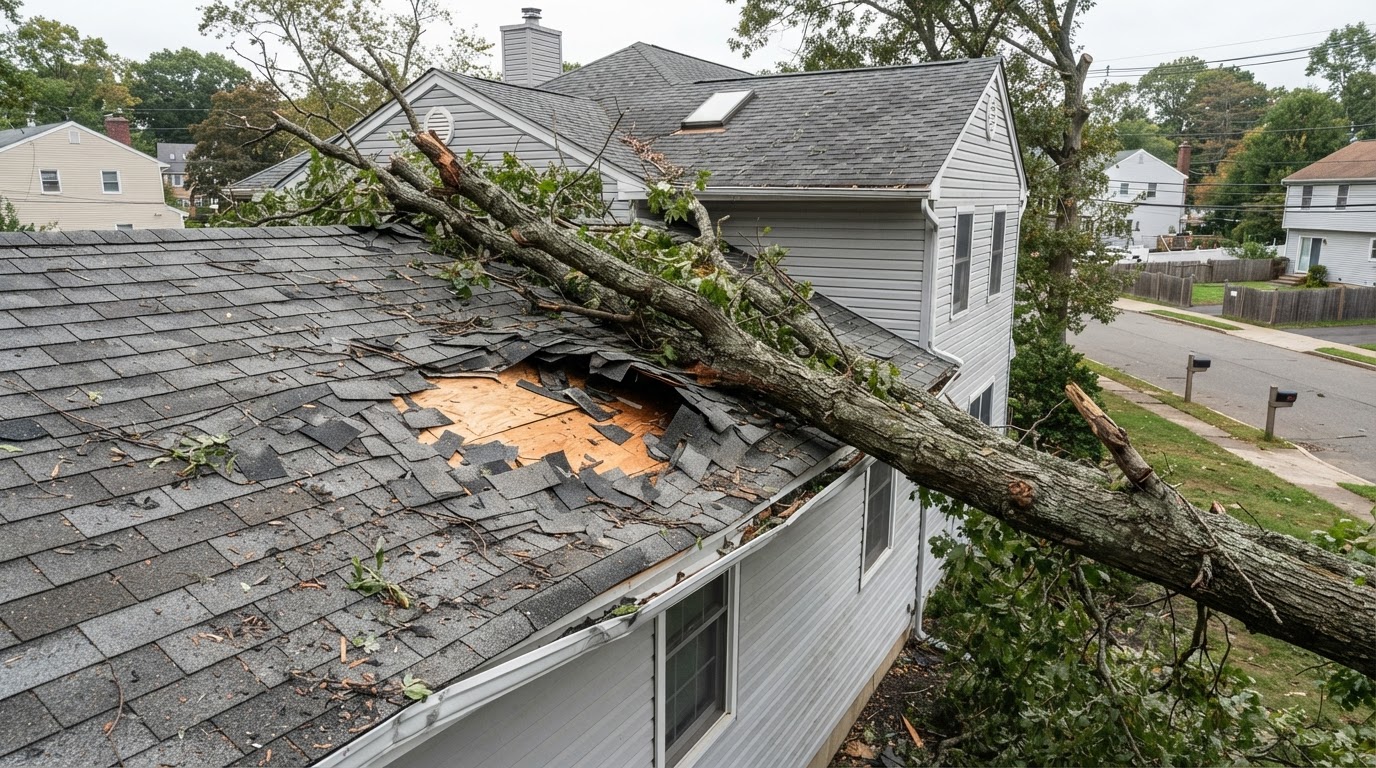
Pine trees near a roof in Central Alabama create two distinct kinds of concern. The first is physical impact: a fallen limb can break shingles, dent metal panels, or damage flashing and the roof edge. The second is gradual accumulation: needles shed into valleys, gutters, and low-slope areas where they hold moisture and restrict drainage.
These are different problems with different repair and maintenance responses. Impact damage is a repair or replacement question. Needle buildup is a maintenance and drainage question. One roof can have both, and the right response addresses each on its own terms.
Needles are a maintenance concern, not an automatic failure
Damage From Fallen or Overhanging Limbs
Impact can affect the covering, flashing, gutters, and sometimes the structure.
Broken or missing shingles
A falling limb can crack, tear, or dislodge shingles, exposing the underlayment and deck below.
Dented metal panels
Impact on a metal roof can dent panels, sometimes leaving the coating intact while deforming the profile.
Damaged flashing
A limb resting on or striking a valley, chimney, or penetration can bend or tear the flashing.
Cracked or displaced roof coverings
Heavier impact can fracture ridge caps, hip shingles, or other raised roof components.
Gutter impact damage
A limb falling across the eave can crush or pull down a gutter run and its downspout.
Damaged roof edges
Impact at the eave or rake can break fascia, drip edge, and the lower shingle course.
Possible decking or structural concerns
A heavy limb can puncture the roof deck or stress the framing beneath, which may need structural evaluation.
Water intrusion after impact
Even when the broken covering looks minor, an impact point can admit water at the next rain.
We do not assume the extent of impact damage without inspection. A limb that looks small from the ground can have caused damage to flashing or the deck that is not visible until the roof is assessed.
Pine Needle Accumulation and Moisture
Needles hold moisture and restrict drainage — the effects depend on where they collect.
We do not assert that pine needles automatically cause rot, mold, or premature roof failure. Their effect depends on where they collect, how long they stay, and whether they are holding moisture against the surface or blocking drainage. Routine removal is the appropriate response.
Professional Roof Assessment
Evaluation covers impact, drainage, flashing, and water-intrusion evidence.
Safety first. If a tree limb has compromised the roof structure, prioritize safe evacuation of affected areas when warranted and seek appropriate emergency assistance. Never climb onto a roof with storm damage, loose branches, sagging areas, or overhead electrical hazards — damaged roofs should be assessed by qualified personnel from a safe approach.
Repair and Prevention Options
Roofing repairs and tree maintenance are separate services.
Possible roofing approaches include shingle repair, metal-panel repair, flashing repair, gutter repair or replacement, professional debris removal, maintenance planning, and roof-section replacement where the damage warrants it. The right combination depends on what the assessment finds — impact damage is repaired or replaced, while needle accumulation is managed through cleaning and drainage.
Roofing and tree work are separate. Removing a limb or pruning overhanging branches is arborist work, not roofing. We do not imply that this company operates a tree-removal crew. Where tree work is needed before or alongside roofing repairs, it is coordinated with a qualified tree professional.
Insurance and Storm Considerations
Document safely, review your policy, and avoid attributing damage without evidence.
Homeowners can document visible conditions safely from the ground — the location of a fallen limb, the area of missing shingles, where needles have accumulated — and review their policy's requirements with their insurer. We do not guarantee insurance coverage, deductible reimbursement, or claim approval; those depend on the policy and the claim.
We do not attribute roof damage to a specific storm event without verified event evidence. When a particular storm is relevant to a claim, that connection is documented and supported rather than assumed.
Frequently Asked Questions About Pine Tree Roof Damage
Clear answers about needles, limbs, gutters, insurance, and who handles what.
01.Can pine needles damage asphalt shingles?
Pine needles sitting on a roof are generally a maintenance and drainage concern rather than an immediate shingle defect — but when they collect and hold moisture against the surface, or accumulate in valleys and gutters to the point that water cannot drain, they can contribute to conditions that affect the roof over time. Needles do not automatically cause rot or premature shingle failure, but they do warrant removal and routine maintenance.
02.Why do pine needles collect in roof valleys?
Valleys funnel water and debris from two roof planes into one channel, so needles shed from overhanging branches tend to settle there as water slows. The same low, shaded, damp environment that catches needles is also where debris is most likely to trap moisture. Clearing valleys is part of routine maintenance on a roof with nearby pines.
03.Can a fallen pine limb cause hidden roof damage?
Yes. A limb that strikes the roof can damage shingles, flashing, or the deck in ways that are not fully visible from the ground — and the water intrusion that follows may not appear until the next rain. The extent of impact damage should be assessed rather than assumed from a quick look, particularly when the limb was heavy or rested on the roof for any time.
04.Should I remove pine needles from my roof myself?
Routine debris removal should be done safely. Climbing onto a roof with accumulated debris, loose branches, sagging areas, or overhead electrical hazards is not safe, and we do not encourage homeowners to walk a roofed surface to clean it. Ground-level leaf blower use, where appropriate and safe, or a professional cleaning are the safer options — and a damaged roof should be assessed by qualified personnel before anyone walks on it.
05.Can clogged gutters contribute to leaks?
Yes. Pine needles are a common gutter clog, and a clogged gutter overflows at the eave, keeps the fascia and roof edge wet, and can back water up under the lower shingle course. Keeping gutters clear is part of protecting the roof edge and the building envelope — especially on a property with overhanging pines.
06.Who should remove a large limb resting on the roof?
A large limb resting on the roof should be removed by a qualified tree professional, not pulled off by someone on the ground or on the roof, because the limb's weight and how it is wedged can cause additional damage or a safety hazard when it shifts. Roofing work addresses any damage the limb caused; the limb itself is an arborist's work. We do not imply that this business operates a tree-removal crew.
07.Does homeowners insurance cover tree-related roofing damage?
Coverage depends on the policy, the cause, and the circumstances, and we do not guarantee insurance coverage, deductible reimbursement, or claim approval. Homeowners can document visible conditions safely from the ground and review their policy's requirements with their insurer. We do not attribute damage to a specific storm event without verified event evidence.
08.When should damaged shingles or metal panels be replaced?
When a limb has cracked, torn, or dented the roof covering, or when needles and debris have contributed to deterioration that a cleaning will not correct, the affected shingles or panels may need repair or section replacement. The scope depends on what an assessment finds — impact damage, the condition of the surrounding roof, and whether the flashing or deck were also affected all factor into whether a repair or a broader section replacement is appropriate.
Related Roofing Resources
Continue exploring storm damage and roof repair topics:
Request a Pine Tree Roof Damage Assessment
If a pine limb has struck your roof or needles have accumulated in valleys and gutters, an on-site assessment can evaluate the impact damage, the drainage and gutter condition, and the surrounding roof covering — and outline repairs, section replacement, or maintenance based on what the roof actually shows, without implying a tree-removal crew or guaranteeing insurance coverage.