
Pipe Boot and Vent Boot Leak Repair Montgomery
A cracked pipe boot is one of the most common — and most overlooked — sources of roof leaks. This guide explains what a pipe boot does, why it fails, how to recognize the signs, and why sealant is rarely a permanent fix.
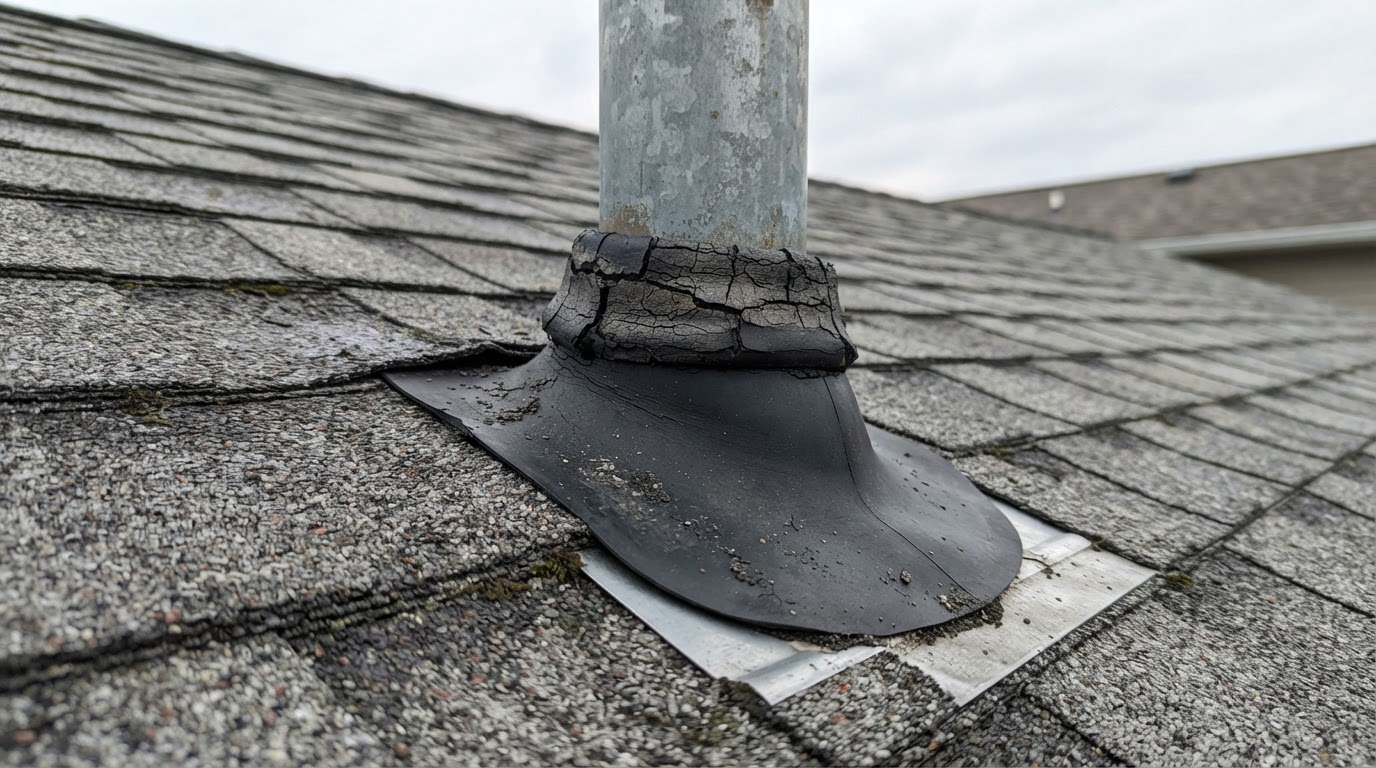
What Is a Roof Pipe Boot?
A small component with an important job: sealing the opening around a plumbing vent.
A pipe boot is the flashing component that seals the opening where a plumbing vent pipe passes through the roof. It typically combines a flexible collar — usually rubber or silicone — that fits tightly around the pipe, with a flat flange that integrates with the surrounding shingles. Its function is to keep rainwater from running down the outside of the pipe and into the hole in the roof deck.
It is important to distinguish a plumbing vent pipe from other roof ventilation. Plumbing vents carry air from the plumbing system up through the roof; they are not the same as attic ventilation intake or exhaust vents, ridge vents, or powered fans. The boot discussed here seals the plumbing vent penetration specifically. Construction varies — some boots are all-rubber, some combine a metal base with a rubber collar, and some use silicone — so not every product is built the same way.
Why Pipe Boots and Vent Flashing Can Leak
Several conditions can compromise a vent penetration — not all of them are the boot itself.
The most common failure is deterioration of the rubber collar, which cracks and shrinks after years of direct sun exposure. But a vent penetration can leak for several other reasons, and not every leak near a vent is caused by the boot:
Not every vent-area leak is the boot
Signs of Possible Vent Boot Failure
What to look for — safely — when a vent penetration may be leaking.
Indoor signs
- • Ceiling stain directly below a vent pipe location
- • Damp area in an accessible attic near a penetration
- • Leakage that recurs during rainfall
Outdoor signs
- • Visible cracking in the rubber collar from a safe vantage point
- • Lifted or deteriorated flange edges
- • Damaged surrounding shingles
Do not climb onto a wet or unstable roof to inspect a vent boot. The signs that matter can be noted safely from the ground or inside, and the on-roof inspection should be left to a qualified professional.
Pipe Boot Inspection and Repair Process
A realistic sequence for evaluating and addressing a vent penetration leak.
- 1Review the reported leak — where it appears, when, and under what conditions.
- 2Evaluate the roofing material around the penetration for age and condition.
- 3Assess the penetration itself, including the collar, flange, and pipe.
- 4Inspect adjacent materials — shingles, underlayment, and nearby flashing.
- 5Select compatible repair components suited to the roof material and pipe.
- 6Complete the repair, replacement, or recommend further investigation as appropriate.
Repair Options and Material Compatibility
The right component depends on the roof material and the existing assembly.
Repair options include replacing the flashing boot with a compatible new component, properly integrating the flange with the surrounding shingles, using product-specific repair components where appropriate, and applying manufacturer-specified sealants only where the product instructions call for them. The key is compatibility — the new boot must work with the pipe size, the roof material, and the surrounding assembly.
Generic caulk is not a permanent solution for a cracked collar. It can buy time, but the collar continues to deteriorate and the sealant eventually fails. A durable repair replaces the failed component rather than coating over it.
It is also important to distinguish asphalt-shingle pipe boot systems from the flashing details used on metal and commercial membrane roofs. On a standing-seam or exposed-fastener metal roof, the penetration flashing must match the panel profile and be installed in a way that accommodates thermal movement. On a commercial membrane roof, the penetration is typically flashed into the membrane system with manufacturer-specific components. The same plumbing vent is sealed very differently on each roof type.
Frequently Asked Questions About Pipe Boot Leaks
Clear answers about vent penetration leaks, repair, and material compatibility.
01.What is a pipe boot on a roof?
A pipe boot is the flashing component that seals the opening where a plumbing vent pipe passes through the roof. It typically combines a flexible rubber or silicone collar that fits tightly around the pipe with a flat metal or plastic flange that integrates with the surrounding shingles. Its job is to keep water from running down the pipe and into the hole in the roof deck. It is a small but critical part of the roof's waterproofing at every plumbing penetration.
02.What causes a plumbing vent boot to leak?
The most common cause is deterioration of the rubber collar, which cracks and shrinks after years of sun exposure. Other causes include a damaged or lifted flange, improper installation that did not layer the flange correctly into the shingles, material incompatibility, deteriorated adjacent shingles, pipe movement, failed previous sealant repairs, or storm damage. Not every leak near a vent is the boot itself — the surrounding flashing or shingles can also be the culprit — but a cracked collar is a frequent and easily overlooked source.
03.Can a pipe boot be replaced without replacing the entire roof?
Yes, in most cases. A pipe boot is a localized component, and replacing it typically involves lifting the surrounding shingles, removing the old boot, installing a compatible new one, and re-fastening the shingles over the flange. This is a targeted repair that does not require replacing the whole roof — provided the surrounding shingles are still in good condition and can be reworked cleanly. If the surrounding shingles are brittle or damaged, additional localized shingle work may be needed.
04.How can I tell if water is entering around a roof vent?
Common signs include a ceiling stain or damp spot directly below a plumbing vent location, a damp area in an accessible attic near a pipe penetration, visible cracking or deterioration of the boot collar seen from a safe vantage point, leakage that recurs during rainfall, and damaged surrounding roof materials. Because these signs can also come from other sources, an on-site assessment is more reliable than guessing from a stain alone. Do not climb onto a wet or unstable roof to check.
05.Will sealant permanently repair a cracked pipe boot?
Usually not. Sealant applied over a cracked collar can slow a leak temporarily, but it is not a durable fix — the collar continues to deteriorate, and the sealant itself ages and eventually fails, especially on a hot roof surface. A lasting repair generally means replacing the boot with a compatible new component properly integrated into the shingles. Sealant has a role in specific manufacturer-approved details, but it is not a permanent substitute for a sound flashing component.
06.Are pipe boots used on metal roofs?
Pipe and vent penetrations on metal roofs use flashing details designed for the metal profile, which differ from the rubber-boot-and-shingle system used on asphalt roofs. The principles are the same — seal the opening and shed water away from the pipe — but the components, integration, and compatibility requirements are specific to the metal panel system. A repair on a metal roof must use components compatible with that panel profile and finish.
07.How long does a roof vent boot typically last?
There is no single lifespan that applies to every vent boot. Service life depends on the material, sun exposure, installation quality, and surrounding conditions. Rubber collars in particular can crack well before the surrounding shingles reach the end of their life, which is why a boot can fail on an otherwise serviceable roof. We do not publish a fixed lifespan figure without supporting product documentation. If a boot is showing cracks or the area is leaking, it is time to evaluate it regardless of its age.
Related Roofing Resources
Continue exploring roof leaks, flashing, and repair options:
Request a Roofing Quote
If you suspect a pipe boot or vent flashing is leaking, an on-site assessment can evaluate the penetration, the surrounding materials, and the right compatible repair — whether a targeted boot replacement or additional roofing work is needed.