
Roof Replacement for 1970s and 1980s Homes Montgomery
A home built in the 1970s or 1980s is not automatically a roof problem — but when it is time to replace the roof, older construction can raise specific questions about decking, layers, ventilation, and materials. This guide walks through what actually matters.
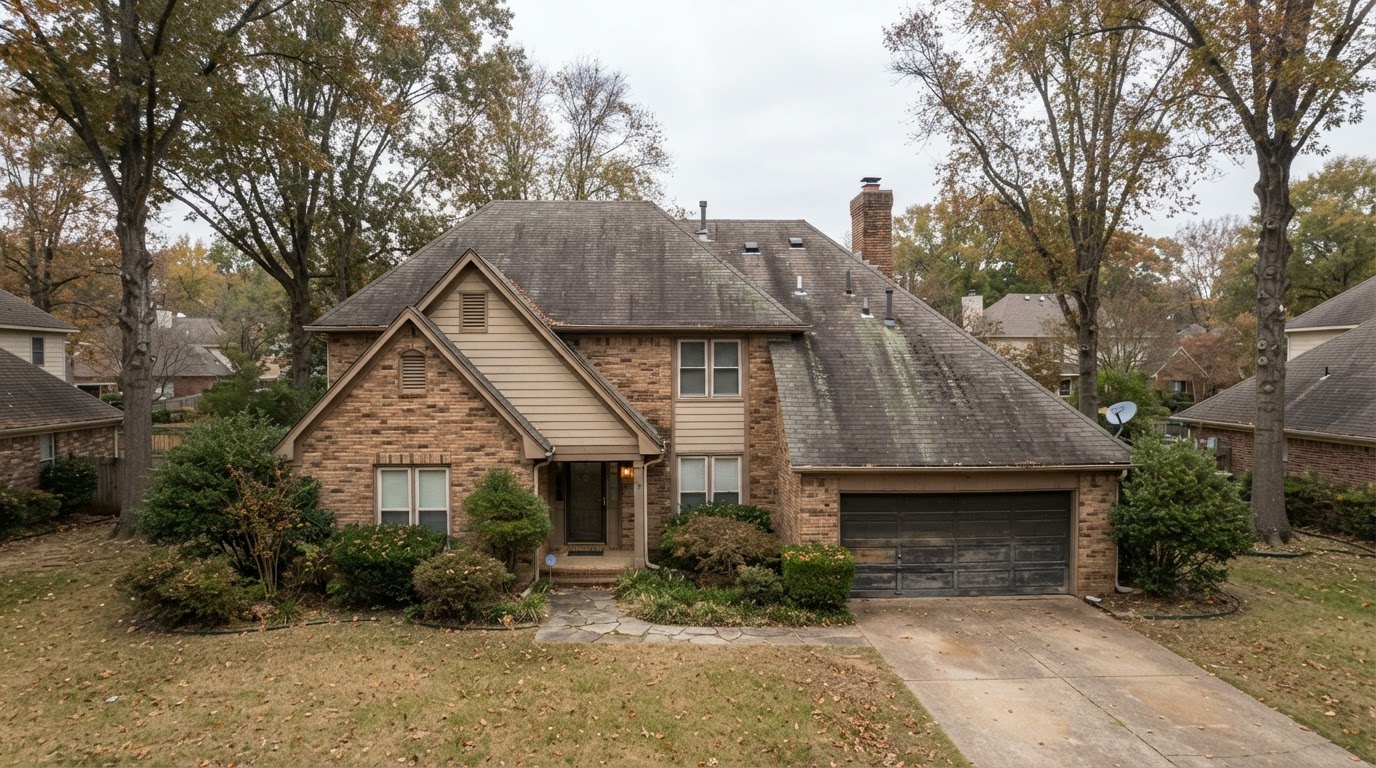
Replacing a Roof on an Older Montgomery Home
The starting point is the roof's actual condition — not the decade the house was built.
Homes built in the 1970s and 1980s are common across Montgomery, and many have had their roofs replaced at least once since construction. The most important first step in planning a replacement is determining the current roof's actual age, material, condition, and repair history. A home built in 1978 does not necessarily have a roof installed in 1978 — and a roof installed in 1978 may already have been replaced twice.
For that reason, it would be wrong to claim that every 1970s or 1980s home needs a new roof. Some do; many do not. The decision should rest on an on-site assessment of the actual roof — its shingle condition, flashing, ventilation, decking, and any signs of moisture or storm effects — rather than on the construction year alone.
Construction year ≠ roof age
Existing Roof Materials and Construction
Older homes vary widely — there is no uniform construction method across a decade.
Property-specific considerations shape any replacement plan. The existing roof may be asphalt shingles of a particular generation, a previous replacement installed over an earlier layer, original or replacement decking, flashing of varying age and material, valleys and penetrations that have been repaired over the years, and ventilation arrangements that may or may not meet current expectations. Each of these affects how a new roof should be planned.
Construction methods were not uniform across all homes built during these decades. Roof slopes, framing, decking materials, and ventilation approaches varied by builder, neighborhood, and budget. Avoid assuming that every 1970s or 1980s home shares the same construction — the actual roof assembly should be evaluated directly.
Roof Deck and Framing Considerations
Removing the existing roof often reveals conditions that were not visible beforehand.
One of the main reasons a tear-off is valuable on an older home is that it exposes the decking and, in some cases, framing that has been hidden for decades. Sheathing that looked acceptable from above may turn out to be damaged, deteriorated, or incompatible with the new roofing system once the old layers are removed. Soft areas, water staining, delaminating plywood, or spaced-board sheathing can all surface during a tear-off.
When such conditions are found, additional decking replacement or, in some cases, structural assessment may be required before the new roof is installed. We do not invent a universal re-decking requirement — only the decking that is actually damaged or incompatible needs replacement — but older homes do have a higher likelihood of revealing hidden conditions once the existing roof is removed.
Tear-Off Versus Recover
Two different approaches — suitability depends on the actual assembly, not on preference alone.
| Factor | Tear-Off (Full Replacement) | Recover (Overlay) |
|---|---|---|
| Existing layers | All existing roofing removed down to the deck | New roofing installed over the existing layer |
| Deck inspection | Decking fully exposed for inspection and repair | Decking remains hidden; condition inferred only |
| Suitability | Appropriate for most conditions, including damaged decks | Only when existing roof is sound, one layer, and code allows |
| Weight | Removes existing weight before installing new | Adds weight; structure must support both layers |
| Limitation | More labor and disposal; longer project | Not permitted with multiple existing layers or moisture damage |
Code, product instructions, roof condition, moisture, and the number of existing layers all determine whether a recover is appropriate. We do not imply that every roof can be overlaid — many older homes are better served by a full tear-off.
Older Materials and Renovation Precautions
Some older building materials are regulated — but their presence cannot be assumed from the decade alone.
Homes from the 1970s and 1980s may contain building materials that are now regulated and require specific handling if disturbed during renovation. It is important to recognize this possibility — but it is equally important not to assume that all homes from these decades contain such materials. Construction year alone does not establish what is present in a specific house.
If suspect materials may be disturbed during a tear-off or repair, appropriate qualified assessment and applicable regulations should be considered before work begins. Handling requirements depend on the material and the jurisdiction, not on the home's age by itself.
This is a precaution, not a conclusion. The right approach is to be aware of the possibility and to arrange appropriate evaluation if there is reason to suspect regulated materials may be present.
Modern Roof Replacement Planning
A replacement is the right time to bring the whole assembly up to current expectations.
Frequently Asked Questions About Older-Home Roof Replacement
Clear answers about age, decking, recover, and planning.
01.Does a house built in the 1970s automatically need a new roof?
No. A home's construction year does not determine its roof's age — the roof may have been replaced once or twice since the home was built. What matters is the current roof's actual age, material, condition, and repair history. A 1970s home with a roof installed ten years ago is in a very different position than one with original or first-generation roofing. An assessment of the actual roof is the right basis for any decision.
02.How can I determine when the current roof was installed?
Installation records, prior-owner documents, building permits, contractor invoices, and real-estate disclosure paperwork can all help establish when the existing roof was put on. Manufacturer markings on shingles or underlayment may also offer clues. When records are unavailable, a professional assessment can estimate condition and likely age based on observed wear — but it cannot produce a guaranteed installation date.
03.Do older homes always need new roof decking?
No. Decking is replaced when it is damaged, deteriorated, or incompatible with the new roofing system — not simply because the home is older. A tear-off often reveals the true condition of the sheathing, and some sections may need replacement while others remain sound. There is no universal re-decking requirement for homes of any age.
04.Can shingles be installed over an existing roof?
Sometimes. A recover or overlay may be permitted when the existing roof is in suitable condition, has only one existing layer, meets code and manufacturer requirements, and the decking beneath is sound. But recover is not appropriate for every roof — moisture damage, multiple existing layers, or incompatible materials can make a full tear-off necessary. Suitability depends on the actual assembly, not on a general rule.
05.Should ventilation be evaluated during replacement?
Yes. A roof replacement is a natural time to evaluate attic ventilation, because the intake and exhaust components are accessible and the new roof's performance depends on a balanced assembly. Older homes may have ventilation that no longer meets current expectations, and correcting it during replacement can support better long-term performance.
06.Can older roofing materials require special handling?
Potentially. Some older building materials are regulated and require specific handling and disposal procedures if disturbed. Not every home from these decades contains such materials, and the presence of any cannot be assumed from the construction year alone. If suspect materials may be encountered during a tear-off, appropriate qualified assessment and applicable regulations should be considered before work begins.
07.What affects roof replacement cost on an older home?
Cost drivers include the roof size and complexity, the chosen material, the extent of any decking or framing repairs revealed during tear-off, ventilation work, flashing replacement, disposal of existing layers, and accessibility. Because older homes can reveal hidden conditions once the existing roof is removed, the final scope is best based on what an on-site evaluation and the tear-off actually find.
Related Roofing Resources
Continue exploring replacement, decking, and lifespan topics:
Request a Roofing Quote
If your home was built in the 1970s or 1980s and you are weighing replacement, an on-site assessment can establish the current roof's actual age and condition, evaluate decking and ventilation, and help you plan the right scope — tear-off or recover — based on what is really there.