
Sagging Roof Repair Montgomery
A visible dip or wave in your roofline deserves careful evaluation — it can point to decking, framing, or moisture conditions that go beyond the shingles. This guide explains what sagging may mean and how to get it assessed safely.
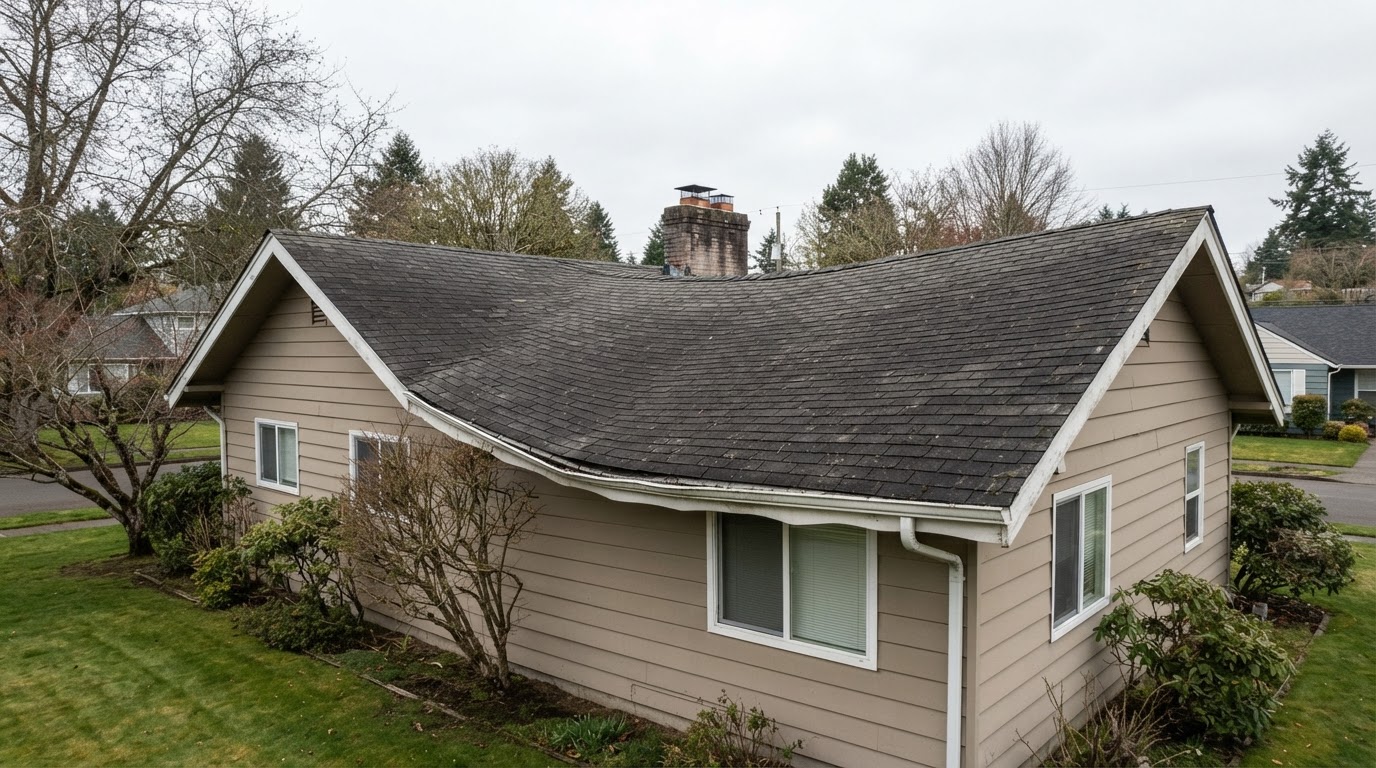
What Does a Sagging Roof Mean?
A visible change in the roofline can range from a minor cosmetic irregularity to a condition that deserves prompt attention.
Roofline sagging describes a visible dip, wave, or uneven plane along a roof slope, ridge, or eave. From the ground it may show up as a section that no longer runs straight, a low spot between rafters, or an eave that has dropped. These changes can develop slowly over many years or appear more suddenly after a storm, added weight, or a structural event.
It is important not to over- or under-react to appearance alone. A minor visual irregularity in an older roof may be long-standing and stable, while a new or progressing dip can signal a condition that warrants evaluation. The difference cannot be diagnosed from a photograph or from the ground. A qualified professional assessing the actual structure is the only reliable way to tell whether a sag is cosmetic, functional, or potentially serious.
Safety first
Possible Causes of Roof Sagging
Sagging is a symptom with several possible sources — not a single diagnosis that fits every roof.
Roof-deck deterioration
Plywood or OSB sheathing that has absorbed moisture over time can lose stiffness, allowing the surface between rafters to deflect.
Framing movement or damage
Rafters, trusses, ridge boards, or collar ties can shift, crack, or separate, changing how loads travel through the structure.
Moisture exposure
Long-term leaks can weaken wood members and fasteners, reducing the assembly's ability to hold its intended shape.
Excessive or unbalanced loads
Heavy roofing layers, accumulated debris, or added equipment can stress framing that was not designed for the added weight.
Previous alterations
Removed supports, modified openings, or past repairs done without engineering input can change how the frame carries load.
Construction deficiencies
Undersized framing, excessive rafter spacing, or missing structural connections from original construction can allow gradual deflection.
No single cause applies to every sagging roof. A roof that has carried multiple layers of shingles for decades, a roof with a long-standing leak, and a roof with undersized original framing can all show similar deflection for different reasons.
Signs That Warrant Professional Attention
Watch for conditions that deserve a closer, on-site evaluation.
Observe these from safe, ground-level or interior vantage points. Do not enter a compromised attic to look for the source.
Structural Assessment and Specialist Involvement
Different questions call for different qualifications — a roofing assessment is not the same as an engineering analysis.
Evaluating a sagging roof can involve several distinct layers of review, and it helps to understand what each one covers. A roofing condition assessment looks at the shingles, flashing, penetrations, and visible decking. A roof-deck evaluation focuses on the sheathing beneath the roofing — its stiffness, moisture content, and integrity. A structural framing review examines the rafters, trusses, ridge, and connections that carry the roof's load.
Important distinction: A roofing contractor can document observed roof conditions and recommend roofing repairs or replacement. Structural analysis, load calculations, and engineered repair designs require a licensed structural engineer. We do not represent this business as a licensed engineering practice.
When sagging appears to involve the framing rather than just the decking, when interior cracking suggests movement, or when the cause is unclear, coordinating with a qualified structural professional may be the right next step before any roofing work is planned.
Repair Options and Scope
The right repair depends on what the structure actually needs — there is no one-size-fits-all fix.
Conceptually, repair approaches can include replacing damaged roof decking so the surface is solid again, correcting roofing defects such as failed flashing or deteriorated shingles, coordinating framing repairs when the structure itself has moved, replacing the damaged roof covering, and pursuing further structural investigation when the cause is not yet clear. These are not interchangeable — a roof that needs framing work is not fixed by new shingles alone, and a roof with only localized decking damage may not require a full replacement.
The actual repair plan depends on site conditions, applicable building code, manufacturer requirements, and the judgment of qualified professionals. No repair should be planned from appearance alone.
Frequently Asked Questions About Sagging Roofs
Clear answers about roofline deflection, safety, and repair planning.
01.What causes a roof to sag?
Sagging can come from several sources — deteriorated roof decking, framing that has shifted or cracked, long-term moisture exposure, added weight the framing was not designed for, previous alterations, or original construction deficiencies. A single roofline may involve more than one of these. The actual cause can only be established by evaluating the specific structure, not by appearance alone.
02.Is a sagging roof dangerous?
A visibly sagging roofline can indicate a condition that deserves prompt, careful evaluation, and in some cases it can reflect a structural concern. Do not climb onto or enter areas beneath a structure that appears unstable. If you suspect an immediate safety risk, contact the appropriate emergency authorities. A qualified professional can assess the condition safely and help determine the right next step.
03.Can damaged roof decking create a visible dip?
Yes. When sheathing between rafters loses stiffness from moisture or age, the surface can bow downward and create a visible wave or dip in the roofline. This is different from a framing-level sag that affects the whole rafter line, but the two can look similar from the ground. An assessment helps distinguish decking deflection from structural movement.
04.Can a sagging roof be repaired without replacing everything?
Sometimes. When the sag is limited to deteriorated decking or a localized framing issue, targeted repairs may be possible. When the deflection involves broader framing, an engineered repair or more extensive work may be required. The scope depends entirely on what an on-site evaluation finds — there is no universal answer.
05.When might a structural engineer be needed?
When sagging appears to involve the framing rather than just the decking, when cracks appear in interior walls or ceilings, or when the cause of the deflection is unclear, a licensed structural engineer may be appropriate. A roofing contractor can document observed roof conditions, but engineering analysis and structural design require the appropriate professional qualifications.
06.Will replacing shingles correct roof sagging?
No. New shingles cover the roof surface; they do not restore decking stiffness or correct framing movement. Installing new roofing over a sagging, unsupported, or deteriorated structure can conceal a problem and may not perform as intended. The underlying condition should be evaluated and addressed as part of any repair or replacement plan.
07.How do I request an assessment safely?
Observe the roofline from the ground and note any interior cracking or staining, then request a professional assessment rather than climbing up yourself. Describe what you have seen and any history of leaks or past repairs. A qualified evaluator can determine a safe way to inspect the condition and recommend appropriate next steps.
Related Roofing Resources
Continue exploring decking, structural, and repair planning topics:
Request a Roof Assessment
If you have noticed a dip, wave, or uneven roofline, a professional assessment can document the visible conditions and help you understand whether the concern is roofing-related, structural, or both — so you can plan the right next step safely.