
Skylight Leak Repair Montgomery
Water near a skylight does not necessarily mean the skylight itself is defective. This guide explains how to tell flashing leaks, roof-system leaks, seal failure, and condensation apart, what an assessment actually evaluates, and which repair fits each finding — without diagnosing the cause from a stain alone or treating caulk as a permanent fix.
What a Skylight Leak in Montgomery Usually Involves
The visible drip is rarely the whole story — the entry point and the stain are often different.
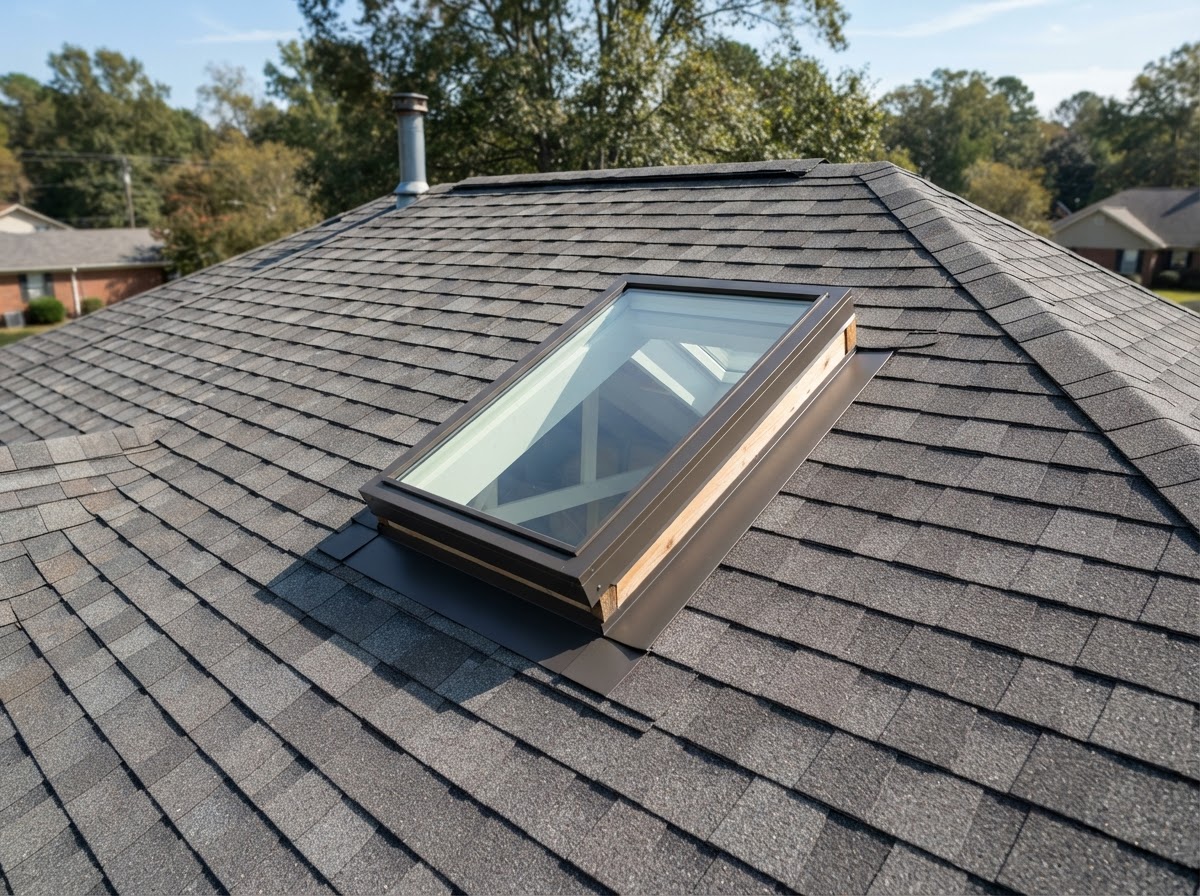
A skylight sits in a framed opening in the roof, and the water-tightness of that opening depends on a layered assembly: the roof covering around it, the underlayment beneath, the flashing that ties the unit to the roof, the curb or deck mounting, and the skylight's own glazing and seals. A leak can come from any one of those layers — and the stain on the ceiling below is often some distance from where the water actually entered.
The first step is confirming whether the skylight unit is the source at all. A sound skylight can leak because the flashing or the surrounding roof failed; a defective skylight can leak through its own glazing; and condensation can produce dripping or staining with no rain at all. Each of those is a different repair, and diagnosing from the stain alone usually picks the wrong one.
The stain and the entry point are not always the same
Common Causes of Apparent Skylight Leaks
Flashing, roof damage, underlayment, installation, seals, and condensation each behave differently.
Improperly installed or deteriorated flashing
Flashing that was not integrated correctly, or that has aged and pulled away from the roof or the skylight, is a frequent leak source.
Roof covering damage around the skylight
Cracked, missing, or lifted shingles or panels adjacent to the opening can let water behind the flashing.
Compromised underlayment
The water barrier beneath the roof covering can fail at the skylight opening, allowing water past the visible roof layer.
Curb or deck-mounted installation problems
The mounting method has to match the skylight type and the roof slope; mismatches create gaps that leak.
Deteriorated glazing or seals
The seal between the glass and the skylight frame can age and fail, admitting water through the unit itself.
Condensation on interior surfaces
Warm humid indoor air condensing on a cold skylight can drip and stain without any rain — a ventilation and humidity issue, not a roof leak.
Water entry higher on the roof
A leak above the skylight can run down the underlayment or framing and appear at the skylight opening.
Material incompatibility or installation errors
Mismatched flashing, sealants, or components can break down or create gaps over time.
Identifying the Likely Source
A professional assessment evaluates the unit, the flashing, and the roof together.
Liquid water intrusion and condensation are evaluated as separate conditions. Neither can be conclusively diagnosed remotely from a description or a photograph — the timing, the weather, the interior humidity, and the roof condition all factor into telling them apart.
Possible Repair Approaches
Repairs are condition-dependent — and caulk around every skylight is not one of them.
When the source is confirmed, repair options may include replacing damaged flashing components, correcting surrounding roofing defects, repairing the appropriate seal or installation detail, replacing an incompatible flashing system, addressing damaged roof coverings around the opening, or — when the unit itself is no longer suitable — replacing the skylight. The right combination depends on the skylight type, the roof slope, the surrounding material, and the manufacturer's requirements.
Caulk is not a universal skylight repair. Applying caulk around every skylight is not a durable repair. Sealant may slow a leak temporarily, but it does not restore a properly integrated flashing system, and it can conceal the real source while it continues to admit water. Skylight types, flashing kits, slopes, and roofing materials differ — there are no universal installation details.
When Replacement Is More Appropriate
Replacing the unit is the right call only when the unit itself is the problem.
Replacement may be the better choice when the glazing or skylight components have failed, when compatible parts are no longer available, when the unit is severely deteriorated, when repeated repairs have not held, when a roof replacement requires the flashing to be re-evaluated, or when the existing unit was not the right selection for the roof configuration. In those cases a new skylight, integrated with compatible flashing, is a more durable answer than continued patching.
We do not guarantee that skylight replacement solves unrelated roof leaks or indoor humidity problems. If the leak is in the roof system around the skylight, or if condensation is driven by indoor humidity, replacing the unit does not address the actual cause — and the symptom will continue after the new skylight is installed.
Frequently Asked Questions About Skylight Leaks
Clear answers about flashing, condensation, repairs, replacement, and roof work.
01.Why does my skylight leak when it rains?
Water near a skylight can come from flashing that was installed incorrectly or has deteriorated, damage to the roof covering around the skylight, a compromised underlayment, a curb or deck-mounted installation problem, deteriorated glazing or seals, or even water entering higher on the roof that travels to the skylight opening. Condensation can create a separate, dry-weather symptom. The cause has to be confirmed rather than assumed from the stain's location — the visible drip and the actual entry point are often not the same place.
02.Can a skylight leak without the unit being defective?
Yes. A sound skylight can leak when the surrounding roof flashing or shingles fail, when the underlayment is compromised, or when water enters elsewhere on the roof and travels to the opening. In those cases the skylight unit itself is fine and the repair is to the roof system around it — replacing the skylight would not stop the leak. Confirming whether the unit or the surrounding roof is the source is the point of an assessment.
03.Is condensation the same as a skylight leak?
No. Condensation forms on the interior glass or frame when warm, humid indoor air meets a cold skylight surface — it can appear as dripping or staining without any rain. It is a moisture and ventilation concern, not a roof leak, and it may point to indoor humidity or airflow rather than a roofing defect. A professional assessment distinguishes liquid water intrusion from condensation, though neither can be conclusively diagnosed remotely from a description alone.
04.Can skylight flashing be replaced?
Often, yes. Worn, damaged, or improperly installed flashing can be removed and replaced with a compatible flashing system integrated into the surrounding roof covering. The right approach depends on the skylight type, the roof slope, the surrounding roofing material, and the manufacturer's installation requirements — there is no universal flashing kit, and the new flashing has to be compatible with both the unit and the roof.
05.Can I repair the skylight without replacing the roof?
Often, yes. Flashing replacement, surrounding shingle or panel repair, seal or installation-detail corrections, and replacing incompatible flashing can all be done as localized work when the rest of the roof is sound. A full roof replacement is only warranted when the leak is tied to broader roof-system deterioration rather than the skylight detail itself. The scope follows the findings.
06.When should an older skylight be replaced?
Replacement may be appropriate when the glazing or skylight components have failed, when compatible parts are no longer available, when the unit is severely deteriorated, when repeated repairs have not held, when a roof replacement requires re-evaluating the skylight, or when the existing unit was not the right selection for the roof configuration. Replacement is not a guarantee that it will solve an unrelated roof leak or an indoor humidity problem — those are separate issues that need their own answers.
07.Can a skylight leak only during wind-driven rain?
Yes. Wind-driven rain can push water uphill or across surfaces in ways ordinary rainfall does not, exposing flashing laps, underlayment gaps, or seal defects that stay dry in calm rain. A leak that only appears in wind-driven storms often points to a flashing or seal detail rather than the skylight unit itself, which is why the weather conditions matter to the diagnosis.
08.Does roof replacement require new skylight flashing?
Often, yes. During a roof replacement the existing shingles or panels around the skylight are removed, and the flashing that ties the unit into the roof is typically replaced or re-installed to integrate with the new roof system. The existing skylight can often be retained if it is in good condition and compatible, but the flashing detail is normally rebuilt as part of the replacement.
Related Roofing Resources
Continue exploring roof leak and flashing topics:
Request a Skylight Leak Assessment
If water is appearing near a skylight on your Montgomery roof, an on-site assessment can distinguish flashing leaks, roof-system leaks, seal failure, and condensation, evaluate the skylight type and the surrounding roof together, and outline whether a flashing repair, surrounding roof work, or skylight replacement fits the actual findings — without diagnosing the cause from a stain alone or treating caulk as a permanent fix.