
Shingle, Metal & Commercial Roofing Fort Deposit
Fort Deposit is a town in Lowndes County, and this page gives it strong residential roofing coverage with appropriately proportioned commercial and agricultural content — without duplicating the Hayneville or Lowndesboro pages. Homeowners can compare asphalt shingle replacement, roof leak repairs, standing-seam and exposed-fastener metal, flashing and drainage details, and roofing for qualifying barns, garages, workshops, and utility structures where they apply. Storm-related assessment is discussed without fabricated event histories, and agricultural roofing is kept to the roof — panel and fastener condition, flashing, drainage, the existing assembly, and penetrations — not construction of new buildings. Commercial content addresses actual low-slope roofing problems rather than inventing a major local industrial market. The applicable Town of Fort Deposit or Lowndes County authority is confirmed per parcel before any permit rule is stated as definite; City of Montgomery rules are not borrowed for a Fort Deposit address.
Residential Roof Replacement and Repair in Fort Deposit
Asphalt shingle replacement, leak repairs, standing-seam and exposed-fastener metal, flashing and drainage, agricultural and detached-building roofing, and small commercial maintenance.
Asphalt Shingle Replacement
A full re-roof evaluates existing layers, decking, underlayment, flashing, valleys, and ventilation before a new shingle system is installed.
Learn moreRoof Leak Repairs
Leak investigation separates the visible interior evidence from the likely exterior source rather than diagnosing from a stain alone.
Learn moreStanding-Seam Metal Roofing
Concealed-fastener standing seam selected against roof slope, style, and compatibility with the existing assembly.
Learn moreExposed-Fastener Metal Maintenance
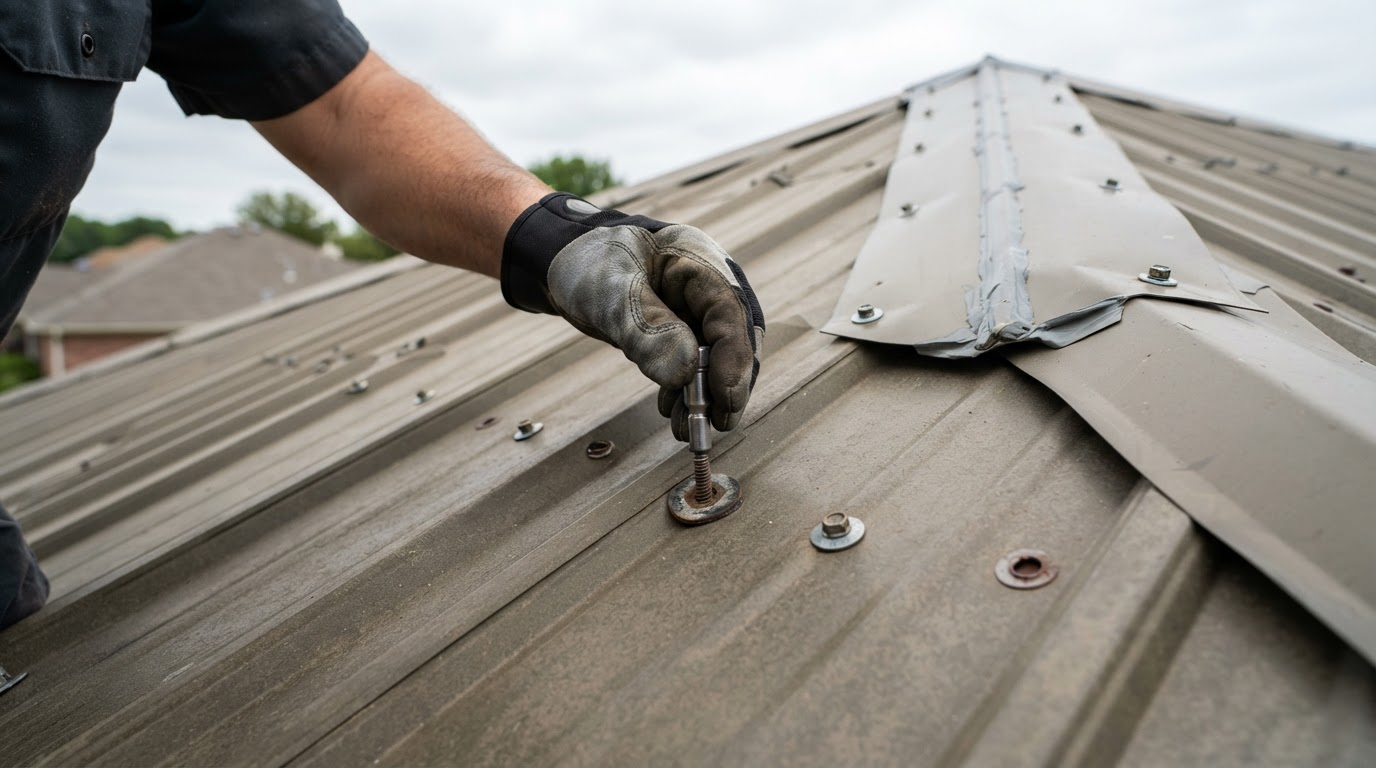
Through-fastened panels need washer, fastener, and seal inspection as they age — evaluated separately from standing seam.
Learn moreFlashing & Drainage Details
Flashing at penetrations and valleys, and the drainage that moves water off the roof, are part of the roof system.
Learn moreAgricultural & Detached Roofing
Roofing for qualifying barns, garages, and workshops — kept to the roof, not new construction — evaluated for the specific structure.
Learn moreSmall Commercial Roof Repair
Low-slope commercial repairs address membrane, drainage, penetrations, and access specific to the building.
Learn moreStorm Damage Assessment
Post-storm documentation supports the owner's insurance process without promising claim approval or deductible reimbursement.
Learn moreRoof Leak and Storm Damage Assessments in Fort Deposit
Roof maintenance priorities differ across homes, shops, garages, and qualifying agricultural structures — and storm assessment is documented without fabricated event histories.
Fort Deposit properties vary in use and configuration, and roof maintenance priorities differ across a home, a shop, a garage, a storage building, and a qualifying agricultural structure. No roof is assumed old, storm-damaged, or agricultural from the address — roofing decisions follow what an on-site assessment of the specific roof actually shows: the condition of the existing covering, roof slope and geometry, flashing at valleys and penetrations, roof decking, gutter and roof-edge performance, and the drainage that moves water off the roof. A localized defect with sound neighbors may be a repair; widespread shingle deterioration, repeated leaks, soft decking, or multiple existing layers may favor replacement.
Standing-seam and exposed-fastener metal are distinct systems. Standing seam conceals the fasteners in a folded seam and uses clips that allow thermal movement; exposed-fastener panels are through-screwed with visible washers that age and need periodic inspection. For a qualifying agricultural or outbuilding roof, the scope is kept to the roof — panel and fastener condition, flashing, drainage, the existing assembly, and penetrations — and repair is weighed against replacement for the specific structure. The roofing company does not construct barns or offer structural engineering. Storm-related assessment documents the visible conditions that support the owner's insurance process without fabricating a specific event history and without promising claim approval, deductible reimbursement, or a guaranteed insurance outcome.
Different structures, different roof decisions
Agricultural and Detached-Building Roofing Near Fort Deposit
From the concern through assessment, repair-versus-replacement, material and structure selection, scope, scheduling, and closeout.
1. Describe the Property and Concern
The roofing problem, the property location, the structure type — home, shop, garage, or qualifying agricultural building — and the roof material if known.
2. Arrange an Assessment
An appropriate roof assessment is arranged, subject to availability — not promised as same-day or free.
3. Document the Conditions
The covering, flashing, penetrations, valleys, drainage, decking, and accessible interior evidence are reviewed for the specific structure.
4. Evaluate Panel and Fastener Condition
On a metal roof, panel condition, fasteners, washers, seals, and flashing transitions are inspected — exposed-fastener upkeep is evaluated separately from standing seam.
5. Weigh Repair and Replacement
A localized defect may be repairable; widespread panel deterioration, repeated leaks, or a deteriorated assembly may favor reroofing the specific structure.
6. Review Materials and Compatibility
Shingle and metal options, and compatibility with the existing assembly and structure use, are weighed against the actual roof.
7. Prepare a Written Scope
A written scope reflects the actual findings — including any agricultural or detached-structure roofing — rather than a generic package.
8. Approvals, Work, Closeout
Permit and jurisdiction are verified for the parcel; work is performed in keeping with the agreed scope, followed by cleanup and maintenance guidance.
Commercial Roof Repair and Maintenance in Fort Deposit
The applicable Town of Fort Deposit or Lowndes County authority is confirmed per parcel — no permit requirement, response time, or inspection procedure is invented without verification.
Fort Deposit is a town in Lowndes County. Whether a given roofing project requires a permit, inspection, or other approval depends on the work's scope and the specific property's jurisdiction — and the applicable Town of Fort Deposit or Lowndes County authority is confirmed per parcel through current official sources before any permit rule is stated as definite. No permit requirement, response time, or inspection procedure is invented where it is not verified; the City of Montgomery's published guidance is not automatically applied to a Fort Deposit address. A roof project is planned against the actual authority for the parcel, not a borrowed rule.
For commercial and agricultural structures, coordination goes with that: occupied buildings, roof access, material staging, and the structure's use all enter the plan. A small commercial roof is evaluated for the membrane, drainage, penetrations, and access specific to the building — not with steep-slope shingle methods — and an agricultural roof is kept to the roof rather than new construction. Property owners are not directed onto damaged or unsafe roofs; safe observation from the ground and documentation of visible conditions are appropriate, and an assessment is arranged subject to availability rather than promised as same-day or free.
Residential and Commercial Roofing Guidance for Fort Deposit
Recognizing common roof problems, roofing options for different structures, and planning a repair or replacement project in Fort Deposit.
Recognizing Common Roof Problems
A Fort Deposit roof problem usually surfaces through visible signs before it becomes an active interior leak. Damaged or missing coverings, flashing that has cracked or pulled away from a chimney or wall, a vent or pipe boot that has dried and lifted, and drainage that no longer moves water off the edge are each prompts for an assessment — not remote diagnoses, because a ceiling stain rarely maps directly to the entry point above it. Water can travel along framing before it appears indoors, so the visible evidence is read as a reason to evaluate the roof rather than a conclusion about its cause. The roof inspections page describes how that condition assessment is documented.
Roofing Options for Different Structures
The roofing system follows the structure. Architectural shingles suit many steep-slope residences where the slope, appearance, and budget align; metal roofing — standing-seam or exposed-fastener, each evaluated for its own fastening and upkeep — is considered where the geometry and the owner's preference fit; and appropriate low-slope systems, including TPO and other membranes, are evaluated for qualifying low-slope buildings rather than approached with residential shingle methods. A detached garage or small outbuilding may use a different system than a primary residence, matched to the structure's slope and use. No material is described as universally superior, and the recommendation follows the building that is actually there. The commercial roofing overview explains how low-slope systems differ.
Planning a Repair or Replacement Project
A Fort Deposit project's scope is built from the actual roof. Material condition, the compatibility of any new material with the existing assembly, safe roof access for evaluation and work, and how water drains off the surface all inform whether a repair, partial replacement, or full replacement is appropriate. A localized defect with sound surrounding material may be repairable, while widespread deterioration, repeated leaks, or soft decking favor a broader scope. Fort Deposit sits in Lowndes County, and no local project experience, commercial client, or specific storm damage is fabricated; the scope follows what an on-site assessment of the specific roof actually finds.
Roofing Questions About Fort Deposit
Local questions on shingle repair, metal maintenance, replacement material, storm documentation, penetration leaks, agricultural reroofing, commercial low-slope, and approvals.
When can damaged shingles be repaired instead of fully replaced?
A localized defect — a few damaged shingles or one flashing leak — may be repairable when the surrounding material is sound and compatible. Widespread shingle deterioration, repeated leaks across several areas, soft decking, or multiple existing layers often favor replacement. The decision follows what an on-site assessment of the specific roof actually shows, not a fixed rule or an assumption that damage always means full replacement.
What does metal roof maintenance involve?
Standing-seam and exposed-fastener panels are distinct systems. Standing seam conceals fasteners in a folded seam; exposed-fastener panels are through-screwed with visible washers that age and need periodic inspection. Maintenance evaluates panel condition, fasteners, washers, seals, and flashing transitions — and metal is not maintenance-free. The roof's slope and the owner's goals drive the recommendation, not a universal preference.
How do I choose a replacement material for my Fort Deposit property?
Material suitability depends on the existing structure, slope, substrate, budget, and desired maintenance. Architectural shingles are a common residential choice for appearance and budget; standing-seam metal is durable where the slope and style suit it. The structure's use — a home, shop, garage, or qualifying agricultural building — also helps determine what fits. The recommendation follows the actual roof, not a universal preference for one material.
How is storm damage documented without a fabricated event history?
Storm-related assessment documents the visible conditions on the specific roof — lifted, creased, or missing shingles; impact marks; and flashing or penetration damage — that support the owner's insurance process. No specific local storm event is invented, and no claim approval, deductible reimbursement, or guaranteed insurance outcome is promised. The documentation reflects what the roof actually shows.
What about leaks around roof penetrations?
Chimneys, pipe boots, vent stacks, and roof-to-wall transitions are detail points where most small leaks originate. A stain inside rarely maps directly to the entry point above, because water can travel along framing before it appears. A repair addresses the specific transition rather than coating the whole roof, and caulk is not a universal durable fix.
Can you reroof an agricultural building near Fort Deposit?
Roofing for a qualifying barn, garage, workshop, or utility structure is evaluated for the specific structure — panel and fastener condition, flashing, drainage, the existing assembly, and penetrations — and repair is weighed against replacement. The scope is kept to the roof rather than new construction, and the roofing company does not build barns or offer structural engineering. A detached structure and a primary residence are evaluated separately so the system matches the structure it covers.
What does a small commercial low-slope roof repair involve?
A low-slope commercial roof is evaluated for the membrane, seams, penetrations, rooftop equipment curbs, drains or scuppers, flashing, and any ponding or previous repairs — not with steep-slope shingle methods. The actual source of a concern is identified before any repair is prescribed, and drainage is addressed as the specific building requires, not from a universal specification.
How are applicable project approvals confirmed for a Fort Deposit property?
Fort Deposit is a town in Lowndes County. Whether a roofing project needs a permit or inspection depends on the scope and the specific property, and the applicable Town of Fort Deposit or Lowndes County authority is confirmed per parcel through current official sources — not borrowed from the City of Montgomery. No permit requirement, response time, or inspection procedure is invented where it is not verified.
Fort Deposit in the Region
An accurate Lowndes County town reference and related nearby service areas.
Fort Deposit is a town in Lowndes County, Alabama. This page describes roofing considerations for homes, qualifying agricultural structures, and small commercial properties in Fort Deposit — it does not represent a branch office, a major industrial market, or an official community boundary. Hayneville and Lowndesboro are separate Lowndes County communities and are not treated as the same location.
Regional coverage context only · Lowndes County town · not a contractor office or fabricated boundary
Request a Roofing Quote in Fort Deposit
Share the property location, the roofing concern, the structure type — home, shop, garage, or qualifying agricultural building — and the roof material if known. An assessment documents the visible conditions, weighs repair against replacement, keeps agricultural roofing to the roof rather than new construction, and confirms the applicable Town of Fort Deposit or Lowndes County authority for the specific parcel — without inventing a major industrial market the community does not have.